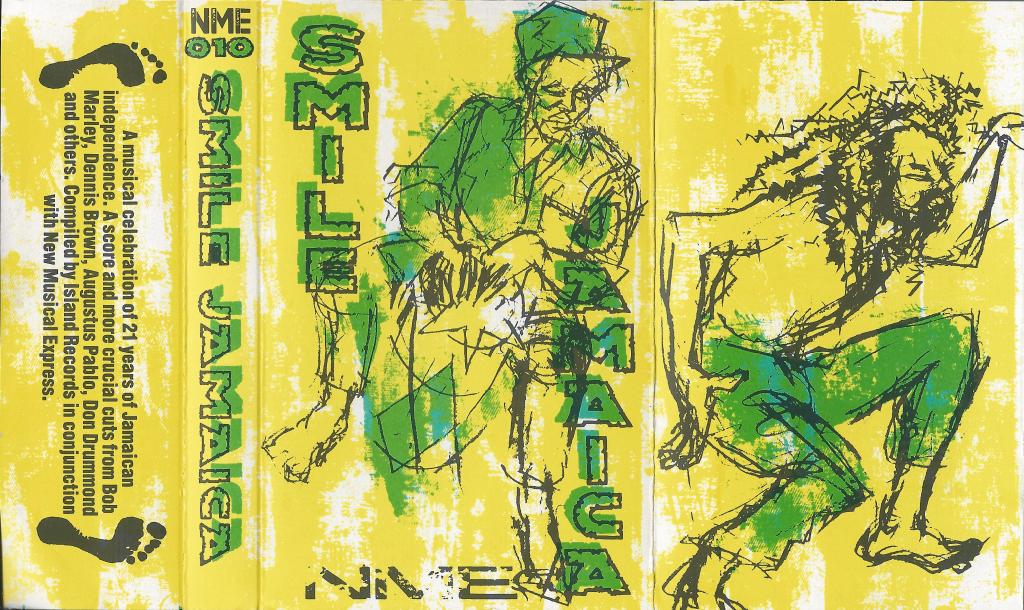
The WIS return continues with six tracks from Smile Jamaica, the legendary 1983 NME cassette celebrating 21 years of Jamaican independence. Enjoy!
First Word
Over the years, WIS has always sought to produce short playlists of fine tunes from varying genres, with the aim of ensuring an elcectic mix of music reaches reader’s ears on a Friday evening. For the first time, this edition of the blog ignores this approach as it comprises six tracks of solely Jamaican music. Having said that, it follows the path from early ska and rocksteady through to reggae and dub with a bit of lovers rock thrown in, so there are some subtle genre shifts in there.
For those of you already getting cold feet, I urge you to persevere – you will not be disappointed by what you hear. However, Jamaican music is far from my comfort zone and I should apologise in advance to any serious fans of ska and reggae reading this as most of my commentary will be seen as pretty shallow from their point of view.
My awareness of this type of music grew during the early punk gigs of the late 70s when reggae and dub would often be used to create the vibe in the venue before the bands came on. The Clash took the punky-reggae party a step further by recording and releasing their own covers of songs like Pressure Drop by Toots & the Maytals and Junior Murvin’s imperious Police & Thieves.
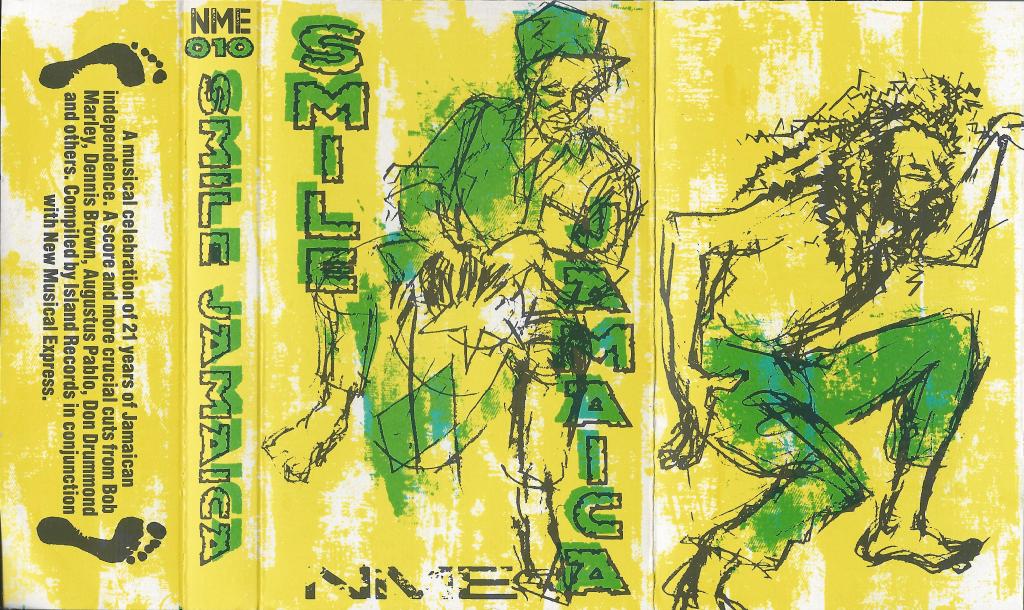
But it was this 1983 cassette, made available via the cut-out coupons in the New Musical Express which has stayed with me over the years since. Although catalogued as NME010, Smile Jamaica was the eleventh in the series of 38 tapes made available between 1981 and 1988. It was compiled by the music paper and Island Records to mark 21 years since the Caribbean island became independent from the UK. By choosing one track to represent each year it provided an aural history of how the island’s music had developed over the period, one killer cut after another.
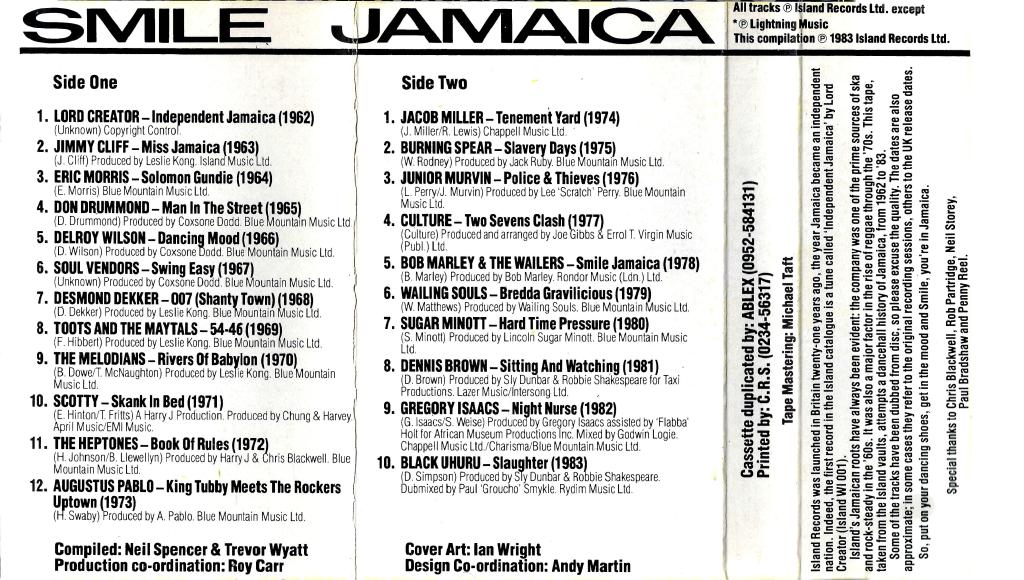
Given the cassette’s place in my musical life, it should come as no suprise that some tracks have already appeared on the blog. The glorious skank of Toots and the Maytal’s 54-56 appeared on WIS 31Mar23 while the dub-heavy King Tubby Meets The Rockers Uptown by Augustus Pablo was playlisted on WIS 24May24 to mark the anniversary of Pablo’s death. And the iconic Two Sevens Clash by Culture made the list for WIS 17Jan25 inspired by my purchase of the Roots Rock Reggae box-set from Cherry Red Records.
Of the remaining tracks, I’ve chose two each from the 60s, 70s and 80s to illustrate the “journey into sound” that Jamaica made over these twenty one years.
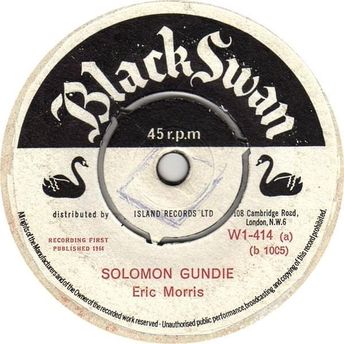
Solomon Gundie – Eric Morris (1964)
Although sorely tempted to select the opening calypso swing of Lord Creator’s celebratory Independent Jamaica from 1962, I’ve kicked off with this terrific track by Eric ‘Monty’ Morris, one of the founding fathers of ska. A Trench Town boy, he grew up through the 1950s Kingston talent contests to record with Prince Buster and became the original vocalist with the Skatalites. He was a key figure in the Studio One era (when the label was widely considered the Motown of Jamaica) and collaborated with Jamaican legends like Clement “Coxsone” Dodd, playing a pivotal role in shaping early ska and rocksteady sounds.
Solomon Gundie was Morris’ take on the Victorian nursery rhyme called Solomon Grundie – he apparently changed the second name to match the popular Jamaican pickled fish pâté. The (comparatively slow) ska offbeats are formed by some terrific brass playing and when the lead is taken by Roland Alphonso’s smouldering saxophone, it lifts it to another level. The internet tells me that Morris is still alive and (hopefully) well, living in Miami at the grand old age of 86. He’ll never sound better.
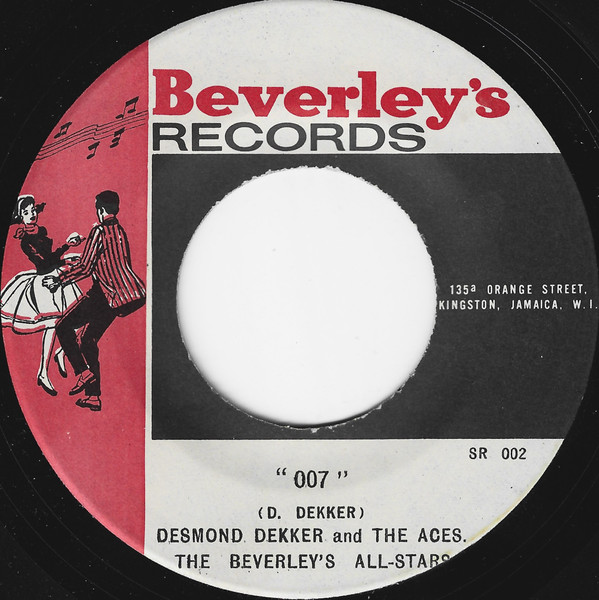
007 (Shanty Town) – Desmond Dekker and The Aces (1968)
We move on to the latter half of the 60s when Jamaican music was beginning to slow down. The frantic dance hall beat of early 60s ska had been influenced by calypso, jazz and rhythm and blues. And while the new, slightly slower ‘rocksteady’ sound held on to these sources, it picked up other influences, most notably American soul music. Desmond Dekker was one of the first Jamaican artists to take the island’s sound to global audiences and is best known for Israelites, his 1968 gospel-infused, rocksteady song of poverty and perseverance which was a No1 hit in the UK.
A year before that, he wrote and recorded the archetypal ‘rude boy’ song 007 (Shanty Town). Partly inspired by a riot against an industrial development near Four Shore beach, it also highlights the tension between the marginalised youth in poor areas and the law (“Dem a loot, dem a shoot, dem a wail“). The cycle of crime, prison and re-offending is also laid bare. And while rebellious, rude boy culture was also stylish hence the aspirational references to the glamour of James Bond and Ocean’s Eleven. This is probably what helped it become the first Jamaican-produced record to reach the UK top 20.
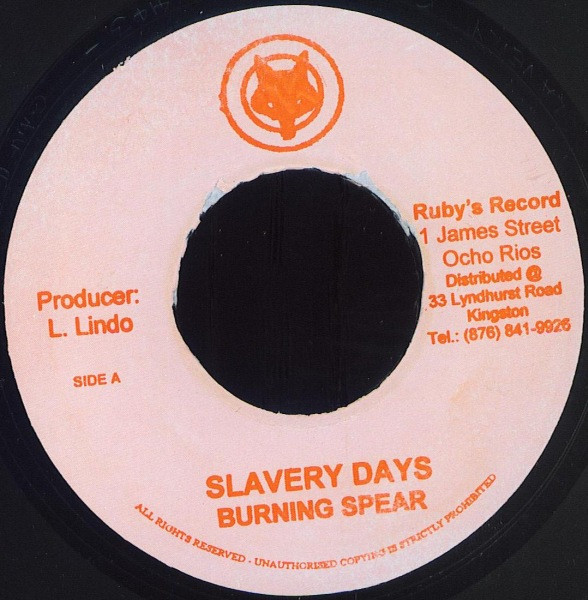
Slavery Days – Burning Spear (1975)
By the 1970s, Jamaican music had evolved further, slowing down the rhythm even more and morphing into reggae, a term apparently coined by musician Toots Hibbert. The emphasis moved to the downbeat on the drums and particularly the bass, leaving the guitars and keyboards to chop into the offbeat. Potentially less soulful than rocksteady, the lower frequency rhythm of reggae had parallels to American southern funk. The music was closely associated with Rastafari, an Afrocentric Jamaican religion that emerged in 1930s, and many established ska and rocksteady musicians/producers moved into reggae. Most famously The Wailers, a band started by Bob Marley, Peter Tosh and Bunny Wailer in 1963, transitioned through all three stages and took reggae global.
I’ve opted to playlist Slavery Days which was a 1975 single by singer/songwriter Burning Spear, who is a hugely influential roots reggae artist, still performing today in his early 80s. The roots sub-genre of reggae is more spiritual in form and often highly politicised, with lyrics about rural poverty, social issues and racial oppression. Against an impressive drum pattern by Nelson Miller, Burning Spear’s rich voice delivers the repetitive lyric urging the African diaspora to recall the hardship of slavery and stand proud for their history. “Some of us survive/Showing them that we are still alive”. Powerful stuff.
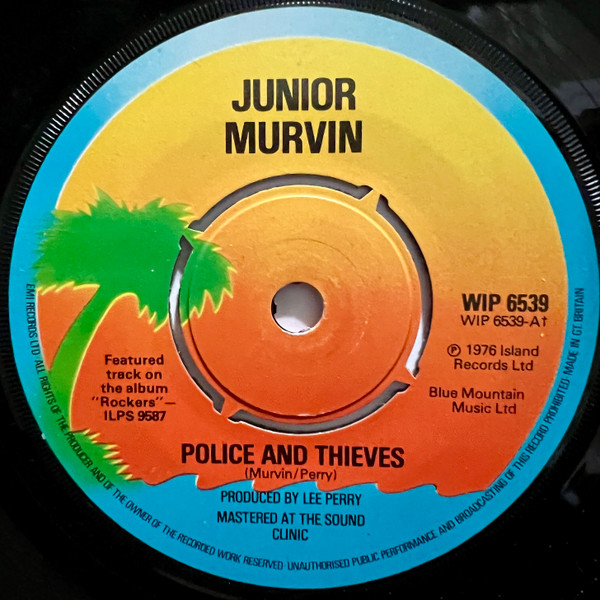
Police and Thieves – Junior Murvin (1976)
Having not found a reason to have it on the blog before, I was always going to select Junior Murvin’s landmark song for this playlist. Written by Murvin with legendary (and slightly crazy) producer Lee ‘Scratch’ Perry, Police and Thieves was first released in 1976 and became an anthem of political and social unrest. Which is quite unusual for a song with a (glorious) falsetto vocal. A big hit in Jamaica, it landed in the UK in the middle of a long hot summer, just as the Notting Hill Carnival erupted into a riot. It is said to have been the defining song of that day and while Joe Strummer and Paul Simonon were taking inspiration for White Riot as the debut single for The Clash, Junior Murvin’s tune caught their ear too. It became a rehearsal room favourite and their “punk reggae” recording of the song made the cut for their first LP, apparently inspiring Bob Marley to pen Punky Reggae Party.
While I love The Clash’s ambitious cover (Joe’s snarl contrasting with Mick’s ‘oh yeah’ part), the original has such style and vibe that Murvin’s fabulous falsetto wins the day. It was pleasing when Island re-relased it in 1980 (I have the four track 12″ version with killer dub and instrumental re-workings) and it deservedly crept up to No 23 in the UK chart.
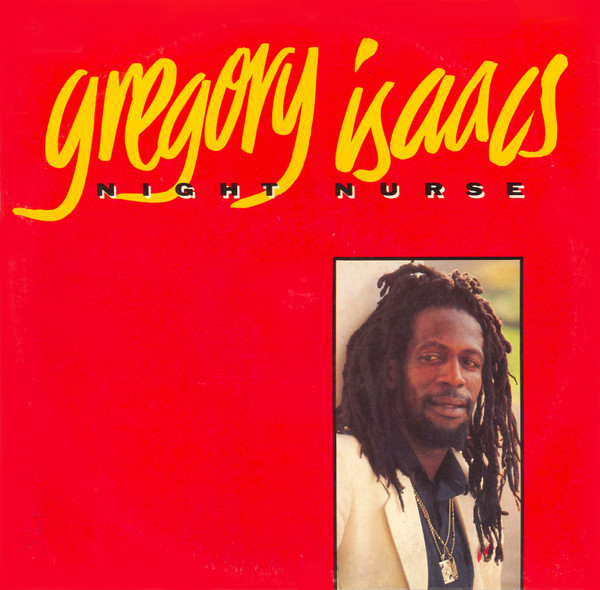
Night Nurse – Gregory Isaacs (1982)
The first of the 80s choices is this fabulous lovers rock tune by Gregory Isaacs, considered to be one of the best singers to come out of Jamaica. Isaacs began recording in 1968 and had a series of local hits working with some of Jamaica’s best producers throughout the 70s. He toured the US and UK with Bob Marley and Dennis Brown and his 1978 Cool Ruler LP gave him the nickname for his promoters. A slot at the Reggae Sunsplash Festival in 1981 was followed by him signing for Chris Blackwell’s Island Records and Night Nurse became the title track of his first album for Island in 1982. The song was released as a single in the UK but despite heavy airplay on radio and in clubs, it failed to chart. The upside was that the LP it came from slipped quietly into the UK Top 40.
It is Issac’s voice that makes the song for me – I can’t put my finger on what it is that makes it so memorable but just listen to how he pronounces his name at the end of the line: “Tell her it’s a case of emergency/There’s a patient by the name of Gregory”. Maybe not surprisingly, the song was picked up by big pharma when GSK used it to advertise their cold medicine of the same name. And the least said about the 1998 cover version by Simply Red, the better.
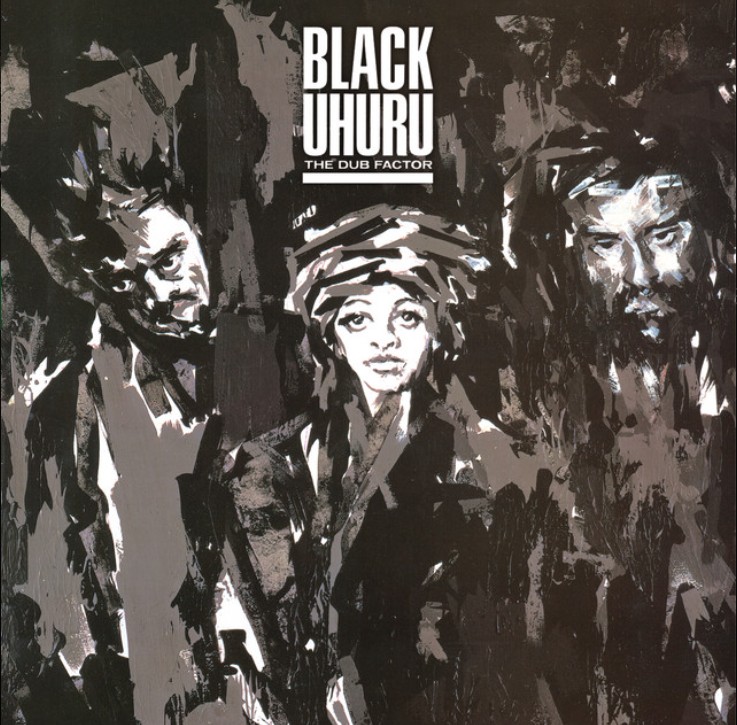
Slaughter – Black Uhuru (1983)
The last track on the cassette is also the last of my six picks and takes us tumbling into the world of dub where songs were are remixed to emphasise the drum and bass track (‘de riddim’). And what better drum and bass meisters for a dub track than the legendary Sly Dunbar and Robbie Shakespeare, who were also in the producer’s chairs. They had been working for a few years with Black Uhuru, an excellent vocal band who were just reaching their peak period. The band had released their widely-acclaimed fifth LP Chill Out at the end of 1982 which had a synth-heavy, electrofied sound thanks to the keyboards of Wally Badarou.
in 1983, Sly and Robbie got back around the mixing desk and the tracks from Chill Out record were reworked into The Dub Factor LP. As well as adding the usual deeper echo and reverb to the vocal samples, Badarou’s bleeping synths benefitted from all sorts of extra effects and give the recordings a slightly weird sci-fi feeling. Slaughter is the dub version of Emotional Slaughter which was the closeing track on Chill Out. The vocals are magnificent and I love the way the track bounces about the speakers, phasing in and out from each channel.
Last Word
Well, that was fun. Looking back at those NME cassettes of the 1980s and cherry picking six tracks could well become a recurrent WIS theme going forward as there are some brilliant collections of tunes still sitting on my shelf beside me.
As is customary, all six tunes have been added to the Master Playlist below.
AR
If you enjoyed this, there is plenty more where that came from. Subscribers receive a link in their inbox on the Friday of publication at 5pm UK time. You can’t start the weekend without it.
WIS FREQUENT FLIER TAG CLOUD
Allison Russell Amy Winehouse Aztec Camera Billy Bragg Blondie Brandi Carlile David Bowie Eels Elton John Elvis Costello & The Attractions Emmylou Harris English Teacher Everything But The Girl Ezra Collective Faces Gang of Four Gil Scott-Heron Jason Isbell and the 400 Unit John Grant Johnny Cash John Prine Madness Nick Cave & The Bad Seeds Paul Weller Prefab Sprout Public Service Broadcasting Ramones Roxy Music Simple Minds Sparks Steve Earle Talking Heads Taylor Swift The Beatles The Clash The Cure The Decemberists The Jam The National The Rolling Stones The Stranglers The Undertones The Waterboys The Who Wilco
WIS VAULT SEARCH


 Week In Sound
Leave a comment