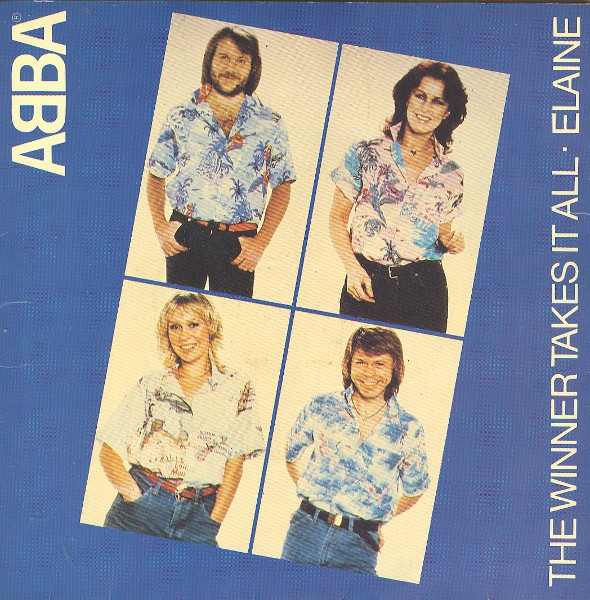
The Winner Takes It All – ABBA (1980)
Is it real? Or is it Memorex? The old cassette advert came to mind as WIS was persuaded to take a leap into the digital future to deep dive into the past at ABBA Voyage.
And so to the last of my retrospective posts on four musical events that we attended over six days in three different cities last month. Careful readers will have spotted that these were not presented in chronological order. And there is a reason I have adopted the 1-3-4 approach featuring Wilco, Brandi Carlile and Kid Creole and the Coconuts, skipping out the second in the series until now. The eagle-eyed pedants among you will also have spotted that I’ve never referred to the events collectively as “gigs”. And that’s because the second night in London was not a gig at all. My description of the Monday night, cheaper ticket trip to London Docklands to see ABBA Voyage with my daughter and her boyfriend is that it was “a digital musical event”. And, having had some time to reflect, I have tried to collate my thoughts on it, particularly in the light of the very real analogue thrill of seeing the three other live gigs before and afterwards.
But let’s start with pondering the popular music phenomenon that is ABBA. From their international breakthrough with the glam-pop of Waterloo at the 1974 Eurovision to their split and final recordings in 1982, they dominated the international music business and sold millions of records. Music snobs (and I know, as I am one of the worst!) would suggest that most of these records were sold to people who didn’t normally buy records. These same snobs would go on to suggest that ABBA became a byword for bland, sentimental music, lacking in artistic depth.
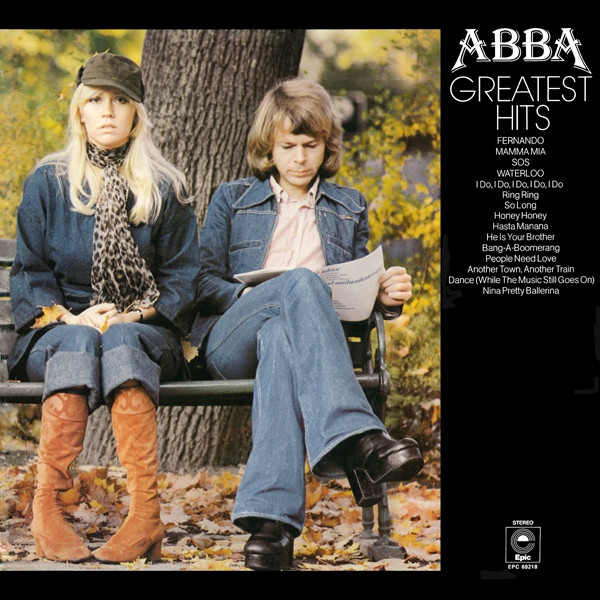
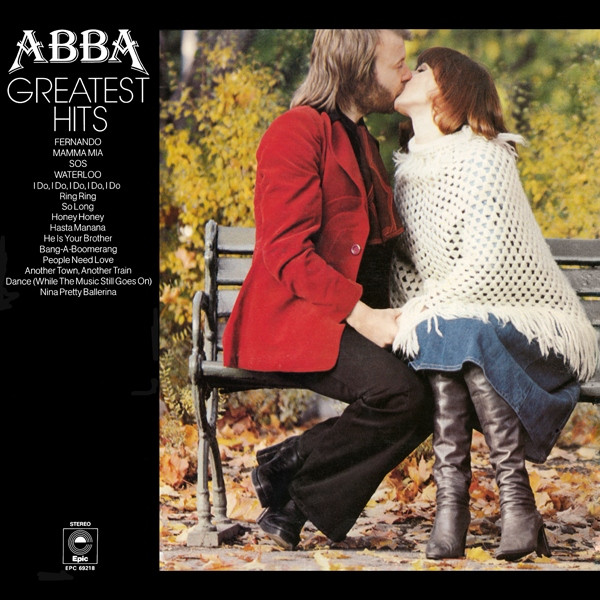
But, to mangle Mark Anthony and the Bard, I come to praise ABBA, not to bury them. It would be foolish not to accept that Benny Andersson and Björn Ulvaeus knew their way around a pop tune. They absolutely knew how to capture a melody, then dress it up to the nines musically in the studio and put it through the dazzling vocal chords of their respective partners at the time, Agnetha Fältskog and Anni-Frid Lyngstad. Yes, there were some atrocities along the way – I give you the gruesome Peruvian folk Bavarian oompa-band mash-up of Chiquitata, the deeply annoying pizzicato show-tune Money Money Money or the truly awful rock-disco of the Does Your Mother Know? with Björn singing ferchrissakes! But some honest reflection has to conclude there are some real pearls in that back catalogue.
Before we dip into these jewels and the assault on the senses that is the Voyage show, we probably need to get “ABBA the industry” out the way first. In the nostalgia-drenched world that we now live in, where popular music (and particularly popular music from the 70s and 80s) is ubiquitous and endemically woven through the fabric of society, it was inevitable that ABBA’s huge popularity with the late baby boomer generation would leak seamlessly into the media-savvy generations that have come after us. What else can explain the rush to the dance floor by kids, parents and grandparents at every wedding you’ve ever been to when the DJ finally and inevitably puts on Dancing Queen?
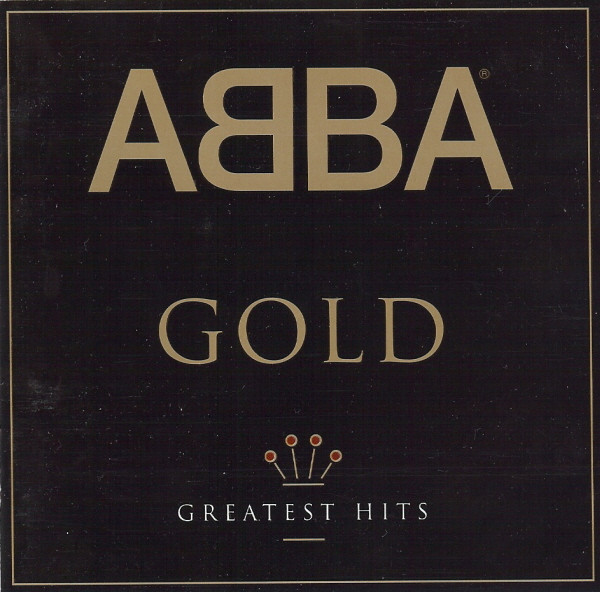
The generational jumping began with the release of the ABBA Gold greatest hits album in 1992, ten years after the band had gone their separate ways to underwhelming solo careers and writing equally underwhelming musicals. The CD format allowed those who bought the original vinyl and tapes in the 70s to have all the hits on a handy disc to play in the car on the school run. Gold has gone on to sell over 30 million copies worldwide and is re-released at every conceivable ABBA-related anniversary. Then came the idea to make the group’s songs into the first major jukebox musical with Mamma Mia! beginning its never-ending stage runs in 1999. And building on that tenuous exercise in linking unlinked songs, not one but two duff movies based on the musical followed to meet the seemingly insatiable global desire for the group’s music. So, something like Voyage was the almost inevitable next technological step in feeding the industrial behemoth that is the ABBA brand.

When I heard about the Voyage CGI digital ‘live’ show extravaganza, I was deeply sceptical – admittedly, my natural starting point on most things. I read all about the four original members performing in motion capture suits so they could be endlessly replicated performing the songs. Although I knew there would be live performers supporting ‘them’ to the side, I expected the stage-centre to look like a soulless video game. Everyone who had been, told me it was not like that. And, you know what? They were right!
I’ve read it took a breathtaking £140M investment to get it up and running but these mega-bucks have delivered something truly jaw-dropping. The bespoke venue looks amazing, and the audio from the 291 surround sound speakers thumps up through your feet. And, as the… erm… abbatars “rise up” through the floor of the stage, they are really quite astonishing.
I was initially put off by the four of them being located centrally but slightly ‘behind’ the live band playing stage right. But then the big side screens kicked in and there they were – their amazing younger selves, 30m high and all white smiles, perfect skin and fantastic, lustrous hair. Sometimes the occasional shimmer of an empty glassy eye gave the (name of the) game away, but overall it was far, far from a digital Madame Tussauds. Like any live gig, the “video” close-ups at the side of the stage are completely in sync with the abbatars in the band. At one point, ‘Frida’ takes her CGI mic off the CGI mic stand, and the damn mic stand wobbled slightly. It’s not even there! That’s how scary the technology is. There must be a huge bank of overheating servers somewhere in the Olympic Park processing all these pixels.
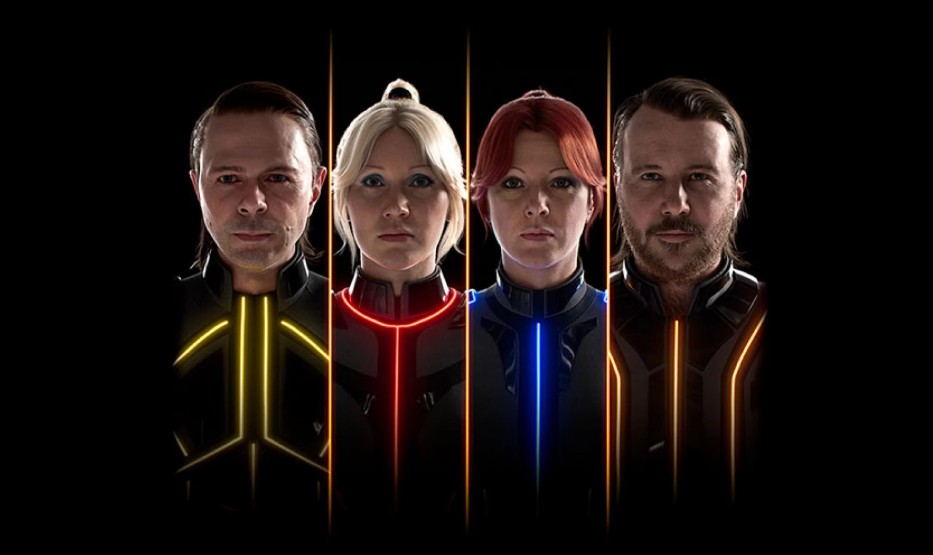
The show opens with the icy synth blast of The Visitors, the title track from their Scandi-noir final album in 1982 and I’m thinking, bloody hell, if you ignore the outfits, it’s like watching Kraftwerk. Later in the show, they put the outfit issue right when the abbatars appear in body-hugging, black ‘Tron’ suits, each with different coloured LED strips so they even look like Kraftwerk – kinda. I have to confess to having a bit of a Galaxy Bunny moment when I saw Agnetha in her perfect red lines!
And so it was that I spent so much of the first half of the set just getting my head around the mind-bending technology, that many of the famous tunes passed in a blur. However, I do recall absorbing the major/minor key changes in the sonic euphoria/lyrical despair of the brilliantly written SOS. The live band performing the music helped bring some ‘real life’ to the evening, even though the assorted nationalities of serious young musicians all looked like they had PhDs in their chosen instruments.
There was a bit of a drag in the middle of the set when the abbatars went off for costume change (or a cup of tea and a fag?) and the hall was treated to the Europe-only single Eagle, complete with a kind of new age hippy animation which looked like a very expensive Japanese video game. Huh? Attentions in the arena wandered at that point, but the crunching hits returned to get the crowd jumping again before the second challenge of the evening arrived with two songs from their 2021 Voyage comeback album. Clearly, many in the hall knew the tunes, but they got a polite rather than an enthusiastic response.
I can’t really forgive them for including two new tunes when one could have made way for the wonderful off-beat synth-pop of their final recording before they split in 1982, The Day Before You Came. Maybe as it only made No 32 in the UK, although it was rightly appreciated in Sweden and Norway, where it went top five.
But then it was time for the emotional master-stroke. After a short spoken intro by ‘Björn’, the CGI abbatars took a back seat while the iconic Waterloo Eurovision performance was projected onto gigantic gauze screens hanging over our heads across the full width of the stage. Like their CGI images, they were young again, but this time they took everyone over the age of 60 in the audience back with them. Suddenly, in one huge nostalgiac tug of the heartstrings, we were all sitting in our parents’ front rooms in 1974 in front of the telly, marvelling at Agnetha’s hat. And, hearing it for the zillionth time, it was the first time I noticed how much its chug-a-chug rhythm reminded me of Wizzard’s brilliant See My Baby Jive. Weird, eh?
From there, it was the run to the finish with the inevitable but cloying Thank You For The Music being shown up for what it was by the explosion of delight in the hall when the string glissando of the imperious Dancing Queen began. If a purpose-built arena full of aging people could go ape-shit crazy, it absolutely did. Even the old folks in their seats at the back were up dancing and, if not, they were certainly waving their walking sticks in the air!
Having been berated by my daughter on the way to the venue for answering her question of what I was looking forward to hearing with The Winner Takes It All (apparently, it’s not a party tune), I felt vindicated when its glorious descending piano line began for their last song. A reference to it in the Guardian once stated: “Writing about divorce is one thing; asking your ex-wife to sing it quite another.” Indeed. And, as she sings the lyrics, to get her to look straight into the camera with that blue eye shadow in the video, too! In my view, it is their masterpiece, once again mixing a hugely uplifting melody with the bleakest of lyrics. The drop to the end of that last verse with the drum fill over the spoken “But you see” before it bursts into the final chorus is terrific and that outro refrain is just perfect pop.
The finishing video curtain call by the band members as their ‘current selves’ somehow heightened the emotional connection that really shouldn’t have been there in a room full of mirrors. And everyone in the audience applauded them wildly, as if they were actually there. It was astonishing – and I can’t really explain why.
But this is surely a one-off – a brilliant visual trick which can only be played once. Having gone through the experience, I couldn’t imagine going to see it again – it was there in the moment, but the thrill has gone. I certainly could not envisage going to see another CGI-type show when there is so much live music with live musicians to experience, all of them uniquely interacting and feeding off their audiences – like Wilco, Brandi Carlile and even Kid Creole and the Coconuts! The digital genie is very much out that bottle and rumours of similar set-ups for Elvis or even the Beatles leave me completely cold. Forget Memorex and get the real thing.
Last Word
I know that was a lot of words but I’ve had a few weeks to think about it all. Thanks for getting this far if you did. I’m pretty sure, of all the blogs I’ve written, this is the one will divide opinion the most. My modest readership numbers could get even more modest!
Abba have now made their debut on the master playlist at the link below.
AR
If you enjoyed this, there is plenty more where that came from. Subscribers receive a link in their inbox every time a post is published, so you never miss out.
Contact the blog directly on weekinsound@hotmail.com
WIS FREQUENT FLIER TAG CLOUD
Allison Russell Amy Winehouse Aztec Camera Billy Bragg Blondie Brandi Carlile David Bowie Eels Elton John Elvis Costello & The Attractions Emmylou Harris Everything But The Girl Ezra Collective Faces Gang of Four Gil Scott-Heron Jason Isbell and the 400 Unit John Grant Johnny Cash John Prine Lucinda Williams Madness Nick Cave & The Bad Seeds Nick Lowe Paul Weller Prefab Sprout Public Service Broadcasting Ramones Sparks Steely Dan Steve Earle Talking Heads Taylor Swift The Beatles The Clash The Cure The Decemberists The Go-Betweens The Jam The National The Rolling Stones The Stranglers The Waterboys The Who Wilco
WIS VAULT SEARCH


 Week In Sound
Leave a reply to AGR45rpm Cancel reply