As the temperature drops, WIS turns up the heat and provides six tunes to warm the very cockles of your heart – whatever they are. Enjoy!

Golden Years – David Bowie (1975)
Last week’s blog was full of comparatively unusual choices so I’ve decided to open this week on more familiar ground. Very familiar ground actually. Released this week in 1975, Golden Years becomes the eighth Bowie tune to feature in these hallowed pages since the blog began back on 24 February 2023. It might be a surprise to some, but that’s two more than either The Clash or Wilco. It was Bowie’s seventeenth UK single released during the 1970s and was released as the lead track for his Thin White Duke-inspired Station To Station album which appeared in the shops in February 1976.
I have a very vivid memory of where I was when I first heard it. Every Sunday night we used to make the short journey to my Gran’s house for our tea. It was a family tradition that was rarely missed. The folding dining table was set out in the middle of my Gran’s living room and the good china came out. We sat on her dining room chairs which I think she got when she was married in 1925 – Lynn and I still have two of these chairs which we recently painted and re-upholstered to use with our new dining table. Although my sister and I were allowed to watch some TV, it was a bit frowned on, although my Gran did seem to enjoy The Golden Shot, ‘Bernie the Bolt’ and all. My obsession with pop music was tolerated and I was permitted to leave the table and sit in my long-deceased Grandpa’s armchair in the corner of the room and listen to the chart run-down on the radio as long as I kept the volume down. My Grandpa’s radio was one of those huge valve affairs with a glass plate displaying the European stations you could tune to on Short Wave – Luxembourg, Bruxelles, Munchen and, appropriately for this tune, Berlin were all there and firing my imagination.
Radio 1 could be found on 247m on the Medium Wave and in 1975 the all- important chart rundown, which was essential listening for the Monday morning playground discussions, was presented by the long forgotten Tom Browne. Browne had succeeded the first presenter Alan ‘Fluff’ Freeman in 1972. My glam-rock predilections had made me a major fan of Bowie’s Ronson-era work but, as he morphed into his white soul period, my 15-year-old self had stuck with the ‘rock’ bit of glam-rock and struggled a wee bit with his singles. I actually liked his slightly clumsy live version of Eddie Floyd’s Knock On Wood but the brilliance of Young Americans and Fame didn’t initially grab me that much. But on the night of Sunday 7 December, when Browne announced that Golden Years was a new entry into the Top 30 at No 19, suddenly it all made sense! I bought the single with its orange RCA label the next week.
Looking back, I can’t really say what caused this Saul-like conversion to the new Bowie. Maybe it was the deployment of the 50s doo-wop sounds, that wonderful circling guitar riff by Carlos Alomar or Bowie’s vocal range as he sweeps from those low “come get up, my baby” refrains up to the glorious high of the ““go-oh-oh-old” tag at the end of the bridge. Probably all of these, although the way he delivers the line “Wish upon, wish upon, day upon day, I believe, oh Lord, I believe all the way” most likely sealed the deal. Golden years, indeed.
Protection – Graham Parker & The Rumour (1979)
Graham Parker’s voice recently appeared on WIS when Dave Heatley’s excellent guest blog WIS 18Oct24 playlisted the Stone Foundation’s version of Earl Randle’s I’m Gonna Tear Your Playhouse Down. Parker was 74 on Monday this week and I thought it was a good reason to give him his first outing on the blog in his own right. Also, his name had just come up in Will Birch’s excellent biography of Nick Lowe which I’m reading at the moment. Parker had employed two of Lowe’s former bandmates in Brinsley Schwarz for his backing band The Rumour and Lowe got his first gig as a producer on their debut LP Howling Wind in early 1976 – “he was cheap” noted Rumour guitarist Martin Belmont.
Parker and the band had gigged hard in the pub-rock scene of 75/76 and began to gain critical acclaim for their songs and live performances. Their breakthrough came in March 1977 with cleverly titled The Pink Parker EP which made the UK top thirty on the back of Parker’s soulful cover of the Trammps’ Hold Back The Night. It got them a slot on TOTP but a follow-up hit from singles lifted from the more American-sounding third album Stick to Me escaped them. They released a live album in May 1978 but included a studio re-recording of Hey Lord Don’t Ask Me Questions from the debut LP which came out as a single and crept into the UK top forty.
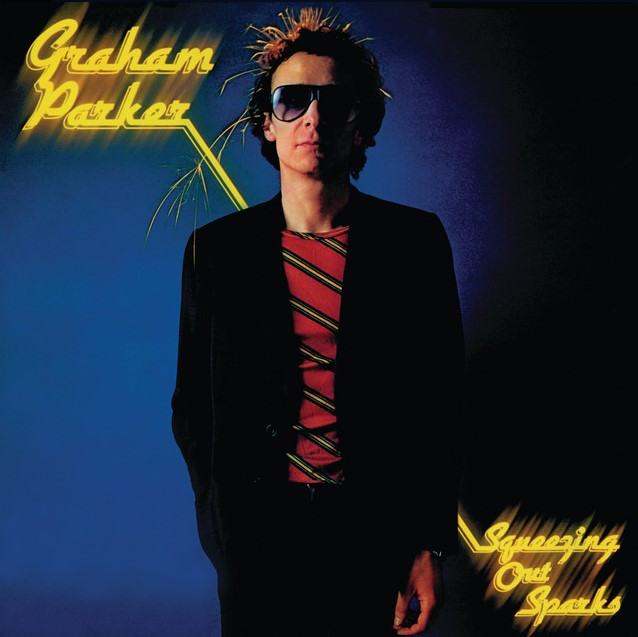
Parker’s fourth studio album Squeezing Out The Sparks was released in 1979 with a new producer, Jack Nitzsche. The former Spector apprentice gave the record a lean, more rock-orientated sound, dropping the horns which featured on all his previous recordings. Although I really enjoy the band’s earlier work, it is this album that I keep coming back to. Someone I knew at uni had the record and, in the fashion customary at the time, I borrowed it to tape it and listened to it a lot. In terms of choosing a song to playlist, I have decided to leave the brilliant but deeply sombre acoustic ballad You Can’t Be Strong until another occasion.
So I have gone for one of the three great singles taken from the LP which all failed to chart in the US or the UK – though the album made the UK top twenty and the NME’s top ten for 1979. Opening with a salvo against what he considered to be an unacceptable Churchill quote, Protection is one of Parker’s best lyrics – the line that really jumped out at me on first hearing was “It ain’t the knife in the heart that tears you apart/It’s just the thought of someone sticking it in”. Musically it has the white reggae rhythm he used on older records and I like the harmony vocal on the chorus leading a beat ahead on the word “no”. And Belmont’s guitar playing is terrific, as it is throughout the album.
Fun Fact – another of those NME 1979 top ten albums was The Clash’s London Calling where Strummer and Jones chose to widen the band’s sound by incorporating horn parts played by the Rumour’s horn section, hired just after they were dropped by Jack Nitzsche.
King of Oklahoma – Jason Isbell and the 400 Unit (2023)
In the build-up to the Usher Hall performance of Jason Isbell and the 400 Unit on Wednesday, I was pondering the history of my interest in what is now known as Americana music. It struck me that it probably began with a brief dalliance with the southern rock of Lynyrd Skynyrd as a 15-year-old but picked up steam again when Costello’s Almost Blue album in 1981 sent me off in search of Hank Williams, Johnny Cash and Gram Parsons. Then came the two NME country tapes: Neon West‘s old school selection in 1984 and The Tape With No Name’s new ‘alt-country’ in 1987. The latter fired my interest in the likes of Steve Earle, Dwight Yoakam, Lyle Lovett and John Prine which led me to a youthful Jeff Tweedy in Uncle Tupelo in the early 90s. Wilco and Son Volt then rose from the Uncle Tupelo ashes and the former were five albums in to their increasingly experimental career by the time Uncut magazine’s Americana 2004 covermount CD introduced me to Jesse Malin, Sun Kil Moon, Richmond Fontaine and The National.
So it was a mighty long way down (country) rock’n’roll. I was aware of the Drive-By Truckers in early 2000s and liked everything I heard by them. But it wasn’t until 2016 when I stumbled on an album called The Nashville Sound by Jason Isbell and the 400 Unit that I discovered that Isbell was a former member of the Truckers who had been pursuing a solo career since 2007. I was so taken by the strength of the songwriting on The Nashville Sound that I dipped back into his previous records and found a great mixture of acoustic folk songs and southern rock telling me it was not a one-off. Born in Alabama near the Tennessee state line, Isbell was steeped in bluegrass, gospel and country at home and encouraged by his grandparents to take up the mandolin and the guitar at a young age. He became a prolific songwriter with a publishing deal in Muscle Shoals by the time he was 21. His early solo career was impacted by a drug and alcohol addiction from his time with the Truckers. But he got sober in 2012 and this inspired his fourth album Southeastern which won the 2014 Americana Album of the Year and drew praise from Bruce Springsteen and John Prine.
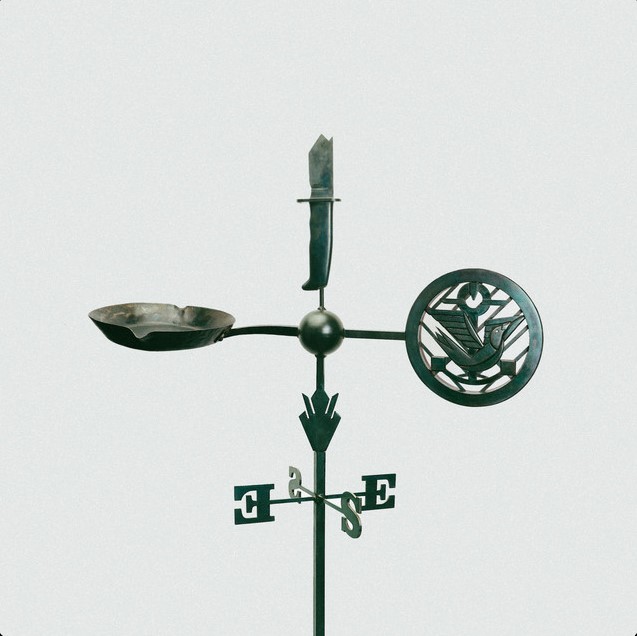
In my mind, there are some parallels with Springsteen in Isbell’s work. His songs can be hopelessly romantic and the characters in his stories are mostly blue-collar southern folk down on their luck and often in troubled relationships. Arguably, the kind of people who might have put Trump back in the White House, but Isbell is no MAGA sympathiser – there is a beauty and deep empathy in him when he sings in his southern drawl, clearly driven by a desire for things and people to be better. On stage this week, the band put in a tight performance which matched the power and emotional heft of Isbell’s songwriting. There was a lot more rock in his live sound than there was the last time we saw him in 2017 in Glasgow – several songs get extended guitar workouts with Isbell’s gold Les Paul trading licks with fellow guitarist Sadler Vaden’s cherry Gibson SG. But he was still able to switch back to his Martin acoustic and hush the hall with a breathtaking delivery of the devastating Elephant and the romantic howl of Cover Me Up. I’ve decided to playlist my favourite track from his latest LP Weathervanes, which ignited the audience when it was played second in the set. King of Oklahoma is a typical Isbell blue-collar tale of someone falling between the cracks as dependency and life struggles lead to a relationship break up. The soaring chorus declares: “And she used to make me feel like the King of Oklahoma/But nothing makes me feel like much of nothing anymore”.
Going Back Home (Live) – Dr Feelgood (1976)
Thursday saw the anniversary of the death of Wilko Johnson in 2022 and this allows me to rectify the absence of Dr Feelgood on the blog’s Master Playlist. The Feelgoods also came up in Will Birch’s Nick Lowe biography mentioned above, where they were being cited as the pub-rock band nobody wanted as a support act as no one could top the energy of their live performances.
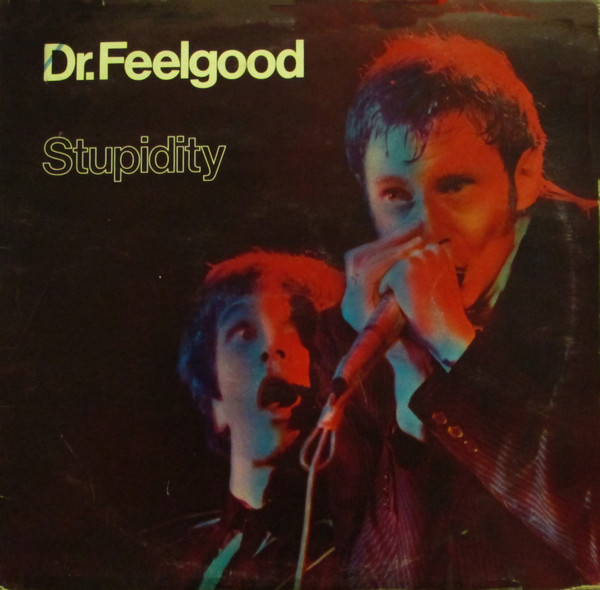
The band famously formed in Canvey Island in 1971, taking their name from American blues pianist Piano Red’s alter-ego. They had a unique R&B sound which was based around Johnson’s unusual percussive guitar style where he didn’t use a plectrum but strummed and picked with his fingers. In this way, he could play rhythm and riffs simultaneously on his beloved 1962 Fender Telecaster. He used to do this while manically strutting backward and forwards around the stage in time to his choppy playing. Singer and harmonica player Lee Brilleaux formed a formidable front of stage partnership with Johnson as can be seen from the image illustrating this track. And he could really play that blues harp! Backed by an equally formidable rhythm section of John B Sparks on bass and ‘The Big Figure’ on drums, this was as tight an R’n’B combo as you could find.
Their highly influential debut album Down By The Jetty was released in January 1975 and featured the iconic monochrome photo of the band with an oil tanker in the background taken on the sea wall at Canvey Island outside The Lobster Smack pub. The record featured a mix of Johnson originals and R’n’B covers as did their second LP Malpractice which followed nine months later. Given their live reputation, it was no surprise that their third LP release, Stupidity in 1976, was a live album. Although their five singles up until this point had failed to sell, Stupidity was a huge commercial success, topping the UK album chart in October that year.
Recorded at two gigs, side one at Sheffield City Hall and side two at the Southend Kursaal, it was another LP that I purloined by home-taping, I think from my school-mate Davie Ross? He must have been in early, as my tape had the band’s cover of Leiber and Stoller’s Riot in Cell Block No9 which was included on a bonus 7″ single with the first 20,000 copies of the LP. But I’m going to playlist the opening track on the Southend side, the blistering Going Back Home which Johnson wrote with Mick Green, guitarist with Johnny Kidd and The Pirates and whose playing style Johnson had adopted. The track is a perfect demonstration of Johnson’s guitar work and Brilleaux’s harmonica solos in the middle and during the outro are just fabulous. I wish I had seen them play at the time but at least there is this video of the track from the Kursaal gig to enjoy.
Fun Fact – Paul Weller was a huge fan of the Feelgoods and the cover of their first LP Down By The Jetty can just be made out among all the other music-related parphernalia on the gatefold sleeve photo on The Style Council’s second LP, Our Favourite Shop.
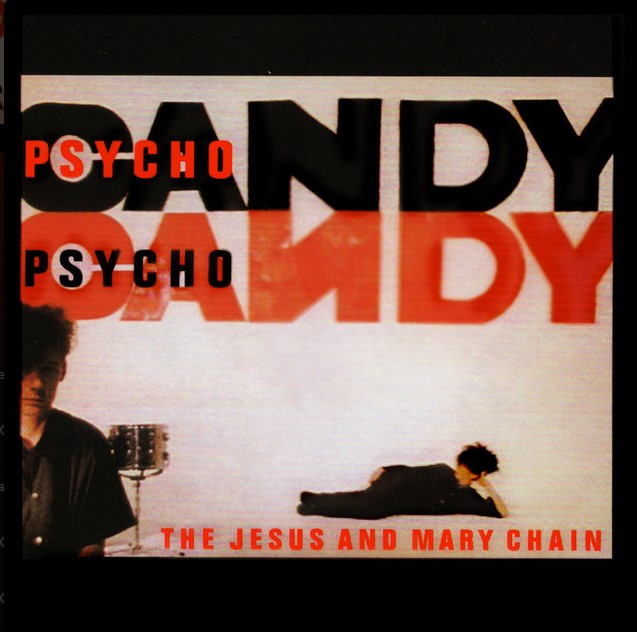
Sowing Seeds – The Jesus and Mary Chain (1985)
Psychocandy is thirty nine years old this week and including a track from it is a no-brainer for this week’s blog. From this distance, it’s hard to imagine the furore created by the rise of the Jaz and Maz boys, who willfully kicked against the shiny happy sounds of the 80s pop music industry such that the tabloids dubbed them ‘the most notorious band since the Sex Pistols’. In their East Kilbride bedroom, quarrelsome brothers William and Jim Reid had dreamed up the concept of a band which had the attitude of the Velvet Underground and the songs of the Shangri-Las. Along with bass player Douglas Hart, in 1983 they bought a Portastudio with £300 of their father’s redundancy money (it was the early 80s after all!) and set about recording some demos. When the initial results sounded like the Ramones, they hit upon the idea of adding layers of feedback and their legend was born. They were unable to get a gig in Glasgow where they weren’t part of the scene but one of their demos found its way into the hands of Primal Scream’s Bobby Gillespie who in turn gave it to Creation Records’ Alan McGee.
McGee invited them down to London to play a gig and, after a hot afternoon spent drinking, he watched as the band’s chaotic soundcheck collapsed as the Reid brothers began arguing and then exchanged blows. McGee signed them on the spot and soon the feedback-drenched first single Upside Down was recorded and 1,000 copies released. It was a revelation and quickly sold out, with re-prints ordered such that it ended up selling some 50,000 copies. Meanwhile, the McGee hype machine got them press coverage and gigs where the band’s short, anarchic sets and sullen audience-baiting often resulted in bottles being thrown and trouble breaking out – compared with today’s venues, security was in short supply. Their carefully created reputation of cultured menace grew and they signed a deal with Warner’s imprint Blanco y Negro, releasing the noise-filled Never Understand and You Trip Me Up singles during the first half of 1985. But it was the release of the slower Just Like Honey in September 1985 that illustrated there were maybe songs hiding behind the hype and the cacophony.
And so it was that the debut LP was a surprise to many. There were still moments that felt that you were listening in a wind-tunnel while being sandblasted but there were also moments where the depth and maturity of the song-writing shone through. These moments could often occur in the same song and it was this combination of feedback and noise with classic pop melodies and structures that made the album so influential. When I listen to the LP nowadays it still thrills, even after all these years. My favourite track back then remains my favourite today and I’m playlisting Sowing Seeds from midway through the second side. Opening with the same ‘Be My Baby’ drumbeat that begins Just Like Honey (and Roy Wood used for Angel Fingers last week!), Sowing Seeds is one of the less noise-filled tracks, using drop-outs for the short chorus but quickly building the layers of overdriven guitars afterwards. I particularly love the way the second chorus allows the vocal line to follow the melody down to the final resonating chord.
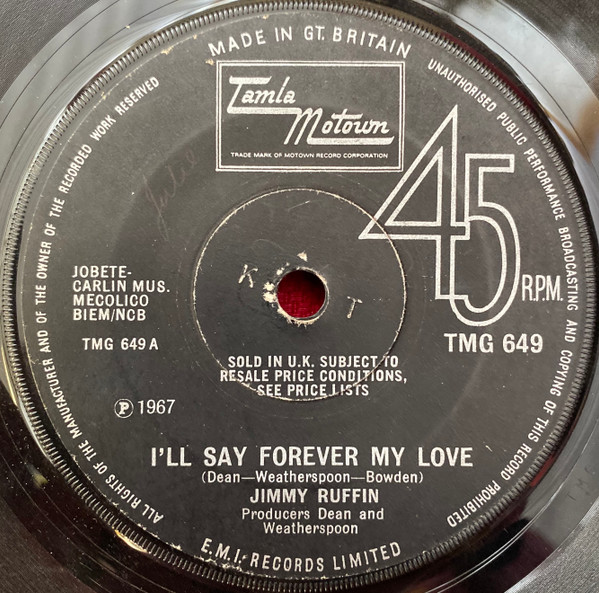
Jimmy Ruffin – I’ll Say Forever My Love (1968)
This week saw the anniversary of the death of American soul singer Jimmy Ruffin in 2014 aged 78. As a young man at the start of the 60s, Jimmy had a contract as a session singer with Motown Records but got drafted for national service. On his return, he was offered the job as the lead singer with The Temptations but was keen on building a solo career and so suggested that the label hire his brother David. They did and while The Temptations went on to have a series of top ten hits throughout the 60s, Jimmy only had one major hit single as a solo artist – but what a hit! The soaring anguish of What Becomes of the Brokenhearted guaranteed Ruffin soul greatness, reaching No7 in the Billboard chart in 1966. It also made No8 in the UK at that time and then it reached No4 eight years later in 1974 when it was re-released and caught my teenage ear for the first time.
Inevitably, Ruffin struggled to surpass that success but he did have a couple of UK top ten hits in 1970 that I was unaware of until I heard about one of them in unusual circumstances in 1985. I had just purchased the “difficult” third LP by Dexy’s Midnight Runners where Kevin Rowland had left his Too-Rye-Ay dungarees and donned his Brooks Brothers suit to deliver the mad masterpiece that is Don’t Stand Me Down. It uses extensive monologues within the songs and one track Reminisce Pt 2 is virtually all spoken word as Rowland does as the title says – he nostalgically reminisces about a teenage love affair and the music that defined it:
“We were both 16, they were sweet, warm nights and it’s a fond memory now. We decided we should adopt a song, a song that was current. She wanted I’ll Say Forever, My Love by Jimmy Ruffin, I wanted it to be Lola by The Kinks. Well, she won. It was never really acknowledged but I’ll Say Forever became the song.”
The gentle track plays out with Rowland singing the refrain from Ruffin’s tune, which was pretty much the melody of the backing music to the monologue. I immediately sought out a copy of the Ruffin song on a hits compilation and, since then, the romantic rush of I’ll Say Forever has made it my favourite Jimmy Ruffin tune, despite the utter brilliance of his one big hit. Who can resist: “Just ask me how long I’ll need you/Go on and ask me how long I’ll love you/ And
I’ll say forever, my love”.
Last Word
Another blog put to bed and we’re wrapped up warm to head off into the capital city for another gig. I’ll need to pick that one up the week after next as I have a theme planned for next week. No spoilers!
The Master Playlist rumbles ever onwards weighed down with the wonder of great tunes including this week’s picks.
AR
If you enjoyed this, there is plenty more where that came from. Subscribers receive a link in their inbox every Friday evening at 5pm UK time. You can’t start the weekend without it.


 Week In Sound
Leave a reply to WIS 20 Jun 2025 – Week In Sound Cancel reply