From an Indian Summer to ice on the windscreen of the car in one week – only Scotland can do this! Another six cracking tunes for you. Enjoy!
Wake Me Up When September Ends – Green Day (2004)
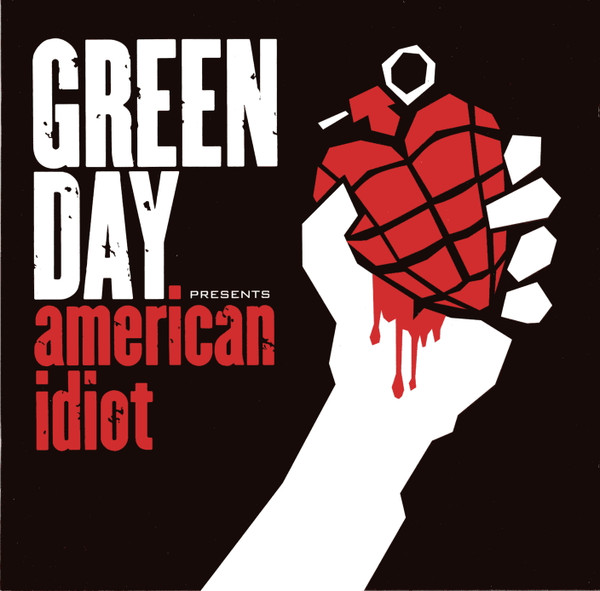
At the start of last September, I recall playlisting Ian McCulloch’s version of September Song. So, it feels right to mark the end of this September with this appropriately named track from Californian skate-punk band Green Day. Wake Me Up When September Ends was the fourth of five singles lifted from their hugely successful UK/US No1 album American Idiot which was released this week in 2004. The three-piece led by Billie Joe Armstrong had formed out of the late 80s/early 90s Bay Area punk scene which emerged from Berkeley and they came to prominence in 1994 with their third LP Dookie. This was their first album on a major label and sold bucketloads reaching No2 in the US and went top twenty in the UK. The singles Basket Case, Welcome to Paradise and When I Come Around all went into the UK top twenty.
In March 2004, we took our then-young kids to their first gig to see Busted at the SEC in Glasgow. The band’s pop-punk sound was the popular choice in sensible primary school playgrounds across the country. Their first two albums and their associated hit singles were hugely popular in our house. Following that gig, my seven-year old son and his pals decided that Green Day was the next big band for them when the blistering title track from American Idiot was released as a single in August 2004. From the point of view of someone who saw The Clash in 1977 when he was seventeen, watching Angus follow this route into music was strangely pleasing for me. He soon diversified into other genres following the trends in the playground but having the American Idiot CD under the Christmas tree that year did make me smile.
American Idiot was Green Day’s attempt at a concept album, a so-called “punk rock opera” which followed the story of a lower-middle-class American adolescent anti-hero dubbed Jesus of Suburbia. Understandably influenced more by The Who’s Quadrophenia than Pink Floyd’s The Wall, the album draws on contemporary American political events, particularly 9/11, the Iraq War and the presidency of George W. Bush. When September Ends is a guitar ballad with lyrics that offer multiple interpretations. In terms of the narrative arc of the album, it sees the Jesus of Suburbia being nostalgic for the family and friends he has left behind on his journey. In the song, Armstrong also makes several personal references to the death of his father when he was only ten: “Like my father’s come to pass/twenty years have gone so fast”. And it is hard not to draw an inference in the lyrics about the victims of the 9/11 attacks: “Summer has come and past, the innocent can never last”.

The Future – Leonard Cohen (1992)
Had he still been with us, Saturday would have been the 90th birthday of Leonard Cohen. He’s never had a spin on WIS before so it seemed like an opportunity to put that right. A quick check of his Wikipedia page told me the following about the Canadian singer-songwriter and poet: ‘Themes commonly explored throughout his work include faith and mortality, isolation and depression, betrayal and redemption, social and political conflict, and sexual and romantic love, desire, regret, and loss’. Despite the preponderance of Oxford commas in that list, he sounds like someone who should be right up my miserable street. And he is, but only to an extent. Like other artists of his era and genre, I recognise that he has an amazing body of work. However, I find his vocal style difficult to listen to on any extended basis and hence my consumption of his art is mainly through those who have covered and/or re-interpreted his songs. And there is no shortage of artists that I admire who have reached for his work to record themselves.
However, rather than opt for one of my favourite Lenny covers, I decided to playlist an original Cohen track on this week’s blog. His recording career began in 1967 and his first few folk-sounding albums were successful in the UK and reasonably so in the US. But there then followed a slow decline in popularity during the 1970s until, by the time of 1984’s Various Positions LP, his record label Columbia refused to release and promote it in the US, relying instead on Canadian imports. This is quite remarkable when you consider that the album contains his now best-known and most covered song, Hallelujah. It, of course, went on to be covered by John Cale in 1991, and this inspired what some consider as the definitive recording by Jeff Buckley in 1994. Following this, there was a huge pile-on (partly down to Cale’s version being on the Shrek soundtrack in 2001!) which culminated with the nonsense of Alexandra Burke’s vocal gymnastics when she used it to win the final of the UK X-Factor reality TV show in 2008.
But before Hallelujah got a life of it’s own, Cohen recorded two notable albums using more contemporary electronic instrumentation – 1988’s I’m Your Man and 1992’s The Future. Both were hailed by the critics and formed a new phase in his career and they provided concert staples for Cohen and more cover opportunities for other artists (eg First We Take Manhattan, Tower Of Song and Anthem). I have chosen the apocalyptic title track from the 1992 album to playlist. Given the bleak themes of his work that I listed above, it’s no surprise he was able to come up with this toe-tapper on the moral decay at the end of the world. The music grooves along nicely as Cohen lays out his terrifying visions, almost sounding like he’s enjoying it all. “Give me back the Berlin Wall/Give me Stalin and St Paul/I’ve seen the future, brother/It is murder”. Cheers, Len!
Cosmic Dancer – T.Rex (1971)
Electric Warrior, the second album by T.Rex, was released on 24 September 1971, an incredible 53 years ago. The band featured in WIS 19Apr24 where I went crazy and playlisted both sides of Jeepster, the first single I ever bought. Yes – two songs by the same band in one blog – I know, what am I like? Both Jeepster and its b-side Life’s A Gas are included on Electric Warrior and were released on the 7 inch 45rpm format on 1 November 1971, five weeks after the LP. The other single on the album was Get It On which had been released before the album in July. This had been preceded by Hot Love in February which was released as a stand-alone single. Just before that, the band’s debut single with their abbreviated name, Ride A White Swan had just been pipped for the 1970 Christmas No 1 by the might of Clive Dunn’s epic Grandad. So it’s fair to say there was a lot going on for the boy Bolan at this time. Indeed, his appearance on Top of the Pops in March 1971 to perform Hot Love with glitter on his cheeks under his eyes is said by some to have been “the start of glam rock”. I remember it well – it was the talk of the playground the next day.
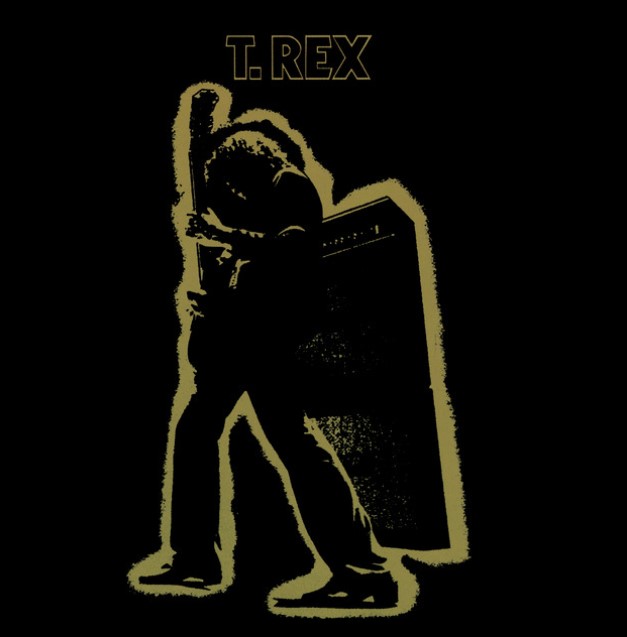
Electric Warrior continued Bolan’s musical move away from the dragons and sorcery fantasy imagery of his folky acoustic Tyrannosaurus Rex days, which had begun under the controlling hand of producer Tony Visconti on the T.Rex ‘debut’ album. The title of Electric Warrior left you in no doubt this was a rock record and the Hipgnosis-designed cover art with the gold edges around the photo of Bolan and his guitar amp arguably made it the first glam rock album. It is cited by people like Paul Weller and Robert Smith as being an inspiration for their careers. It appears Bolan had played a Fender Stratocaster on early demo versions of Cosmic Dancer but, like Life’s A Gas, he realised that this was one of the few tracks that couldn’t be glammed up and sensibly picked up his acoustic guitar again. The Strat provides the wonky reverse guitar solo in the drum-laden outro, while Visconti’s inspired string arrangements throughout give a real lift to the song.
Being a singles boy back when I was 11, I only heard the album a couple of times at my friend Alan McKean’s house and Cosmic Dancer didn’t register with me. Like many others, it leapt out at me when it was used so cleverly on the soundtrack to the Billy Elliot film in 2000. It had been covered by Morrissey in the early 90s and there is a recording of a one-off duet he did with David Bowie during an encore at a Los Angeles concert in 1991. More recently, Nick Cave recorded a great version for a Bolan tribute album, with a clarinet providing the solo in an extended outro which is well worth a listen.
Complete Control – The Clash (1977)
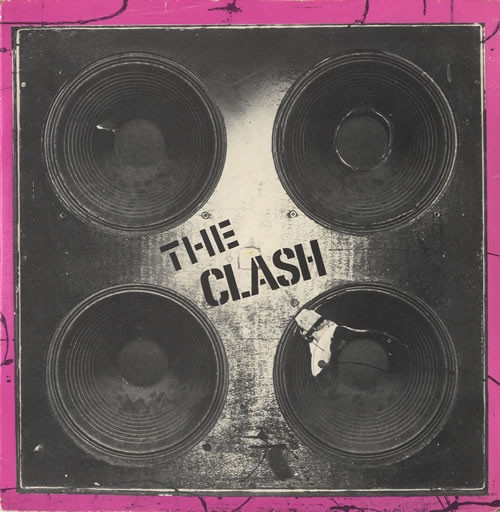
I mentioned The Clash above and there is a school of thought that they appear too often on this blog. But they’ve only been on once this year in May so the anniversary of the release of their third single on 23 September 1977 seems to be as good a time as any to have the self-styled ‘only band that matters’ on again. In this humble scribe’s opinion, the seven inches of vinyl that is Complete Control is their finest moment, although White Man In Hammersmith Palais runs it a very close second. Let’s start with the cover which is as iconic an image for me as that Pennie Smith photo of Paul Simonon smashing his bass on the cover of London Calling. Complete Control‘s simple photo of Simonon’s pink bass cabinet with a torn speaker cone with their name in the middle in stencil text is hugely evocative of the era. It is one of my favourite single covers and a prized possession on my shelf.
And then there is the music. The band were upset by their record company’s decision to release the track Remote Control from their first LP as a single against their wishes and Complete Control is their riposte to this. The Mick Jones lyric is a powerful polemic on the influence of managers and labels on the creative freedom of bands: “They said we’d be artistically free/When we signed that bit of paper/They meant ‘Let’s make a lots of money/And worry about it later’ “ It was as heartfelt as it was naive – as John Peel said at the time, when you sign with CBS Records, you can’t expect it to be an arts foundation. The song also documents the band’s troubles with the police when on tour and, in the brilliant ‘Joe Public’ riffing by Strummer in the outro, he can’t resist goading the tabloid’s approach to punk bands: “They’re dirty, they’re filthy and they ain’t gonna last!”.
The track was recorded in Whitechapel and was the first Clash session to feature drummer Topper Headon. While still rooted in punk, you can hear them taking their first tentative steps into more complex song structures with the instrumentation in the coda and Jones’ distinctive nasal backing vocal balancing Strummer’s barking. It was produced by reggae icon Lee “Scratch” Perry who apparently blew the studio mixing board trying to get the deepest sound out of Simonon’s bass. Jones has said that while they were pleased with Perry’s work, they did some adjustments to the mix to reduce the echo and bring out the guitars. And boy, do those guitars stand out. I am guilty of using the word ‘blistering’ too much on this blog, but it is the only word to describe it. It’s anthemic stuff – and what a way to finish a song as well!
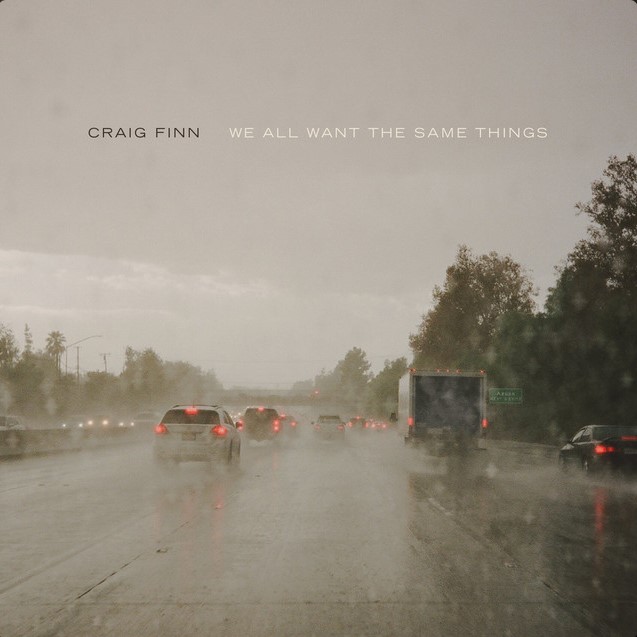
God In Chicago – Craig Finn (2017)
So this is a track that I have been looking for a chance to playlist on WIS since it was trailed in a post way back on WIS 28Apr23. I was thinking of including it in a Chicago-themed blog at one point and as part of a ‘spoken word’ theme too. But I never quite got round to pulling these together. So, when it came up on one of Lynn’s playlists this week, I thought, sod it, I’m using that tenuous link to get it into this week’s edition. The track was trailed as Craig Finn is the singer from The Hold Steady who were on the blog back then and then on again in the Springsteen covers week in June 23 with their great version Atlantic City. Looking back to what I said about Finn as a writer it is particularly relevant to this track, so to save you looking it up I am going shamelessly reproduce it here!
Finn has a very distinctive voice and has been described as a “lyrically dense story-teller” – a favourite idiom of mine! He loves developing involved song narratives that feature (sometimes recurring) characters who live complex and difficult lives “in the dark parts of big Midwestern cities”. In his strange but fascinating songs, people work in humdrum jobs, scraping to get by and issues of substance abuse recovery/lapses can arise. People move from town to town in search of work and crash in and out of difficult relationships in a very American way.
God In Chicago is a song taken from Finn’s 2017 solo album We All Want The Same Things. It is a stripped-back masterpiece of first-person story-telling, where a whole canvas is filled with brief brushstrokes from the carefully chosen details in his spoken-word lyric. The imagery is captivating throughout beginning with the deftly handled set-up in the opening lines: “Her mom found her brother/Then she found the container/Wrapped up in a newspaper/Stuffed in a duffel bag/With hockey pads and seven grand in rubber bands”. The forlorn solo piano takes us onward and by the time “Wayne from Winnetka picked up on the first ring”, you are completely hooked. The arrival of the drum part signals the journey, complete with tales of wobbly boom box harmonies on 1999 and Led Zep III. And then, once the deed is done, there is the glorious switch to Finn singing along with Charlie’s sister’s words “I’ve never been to Chicago”. The description of the inevitable night where they both want the same things is brilliantly handled as is the drop into instrumental break for the morning after. And the abrupt final line tells us so little but also so much.
For those who read the posts as they listen to each track, I’m going to insist you stop now and go back to the start of this incredible song and just listen without reading as the story unfolds around you. It is mesmerising.
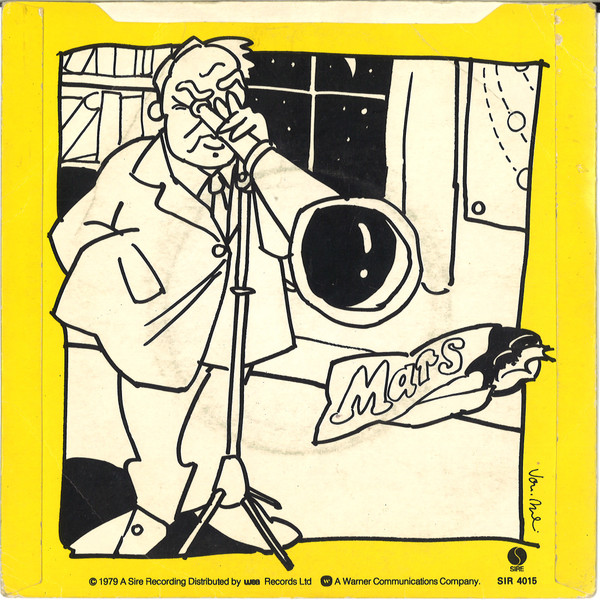
Mars Bars – The Undertones (1979)
After the emotional heft of that last track, I think we need something to finish with something to cheer us up. By the time some of you are reading this on Friday evening, I will be standing in the O2 Academy in Edinburgh watching The Undertones, some 44 years after I last saw them. The full story of that first (and second) time in May 1980 was laid out in all its Glasgow Apollo backstage pass glory when I last playlisted the band on the blog in WIS 19May23. Normally, I would wait until after seeing the band to playlist a track and do a bit of a gig review in the process. But as you will see below, next week’s blog is going to be a theme week and then we have a guest blog, so I’m going to squeeze in a track from Derry’s finest this week, in the expectation that it will be a great gig.
Formed in Derry in 1974 by five likely lads with an ear for the Beatles and The Small Faces, by 1976 they were being influenced by punk bands like Buzzcocks and the Ramones – not for nothing is there a monochrome photo of the band on a brick wall on the cover of their first LP! After Teenage Kicks launched them on the world, the band produced a series of terrific catchy singles but I was toying with choosing something from the band’s third album in 1981, The Positive Touch, where they took the punky guitar-pop joie de vivre of their first two albums and added some light and shade to the structure of their tunes in songs like When Saturday Comes and Julie Ocean. But then I thought, do you know what? We need a laugh so let’s just go back to their earlier work and playlist one of my favourites, the knowingly daft Mars Bar from the b-side of third single Jimmy Jimmy. This ode to the claimed health benefits of the chocolate bar – apparently it helps you work, rest and play – was written by guitarist Damian O’Neil (see the Apollo story!) and bassist Mickey Bradley, he of the excellent radio show on BBC NI on Friday nights. It’s a total joy from the advert theme start to its brilliant crescendo finish as the long-departed Feargal Sharkey gives everything to what I assume are Bradley’s witty lyrics. TV astronomer Patrick Moore gets a namecheck as well as David Bowie, just like the Human League on My Perfect Cousin (another Damian/Mickey co-write). The words in the bridge are terrific: “There’s glucose for energy/Caramel for strength/The chocolate’s only there/To keep it the right length”. They rarely play it live so I’m keeping my fingers crossed it gets an outing on Friday night!
Fun Fact: The opening track on the Undertones second album is a play on words using the slightly arty name of the second album by Sire labelmates Talking Heads, More Songs About Buildings and Food. Damian O’Neil came up with More Songs About Chocolate and Girls. Class.
Last Word
As hinted above, there is a theme lined up for next week, something I’ve been meaning to do for a while. And then we have a guest blog debut from my friend John Linnett whose contribution comes all the way from Frankfurt. So it will be Friday 18 Oct before the weekly ‘dream it up on the spot and bash it out’ format that you know and love returns.
If I remember to add them, the tracks on John’s guest blog will take the Master Playlist past the 500 songs mark. So I expect the 18 Oct WIS might have some reflections on this. Maybe.
AR


Leave a comment