Perplexingly written in the heat of an Indian Summer out on the Fife Coastal Path, this week’s six tunes come with usual ramblings. Enjoy!
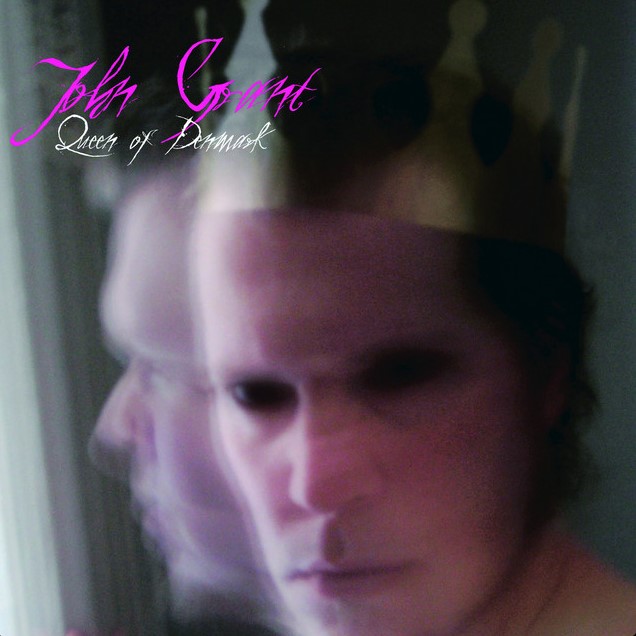
Sigourney Weaver – John Grant (2010)
After the adrenaline rush as I finished writing last week’s blog at 16.56, the evening required a large gin to kick it off. Then we opened a lovely bottle of Muscadet which we got a few weeks back in our ‘no more than 6 Euros’ supermarket sweep in Normandy before leaving France. As the bottle and the evening finished, I found myself in the corner of the sofa transfixed by the opening scenes of Ridley Scott’s original Alien movie which the BBC were showing as the late film. As the ‘must-see’ movie of 1979, I’ve probably watched it a couple of times since then (when I was 19!), but not in a long time. I was fascinated to see that, while the story hadn’t really dated, the view of the technological future it portrayed had. While Scott’s vision of the crashed alien craft with the living eggs was still amazing and the external look of massive mining spaceship seemed right, it was the controls and screens on board the ship that made me smile. Everything was controlled with a physical switch, some of the equipment had power cords and every screen was a curved cathode-ray type. Even better was these screens were generally projecting data and code in flashing green type on a black screen and the occasional more ‘graphically rich’ navigation screens were 2D linear images. Still a great film, though.
Seeing the movie again gives me the chance to playlist this great track from John Grant’s 2010 debut solo album Queen of Denmark. Grant began his musical career in 1994 as a founder member in Denver band The Czars where he was pianist, singer and principal songwriter before they split in the early noughties. The covermount CD of The Word magazine in May 2010 included his song Marz taken from Queen of Denmark which had been released in April. I was amazed by his baritone voice set against his piano supplemented by layers and layers of 70s analogue synths. The song appears to be an elegy for a sweetshop of his childhood and all the ice creams they used to sell. It was like being in a time-warp listening to it and while Sigourney Weaver is more piano-led, the synths hover in the background at the opening and come squeaking back into the bridge towards the end. Like most of the tracks on the record, the song has a gorgeous melody and the drops into the harmony chorus sections are terrific, particularly when the descending guitar figures kick in. The Weaver Alien reference is funny as is his putdown of poor Winona Ryder. Not for her appearance in the fourth Alien movie alongside Weaver, but for her and the unnamed Keanu Reeves’ terrible attempts to act with a British accent in Bram Stoker’s Dracula. Facing up to Gary Oldman must have been a tough gig, though.

What Is It About Men – Amy Winehouse (2003)
It must have been movie weekend in our house because on Saturday night we finally got round to seeing the Amy Winehouse biopic, Back to Black. The poor reviews when it came out prompted an entry of the blog on WIS 19Apr24 where I playlisted Just Friends which was a personal favourite of mine from her Back To Black LP. However, I see now that I included a graphic for the single You Know I’m No Good which suggests I began with that track and forgot to edit the image – I’m clearly an amateur at this blogging stuff! Looking back at that piece after watching the film, I can see that there was a huge challenge for newcomer actress Marisa Abela to take on the role of such a well-known and unique character without falling into parody which happened a few times. And I also agreed with some critics that the film seemed to blame no-one but the paparazzi for her sad demise with her father painted very sympathetically and even the dubious Blake Fielder-Civil made to look no worse than a lovable rogue. I have to say I enjoyed the film while watching it but, on reflection, it does gloss over the ugly reality of her addiction and the impact that the pop industry (not just the tabloids) can have on someone as “lost” as Winehouse.
What the film did make me do though was dig out her first LP Frank, tracks from which feature strongly in the movie but which I am much less familiar with than her second record. Winehouse was famously critical of Frank in its aftermath but this seems more around a disatisfaction with her management and the people involved in the promotion of the LP rather than the songs themselves. The track that jumped out at me was What Is It About Men, particularly when she sings knowingly: “My destructive side has grown a mile wide/And I question myself again: what is it ’bout men?”. I love the way the guitar part crys throughout in the background and how the horn figure comes in at times to lift the sound of the choruses. I found a live version of her playing it at the North Sea Jazz Festival where her intro suggests she wrote it about her dad but insisted that it was some time ago and “everything was fine now”. Hmmm. Anyway, I’ve kept with the studio version as I like the instrumentation more.
Memo From Turner – Mick Jagger (1970)
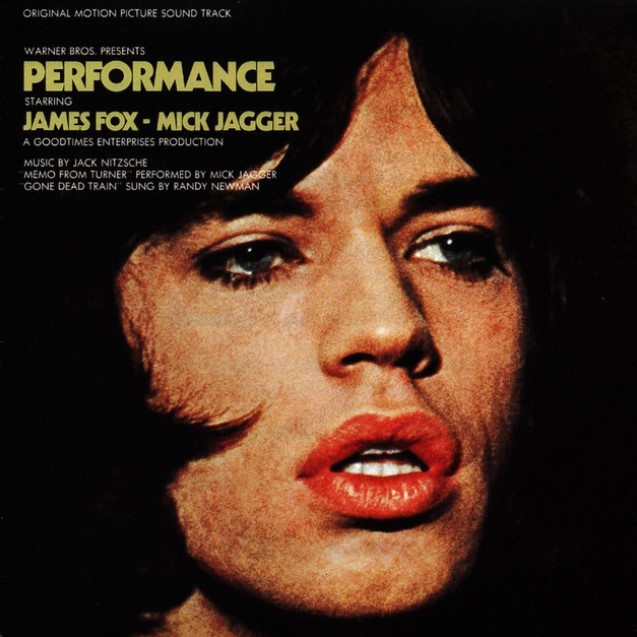
The last in a triptych of film connections this week brings us to this Mick Jagger tune taken from the Performance soundtrack album which was released this week in 1970. Unlike Alien or Back To Black, I’ve never seen Performance, although I was aware of it as a movie of its time. I only became aware of this great song from the soundtrack a couple of years ago when it came up on a playlist I was listening to.
Let’s deal with the movie first. It’s a 1970 British crime drama directed by Donald Cammell and Nicolas Roeg – the man who went on to make Walkabout, Don’t Look Now and The Man Who Fell To Earth. (I’ve seen these ones!) Held back by two years from its production in 1968 due to concerns over its content, Performance stars James Fox as a violent and ambitious London gangster who, after killing an old friend, goes into hiding at the home of a reclusive rock star played by Mick Jagger. In short, it got panned by the critics on release but gradually acquired a cult following on the late-night cinema circuit and has undergone a critical reappraisal. So much so that in 1999, it was voted the 48th greatest British film of the 20th century by the British Film Institute. I guess I should try and see it sometime, eh?
The plan was that Jagger and Keith Richards would write the soundtrack, but since Jagger was acting out sex scenes in the movie with Richards’ then-squeeze Anita Palenberg, artistic endeavours by the Glimmer Twins were tricky and only one track emerged. The soundtrack ended up featuring music from Randy Newman, Ry Cooder, Buffy Sainte-Marie and the playlisted track by Mick Jagger, whose character’s name was Turner. Written by Jagger/Richards, Memo From Turner was featured heavily in the film and, released as a single in the UK, where it reached No 32 in the charts. Apparently three versions of the song were recorded – the first one by Traffic with Steve Winwood on vocals and all instruments bar the drums, which were played by Jim Capaldi. The second version was by the Rolling Stones – it was recorded in 1968 and it is rumoured that Capaldi and Al Kooper played in place of Charlie Watts and Richards. The third version is the one that made the movie soundtrack. Jagger’s vocal track from the Stone’s version was used by producer Jack Nitzsche who recorded new music parts including Ry Cooder on slide guitar and Randy Newman on piano as well as the great Jerry Scheff on bass. As Jagger sings little snippets of dark gangster stories, Cooder’s slide presents a gleeful backdrop, which makes the song in keeping with the callous violence of the film.
Who’s Lovin’ You – The Jackson 5 (1969)
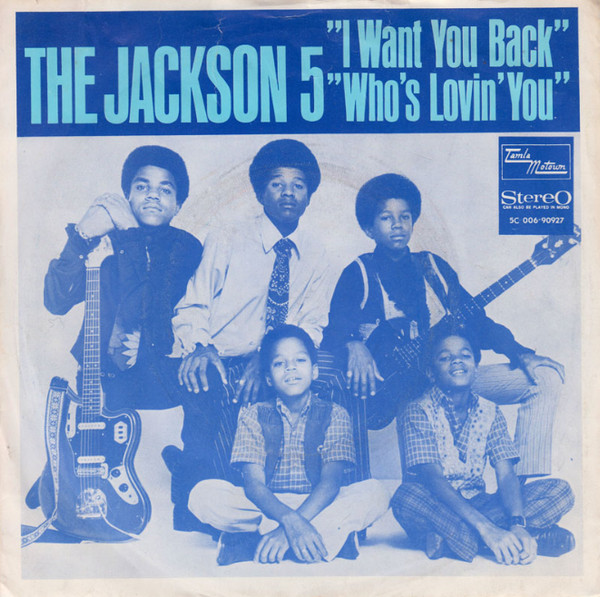
The death of Toriano Adaryll (Tito) Jackson was announced this week, from a heart attack aged 70. One of ten Jackson siblings and an original member of The Jackson 5, Tito was the guitar player in the group alongside Jermaine, Jackie, Marlon and, of course, Michael. The family group formed in 1964 and, after much gigging at talent shows and small African American clubs, they graduated to the venues like the Chicago Regal and the Harlem Apollo. In 1967 they released a single Big Boy on the Steeltown label where Tito’s guitar chops stood out, along with the voice of nine-year-old Michael.
After first refusing them, Motown signed them up and, under the steely grip of Berry Gordy’s management, they went on to become the first African American group to cross over into the mainstream of US popular music. They were the first group to debut with four consecutive No1 singles on the US chart, going on to have two more in their run of seventeen Top 40 hits. Arguably they were the original ‘boy band’ and Jacksonmania exploded across the USA with police escorts and screaming girls everywhere they went. Motown were quick to capitalise, branding everything they could get their hands on with the J5 Heart logo. There was even a Saturday morning cartoon show The Jackson 5ive with Tito in his signature cap – an incredible feat for five black kids in 1971, only three years after the assassination of Martin Luther King.
But all this fame came with consequences. Despite their skills on their instruments, Gordy would not allow any of the brothers to play on their recordings, insisting that the in-house session team The Funk Brothers lay down the backing tracks to the boy’s vocals. In addition, Berry formed The Corporation, a dedicated writing team for the group. It was only once they left Motown to join Epic (under their new name The Jacksons) in 1976 that the band got writing credits and contributed to their studio sound. The European picture sleeves of their incendiary 1969 debut single I Want You Back ironically show them with their instruments in hand. While it is a fabulous recording, I’m opting to playlist the b-side in tribute to Tito as the band’s vocal parts are to the fore. Originally Who’s Lovin’ You was the Smokey Robinson song on the b-side of The Miracles’ first hit Shop Around in 1960, Motown’s first million-selling single. The Jackson 5 version was the last song they recorded at the famous Hitsville U.S.A. studio in Detroit before Gordy moved the entire family out to California in preparation for hyping their career. It’s a great song and a showcase vocal for the by-then eleven-year-old lead singer and it continued to feature in the band’s live shows until 1972. They sang an abbreviated version on their debut appearance on the Ed Sullivan Show and if you can suffer the cheesy intro, it is worth watching if only for the jaunty angle of young Michael’s purple felt fedora.
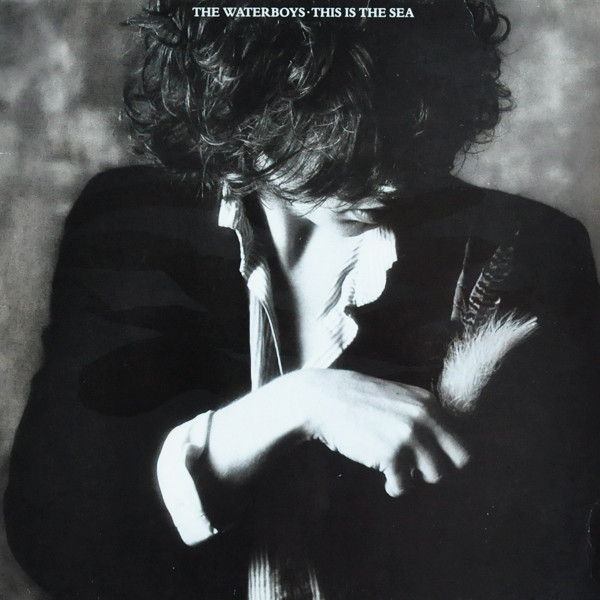
This Is The Sea – The Waterboys (1985)
The third Waterboys album This Is The Sea was released this week in 1985. It was the last collection of tunes recorded in their early widescreen “big music” epic rock style before leader Mike Scott’s Celtic folk instincts took them in a different direction. It was also the last Waterboys recording which features founder member Karl Walinger who left the band to start recording as World Party – I wrote about Wallinger earlier this year in WIS 22Mar24 following his sudden death from a stroke. There are many stories about the This Is The Sea album but my favourite is that Mike Scott visited a strange occult store called Magicalkal Childe in New York apparently frequented by John Lennon and bought a mysterious hard back volume of blank pages into which he scribbled all the plans and lyrics for the songs.
There are some great tracks on the record that Scott retrospectively commented had achieved his “youthful musical ambition” to merge The Velvet Underground with Van Morrison’s Astral Weeks. Dominating all of the songs is the band’s biggest hit and best-known song, The Whole Of The Moon. But, wonderful though it is, just to be contrary – yes, me! – I’m not going to playlist it this week, even though as I type this a Super Moon is shining down on the dark water of the Forth Estuary behind me! I have decided to playlist the album’s title track which was in my head today as I walked on the edge of the estuary towards the beautiful East Neuk village of Crail. I was thinking about Scott’s lyric about moving forward and leaving the past behind: “Once you were tethered/And now you are free/That was the river/But this is the sea” and musing as I watched scores of adult and juvenile gannets sweeping majestically westwards towards the mouth of the estuary as it meets the North Sea. Scott apparently wrote twenty verses for the song and some of these turn up on an ‘alter-ego’ track called That Was The River that appeared on an outakes album in 1994. He says his recording of the song with nine acoustic guitars simulating an ocean and an accompanying soundscape of brass and string orchestrations took him to the “top of his sonic mountain with nowhere else to climb.” Next stop, a pub in Galway.
Fun Fact: There was a six CD box set called 1985 – How The Waterboys made This Is The Sea and saw The Whole of the Moon released this year containing a 3,000 word essay by Scott and including 93 tracks. There are several versions of This Is The Sea, one lasting over seventeen minutes. Be grateful you got the six and a half minute original!
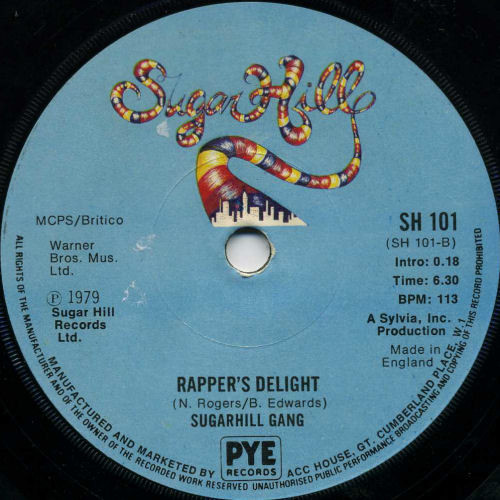
Rapper’s Delight – The Sugarhill Gang (1979)
In the week of the 72nd birthday of the great Nile Rodgers and on the 45th anniversary of its release on Sylvia Robinson’s ground-breaking Sugar Hill Records, what other record could we finish this week’s blog with to get your Friday evening off with a bang?! As soon as the sample of Bernie Edwards’ bass starts pumping and you hear “Said a hip-hop, the hippie to the hippie/The hip, hip-a-hop and you don’t stop rockin’/To the bang, bang the boogie, say up jump the boogie/To the rhythm of the boogie, the beat” jumping out the speakers at you, you know where things are going. The tune that launched hip hop into the mainstream (top 40 in the US and top three in the UK) is instantly recognisable, particularly from the initially unlicensed sample from Chic’s Good Times. The original ‘red label’ 12 inch US pressing (all 14mins 35 secs of it) failed to credit Rodgers and Edwards and they launched a lawsuit which resulted in the new Sugar Hill logo ‘blue label’ pressing carrying their name.
The apocryphal story is that Chic were supporting The Clash at the New York Palladium in September 1979 and when the band played Good Times the three members of the Sugarhill Gang got up on stage and started freestyling along to the band. A few weeks later Rodgers was on the dancefloor of a NY club when he heard his band’s riff and the rap kicked in. The DJ had bought the record in Harlem that afternoon and when Rodgers asked to see the label he placed a call to his brief. Apparently, with his cut of the pie, he now considers that Rapper’s Delight was just as innovative and important as Good Times, if not more so. The Library of the US Congress agrees as the track is preserved in the National Recording Registry for being “culturally, historically, or aesthetically significant”.
When “Big Bank Hank” (Henry Jackson), “Wonder Mike” (Michael Wright) and “Master Gee” (Guy O’Brien) recorded the track, incredibly they did it in one take with no vocal overdubs. Unlike much of the genre they started, the lyrics are full of gentle and humorous boasting about their style and I’m sure everyone has their favourite lines. I enjoy “So after school, I take a dip in the pool, which really is on the wall/I got a color TV so I can see the Knicks play basketball”. And no matter what the context is, when anyone says “Hotel” to me, in my head I hear “Hotel, motel, Holiday Inn!” Maybe that’s just me.
Take a look at this video from their appearance on Soul Train in 1979 to see just how long ago it was when this record was a hit. Wonder Mike has a side parting, a beard and is kitted out with what would be called a brown jacket and slacks to match his tie! Hank looks slightly more rap-like but when the diminutive Master Gee takes over in his sky blue jump-suit thing, you are struggling a bit with his claim to be “the baddest rapper there ever could be”. Wonderful stuff!
Last Word
I’m not sure that five days without rain and four of them actually being sunny really counts as an Indian Summer but in Scotland we’ll take all we can get. I’d like to say thanks to those who have thrown their purple felt fedoras in the ring for guest blogs. But please don’t let that stop any others out there with a desire to ramble on about how good their choice of six killer waxings is – the more guest blogs the better in my book.
This week’s killer waxings have been dropped into the Master Playlist which is only a click away…
AR

 Week In Sound
Leave a reply to WIS 14 Mar 2025 – Week In Sound Cancel reply