On only the second Friday 13th since the blog began, this one arrives with some tunes to cheer you as Autumn starts to turn the leaves brown. Enjoy!
First Word
Having had a couple of theme weeks, we’re back to whatever passes as normal in writing this nonsense, with six tunes tenuously connected to events of this week and catching up on some things missed in the two weeks gone by. Bookended by two longer pieces on new recordings, the four tracks in the middle hark back to my usual time zones.
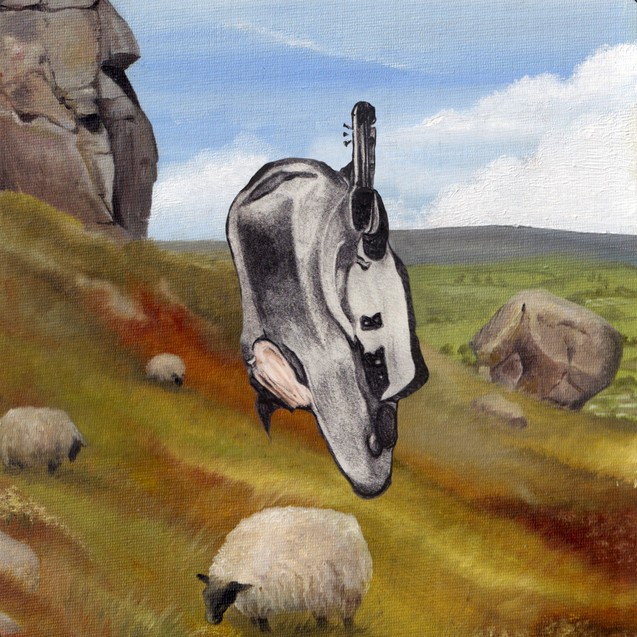
The World’s Biggest Paving Slab – English Teacher (2024)
This time last year, I was posting about London-based jazz group Ezra Collective winning the Mercury Music Prize with their excellent Where I’m Meant To Be album. This week we’re kicking off with a track from this year’s suprise winner English Teacher, a young band from Leeds who released their debut album This Could Be Texas in the spring. The bookies had second-time nominee Charli xcx (or is it XCX?) and her much-hyped Brat album as the odds-on favourite. But This Could Be Texas got the nod and I’m delighted I don’t have to find some words to sound mildly enthusiastic about Charli’s music which leaves me stone cold.
English Teacher were new to me but having listened to their record a few times since last week, I am enjoying it hugely. The easy way to describe them is as an ‘indie’ band but that doesn’t do their wide range of soundscapes justice. I hear rock, electronica, folk, prog, jazz and post-punk all melded together in their twisting dreampop melodies with plenty of complex rhythms to keep you guessing where the tune is going next. Singer Lily Fontaine sometimes deploys the deadpan spoken word approach (apparently its called “sprechgesgang”) as favoured by acts like Dry Cleaning and Black Country, New Road but she does also sing as well.
If this all sounds too much like hard work, please don’t reach for the skip button – just let the weird wonder of last year’s single The World’s Biggest Paving Slab wash over you. It’s a quirky ode to English northerners (namechecking John Simm and the Pendle Witches in one line) and its insistent guitar figure drives you through the verse towards the relief of whatever glorious diminished chord it is that crashes you into the chorus with the line “You should see my armoury”. I encourage you to dip further into the record, if only for the great song-titles – the appropriately unstructured Broken Biscuits jumps out at you and You Blister My Paint has a keening intensity. In the bass-driven R&B, Fontaine pushes back at musical pre-conceptions about her mixed race background: “Despite appearances, I haven’t got the voice for R&B”. I’m still trying to get my head around the scope of the meandering title track but I know next time I listen to it, I’ll hear something else new in it. And album closer Albert Road builds and builds to a superb finish. This is a very fine album, indeed.
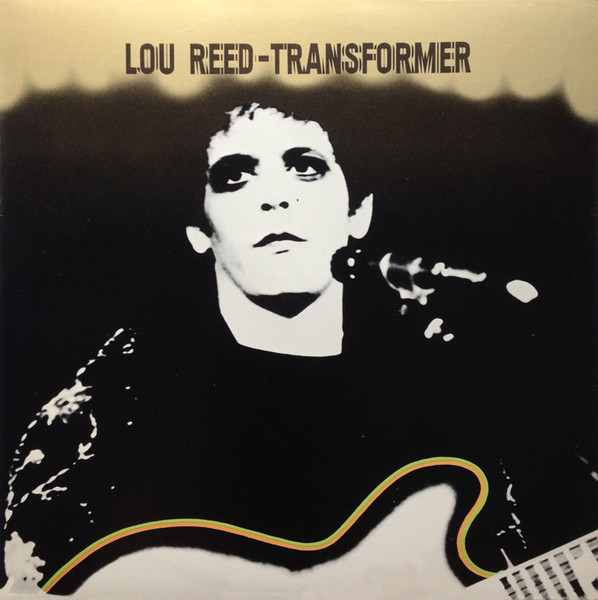
Walk On The Wild Side – Lou Reed (1972)
The death of bass player Herbie Flowers was announced on Sunday with the coverage in the mainstream media focused on the bass-line he recorded for Lou Reed’s Walk On The Wild Side from his 1972 LP Transformer. Flowers was a session man in the 60s and 70s working with producers like Mickie Most and Tony Visconti – it is said he worked on more than 20,000 recording sessions in his lifetime! Along with Madeline Bell, he was also a founding member of Blue Mink, a band comprising session musicians who had seven top thirty hits in the early 70s.
When Reed came to London to work with David Bowie and Mick Ronson on his second solo album since the breakup of the Velvet Underground, Flowers was hired to play bass on some tracks at Trident studios in Soho. Paid a Musician’s Union flat fee of £8 10s per session, one morning he was asked to develop a bassline to suit the guitar chords for a dark moody song that Reed had scribbled down on a bit of paper. His “old jazzer” idea of overdubbing his pitch-sliding riff on his preferred stand-up bass with a similar riff played ten notes above on an electric bass earned him double rates. Reed loved what he got for his £17 and the bass riff was pushed upfront in the mix ahead of Bowie’s gentle acoustic guitar and Ronson’s delicate string arrangement. Combined with Reed’s lyric describing the characters and hangers-on at Andy Warhol’s Factory studio in New York, the song became an unlikely cultural anthem, as well as a top twenty hit single on both sides of the Atlantic.
In 1990, Flowers’ iconic bassline was cleverly sampled by influential New York hip hop group A Tribe Called Quest for their track Can I Kick It? When it was released as a single it was brilliantly remixed to also sample the terrific bass riff from Ian Dury and the Blockheads’ What A Waste, played by the nimble fingers of Norman Watt-Roy.
Fun Fact: Flowers was also responsible for the atmospheric bassline on Rock On by David Essex – as featured on WIS 28Jul23.

Sorry For Laughing – Josef K (1981)
Among recent musical anniversaries, I spotted that last Wednesday was the 64th birthday of Paul Haig. Born in Edinburgh, Haig was the writer, guitarist and singer with Josef K who also featured his old school pal Malcolm Ross and became part of the Postcard Records scene that emerged from Glasgow at the very end of 1979. Although they recorded their first single Chance Meeting on another label (Absolute), Alan Horne’s Postcard label signed them up and the band released a series of now very sought-after singles. These made up four of the eleven singles to be released by the label in its short but hugely influential existence and they also recorded the only album that Postcard managed to get out the door, released in July 1981. After this, it all fell apart as artistic and commercial pressures conspired to crush the wilfully home-spun approach to running a record company adopted by the single-minded and often abrasive Horne. Walking the line between the Velvet Underground and Tamla Motown was a tough gig! To those interested in this fascinating period of Scottish musical history, I can highly recommend Simon Goddard’s great book Simply Thrilled – The Preposterous Story of Postcard Records.
After Josef K split in late 1981, Haig went on to pursue a solo career, firstly adopting the Rhythm of Life moniker but then reverting to having his name of the records and gig posters. He veered towards a more funk-orientated sound and nearly had a hit with his re-working on the old Josef K song Heaven Sent. Collaborations with a range of musicians were to follow including Alan Rankine and Billy McKenzie of the Associates before he developed a number of instrumental works at the end of the nineties. But I am returning to his Josef K days and playlisting the single version of Sorry For Laughing which Haig wrote with Ross. Although catalogued as a Postcard release (81-4), the record was actually released on the Belgian independent label Les Disques du Crépuscule for reasons much too complicated to explain here. It has all the trademarks of Postcard – insistent funky but jangly guitar, a brilliant burbling bassline and a hi-hat driven beat with some wonderfully fey lyrics: “When we grooved on into town/Charles Atlas stopped to frown/’Cause he’s not made like me and you/Just can’t do the things we do”. Terrific stuff.
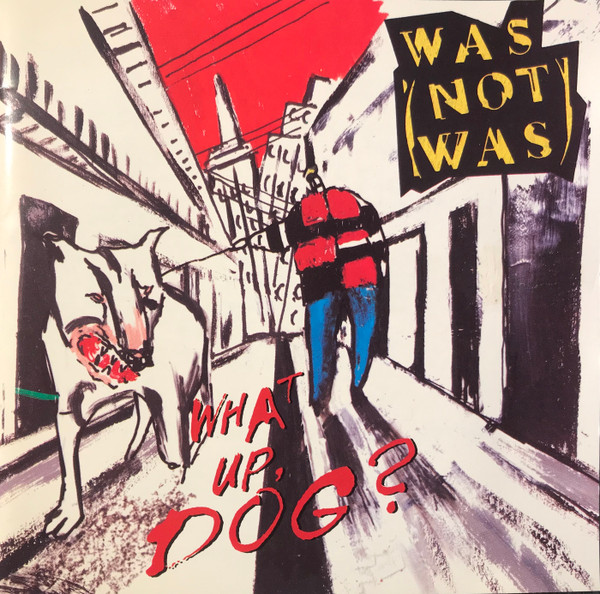
Somewhere In America – Was Not Was (1988)
Another birthday this week was that of Don Was, whose real name is Don Fagenson but he adopted the surname Was for stage use along with his childhood friend David Weiss when they formed the band Was (Not Was) in Detroit in 1979. They released a series of eclectic singles during the 80s and are probably best known for the “boom-boom, acka-lacka-lacka boom” novelty of Walk The Dinosaur which was a UK/US hit in 1987. I first became aware of them through their 1981 single Out Come The Freaks which came from a debut LP full of odd songs which mixed rock, jazz and dance with social commentary and absurdist lyrics. Freaks was to be recorded in three different ways over their career – I bought its second iteration as a 12″ single in 1984 where a half-speed version had the brilliant title (Return to the Valley of) Out Come The Freaks.
The Was ‘brothers’ produced all the band’s work and each of them would go on to have long careers as sought-after producers. Don has worked with a wide variety of major artists and received six Grammy awards, notably for his work with Bonnie Rait on her Nick of Time album. Most famously, having been a fan since seeing them play live in 1964 at the age of 12, Don has become the Rolling Stones’ go-to producer, working with them on all their records since 1992, even doing work on remastering the reissue of their classic LP Exile On Main St in 2010. He has also been music director/consultant on many movies including Thelma and Lousie and Toy Story and written and directed his own documentary about former Beach Boy Brian Wilson. Since 2012 he has been president of the legendary jazz record label, Blue Note.
But to mark his birthday, I’m going back to 1988 and the Was (Not Was) commercial breakthrough LP What Up, Dog? As well as containing the third version of Out Come The Freaks (Again), it also had the hits Walk the Dinosaur and Spy in the House of Love. But I am playlisting the languid opening track, with its smoky jazzy vibe and that glorious muted trumpet. The song shimmers with an elegant pop sensibility that Burt Bacharach would have been proud of and the thoughtful lyric is beautifully sung by one of the band’s two singers Sweet Pea Atkinson: “No daycare Fellinis/No fast food assassins/No billboard bikinis/Just truth and compassion/Somewhere in America/There’s a street named after my dad/And the home we never had”. Just wonderful.
Me And Magdalena – The Monkees (2016)
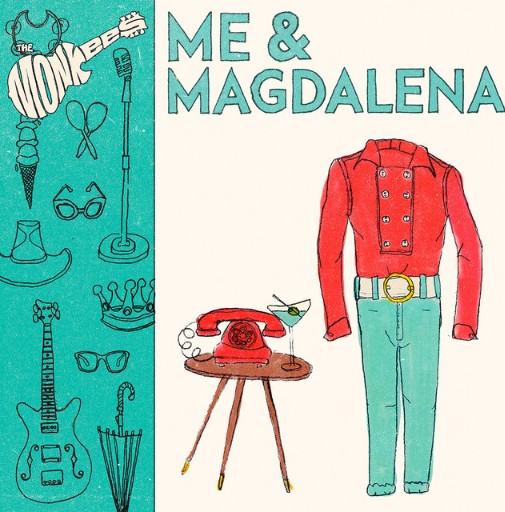
On 12 September 1966, The Monkees TV show made its debut on American television and this gives me a paper-thin excuse for playlisting a record that I have been meaning to get on here for some time. I talked about the impact The Monkees had on me as a kid back in WIS 5Jan24 when I playlisted the terrific but ghost-written Last Train To Clarksville. The group had been put together using four actors to portray a fictional pop band in the style of The Beatles circa their 1964 Hard Days Night movie. However, over the years the group became ‘real’ and eventually played on their own recordings and wrote some of their later songs. Although a phenomenon of the 60s and the ealry 70s, they split up but re-runs of the show on MTV in the 80s brought them to a new generation of fans and the band re-united, leading to a 30th anniversary TV special in the 90s and an album of new songs.
The owners of Rhino Records wanted to celebrate the 50th anniversary of The Monkees with more than another repackaging of their greatest hits. So they hired Monkees fan Adam Schlesinger of Fountains of Wayne to produce (and play on) an album of new material which included tracks written by contemporary songwriters and some re-recordings of older tracks by the band, all made with a ’60s vibe. Good Times! was released in 2016 to a positive critical response and reached No14 in the US charts. Sadly, Davy Jones had died from a heart attack in 2012 and is only present on the record on one unused track from 1969. However, Mickey Dolenz, Mike Nesmith and Peter Tork all take vocal leads on other tracks. The list of guest songwriters is impressive including Scheslinger, Andy Partridge (XTC), Rivers Cuomo (Weezer) and a co-write by Paul Weller and Noel Gallagher. It’s all good fun but the standout track by a country mile is Me And Magdalena which was written by Ben Gibbard of the band Death Cab For Cutie. He is another huge Monkees fan. Sung by Nesmith and Dolenz in a harmony duet, it’s a gentle piano-led song set among the canyons of California with the scene setting opening: “Me and Magdalena/We’re driving south through Monterey/As the sun is slowly sinking/Into a distant ocean wave”. A poignant story of love and loss, there is something beautiful about the melody that just tugs at the heartstrings. It’s folky melancholia at its very best and with Peter Tork, Mike Nesmith and even producer Adam Schlesinger now passed away, the song resonates even more. “But know everything lost will be recovered/Drifting into the arms of the undiscovered”.

Song Of The Lake – Nick Cave and The Bad Seeds (2024)
Having started this week with an excellent 2024 album, I’m going to finish with another one. Wild God was released a couple of weeks back and it marks a reunion of sorts between Nick Cave and his long-time but oft-changing band The Bad Seeds. Cave recorded his last record Carnage in 2021 with only Warren Ellis and, while there were Bad Seeds involved, 2019’s Ghosteen was musically driven by layers of ethereal synths and it didn’t really feel like a ‘band in the studio’ record. I’m delighted to say that Wild God does and, while the band are used sparingly, they retain their renowned muscularity. It is great to hear the drums and percussion of long-term members Thomas Wylder and Jim Sclavunos again – their simple break halfway through the track Conversion as the song explodes into a mass of voices is an album highlight. While newest member George Vjestica returns on guitar, the bass playing is handled by both Martyn P Casey and Radiohead’s Colin Greenwood. And just as this blog was being written, it has been announced that Greenwood will tour with the band in the UK and Europe this autumn due to Casey being ill.
It is Greenwood’s bassline that anchors the cinematic opening track I’ve chosen to playlist. Like most of the record, Song Of The Lake is flooded with melody and kicks the LP off with a joyous euphoria that is maintained throughout the suite of songs, despite the underlying themes of suffering and pain that are never far from Cave’s mind. Marked by the vocal being partly spoken and sung, the song progresses at a stately pace drenched in strings and wrapped in the choral backing vocals. At around two minutes in, the instrumentation drops back to just Greenwood’s bass with Cave muttering “never mind, never mind” before a couple of trademark rings of Sclavunos’ tubular bells takes us onwards to the soaring outro section. The much trailed King’s horses finally appear but remain unable to put things back together and Cave asks “oh my darling, well, where will we go now?”.
Cave is very much a ‘Marmite’ artist, particularly as he becomes more explicit about his spirituality in his lyrics, which is challenging some of his longer-term fanbase – there was a great question on his Red Hand Files online Q&A forum which opened with “Enough already with all the God shit!”. But musically, I think this record, with its remarkable and optimistic melodies, should actually widen his appeal to those of a… erm… Doubting Thomas persuasion.
Last Word
As another edition of this endless stream of (semi) consciousness comes to a close, I’m scanning ahead in my calendar and see a couple of weeks in October where it would be good to have a guest blog to fill in some gaps. So, if you’re out there and fancy picking six tunes to playlist and write a wee bit about them, then please let me know.
As well as being the envy of all your pals, the added bonus as a guest blogger is that your choice of six tunes gets subsumed for posterity into the behemoth that is the Master Playlist.
AR

 Week In Sound
Leave a reply to WIS 3 Jan 2025 – Week In Sound Cancel reply