In slightly delayed recognition of the 70th birthday of Declan Patrick Aloysius McManus, WIS picks six Costello covers by female vocalists. Enjoy!
First Word
I’m starting with a plea for you not to skip this week’s blog. I know the theme is pretty niche and, although his body of work is one of my personal obsessions, I am well aware that the artist known as Elvis Costello is an aquired taste. Further, only a couple of the tracks covered are likely to be known to those of you with long memories. But you’re going to have to trust me on this. There are countless covers of EC’s songs but these six tracks are great versions of tunes that I believe are well worth a few minutes of your time to hear them.
As with previous cover themes, the cover and the original source artwork are presented along with a link to the original version of the song.
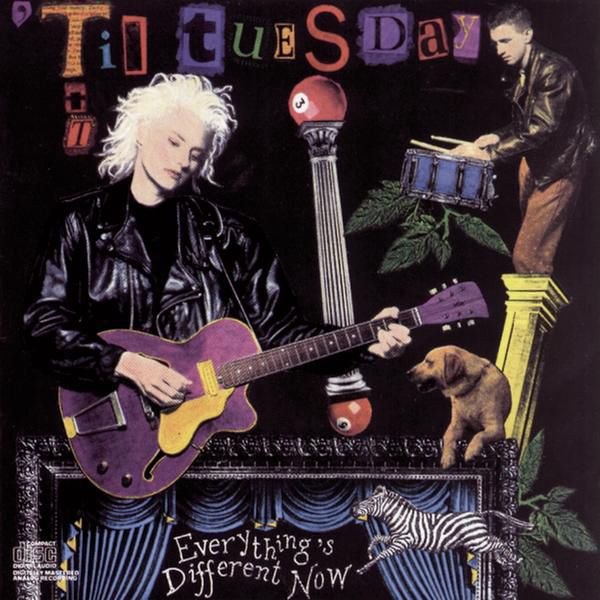

The Other End (Of The Telescope) – ‘Til Tuesday (1988)
Original: All This Useless Beauty (1996)
And before we even get started, I’m breaking the rules by playlisting a song that was co-written by Amiee Mann and Costello for her band ‘Till Tuesday’s final album Everything’s Different Now in 1988. Costello recorded his version eight year’s later so to call it a cover is a significant stretch. He uses the tune to open his 1996 LP All This Useless Beauty which turned out to be the last before his on-going feud with bass player Bruce Thomas finally broke the original Attractions line-up for good. It was intended to be a collection of songs he had written for other artists but in the end became a bit of a patchwork of tunes. Apart from this one, only three of the other tracks had previously been recorded, one by Roger McGuin and two by June Tabor. Johnny Cash had passed on Complicated Shadows and Sam Moore declined one too. The other co-write on the LP is Shallow Grave which came from his previous collaboration with Paul MacCartney.
Although he altered some of the words in his version, Costello had written the original lyric for Mann aware of her ongoing breakdown with her partner which informs several other songs on the ‘Til Tuesday album. He felt it was a bit presumptous, but she embraced the lyric and sang it beautifully. “When you find me here at the end of my rope/When the head and heart of it finally elope/You can see us off in the distance, I hope/At the other end, at the other end of the telescope”. The song has a waltz like quality and the echoey double-tracked harmony she sings in the verses gives the song a more airy feel that Costello’s version. He somewhat reluctantly provided the backing vocal for the chorus on the ‘Til Tuesday track and has commented that he is concerned that “it distracts from Aimee’s excellent performance”.
Alison – Everything But The Girl (1992)
Original: Stiff Single (1977)
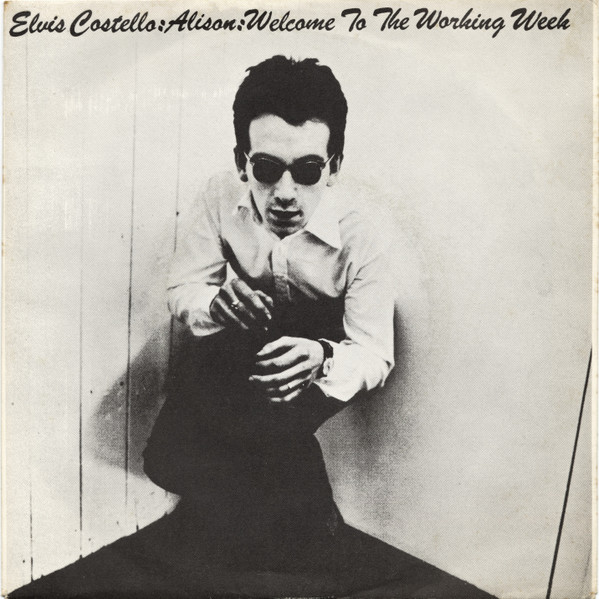
One of Costello’s best-known and most-covered songs, Alison was released by Stiff Records as his second single in May 1977. Like it’s debut predecessor, Less Than Zero, it sold modestly but went on to inspire the title of his debut LP My Aim Is True in June of that year. EC has always been coy about the story behind the song, other than saying it was about “disappointing somebody” and “much could be undone by saying more”. He has talked of his youthful aspiration to write songs as good as Nick Lowe and that Alison was an amalgam Lowe’s Don’t Lose Your Grip on Love and Living Just a Little by The Detroit Spinners. As it turned out, Lowe produced Costello’s first two singles and went on to produce everything he recorded up to and including his fifth album Trust in 1981. I have seen Costello play Alison live many times and heard him improvise the “My aim is true” outro cleverly incorporating lyrics from the aforementioned Living Just a Little, Smokey Robinson’s Tracks of My Tears and Suspicious Minds, made famous by that other Elvis guy.
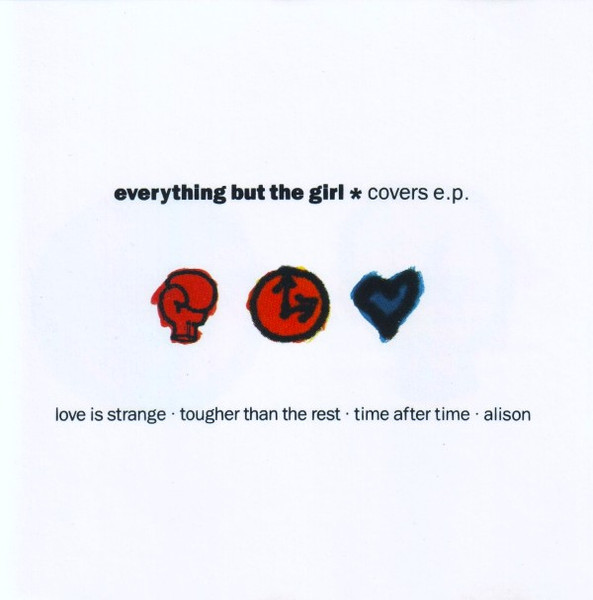
The first recorded cover of Alison was by Linda Ronstadt who included her fairly bland and soulless version on her 1978 album Living In The USA and released it as a single in the US but it didn’t chart. However, when Everything But The Girl included the song as one of four tracks on their Covers EP released in the UK in 1992, it did reach No 13. Arguably, as the lead track was Love Is Strange (as made famous by The Everly Brothers), this is a moot point. But it is a lovely version of the song, stripped back to just Tracey Thorn’s voice and Ben Watt’s guitar. As well as the count-in, Watt adds some gentle harmony backing on selected lines and the whole song feels airy and sophisticated. This is the second track from the EBTG Covers EP to make an appearance on the blog as their great version of Tougher Than The Rest made it onto the Springsteen covers back in WIS 2Jun23. I recall an argument over it with my fellow Bruce aficionado John McT who strongly disagreed with my view on the drumming on the original!
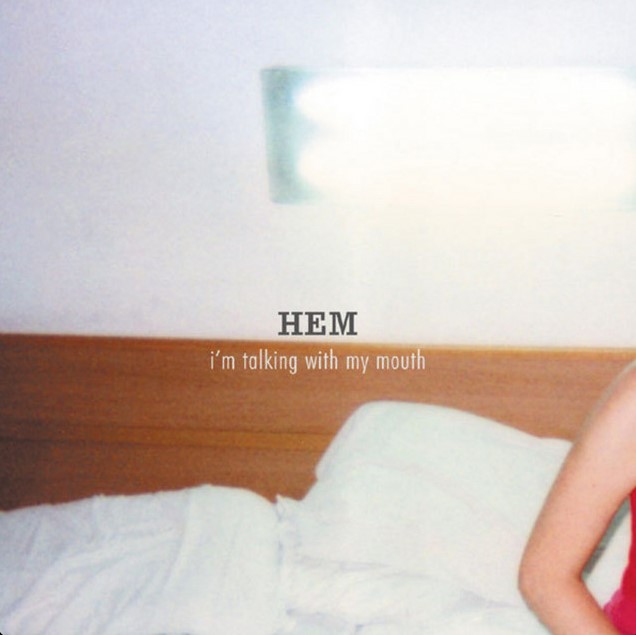
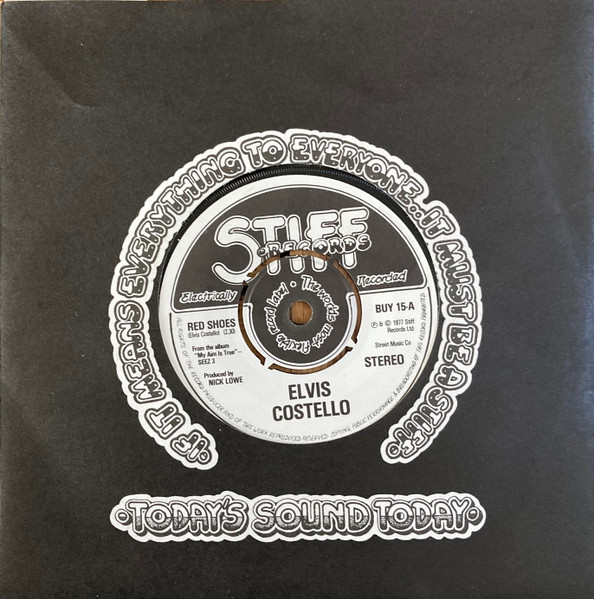
(The Angels Wanna Wear My) Red Shoes – Hem (2002)
Original: Stiff Single (1977)
Following on from a cover of Costello’s second single, here is a cover of his third which was released to tie with the release of his debut album. The publicity surrounding the My Aim Is True LP took it into the top twenty of the album charts but the single sunk without trace. Although the full title was used for the LP, the single label displays it simply as Red Shoes – no doubt space was an issue! Apparently, the song came to him in a burst of inspiration in the last ten minutes before a train he was on came into Liverpool and he had to dash round to his mother’s house to get an old guitar to play it before it slipped from his memory. Like the rest of the album, the song was recorded before EC had formed The Attractions and so he was backed in the studio by American country rock band Clover. Guitarist John McPhee plays the Byrds-style jangly opening chords which develop into a call and response 60s-style pop song, albeit on the subject of romantic disappointment. This vibe is summed up by the brilliantly biting lyric: “Oh, I said ‘I’m so happy, I could die’/ She said ‘Drop dead’, then left with another guy.”
I don’t really know much about Hem who recorded their cover of Red Shoes for their I’m Talking With My Mouth EP of covers in 2002 and it went on to be included on a 2003 compilation LP of EC covers called Almost You. They are an indie-folk band from Brooklyn who got some acclaim for their first album and feature Sally Ellyson on vocals. Their version of Red Shoes slows the song down and fills it out musically, deploying mandolins and pedal steel guitars. The beat is definitely languid, matching Ellyson’s phrasing, but the approach they adopt really works, giving the melody in the song enough time and space to shine through.
Fun Fact: On their first UK tour in the summer of 1977, Costello and the Attractions found themselves victims of Glasgow City Council’s ban on “punk rock” bands playing in the city. The gig was moved to Paisley but not to the normal music venue, the Bungalow Bar – they played the tiny Silver Thread Hotel on the Barrhead Road. My school pal Davie Ross and I walked down to the hotel from his house in Hunterhill but the gig was sold out by the time we arrived. So, we did what every 17 year old would do and mooched about outside in the carpark and listened to the recently released single Red Shoes blasting through the walls.
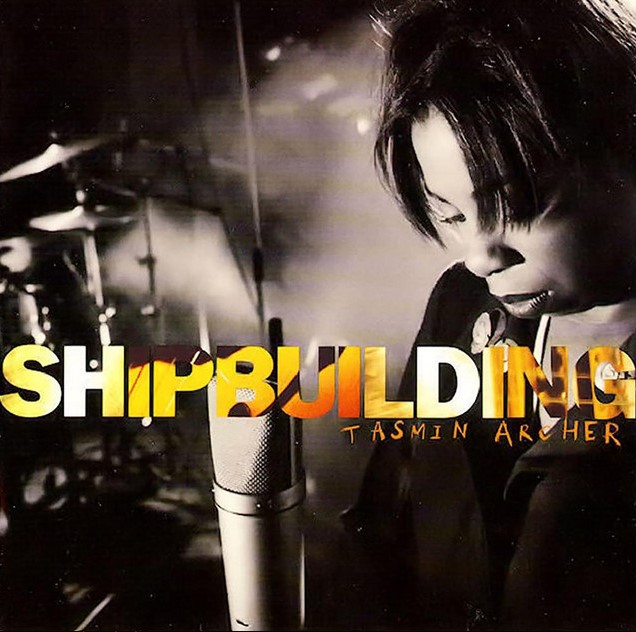
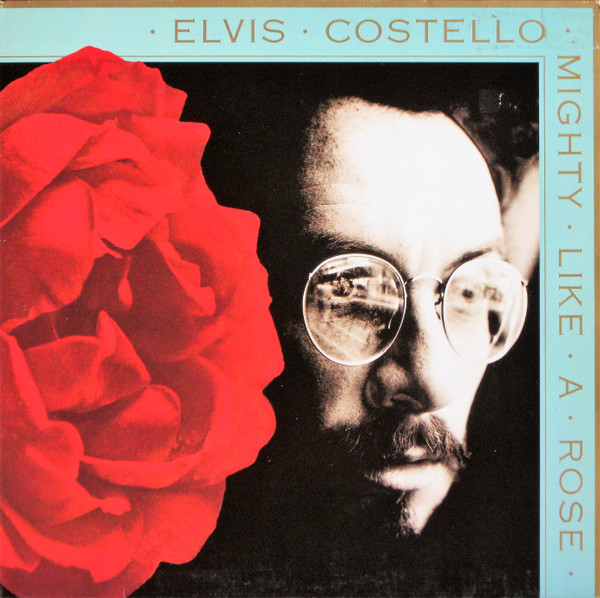
All Grown Up – Tasmin Archer (1994)
Original: Mighty Like A Rose (1991)
Costello’s ‘beardy years’ arguably began with him walking on stage at Live Aid in 1985 and singing the “old English folk song” All You Need Is Love. This period concluded with his 13th studio album in 1991, Mighty Like A Rose. Seen as a sister record to it’s predecessor Spike, both records are crammed full of wildly varying sounds (New Orleans jazz meets industrial percussion meets neo-classical chamber pop) and both feature the fruits of his work with Paul McCartney. At times it seemed like Costello had developed into middle age with a record more angry in tone than his celebrated ‘angry’ early work – try How To Be Dumb, his vitriolic put down of Bruce Thomas. Hidden among all the clattering drums and harpsichords is one of my favourite EC tracks, All Grown Up. First and foremost, its one of his most engaging and under-rated melodies. His recording not only features clavinet, cornet and Eb horn but has a lush string and woodwind arrangement by Irish composer Fiachra Trench. All this and a terrific opening lyric: “I’m trouble”, she said/Spread out on the floor of her father’s house/Her promise was almost undone”.
The name Tasmin Archer might ring a vague bell with older readers. (Are there any other kind, I wonder?) Back in 1992, she had a huge international hit with her first single Sleeping Satellite, which went to No1 in the UK. Her debut album sold well enough but, as is often the case, sales started to fall away with her follow-up records. It turns out Archer was a huge Costello fan and in 1994, she released a four-track EP of EC covers called Shipbuilding which she recorded as piano and vocal performances with Attractions keyboard player Steve Nieve. It gave her a last UK top forty hit and one of the tracks was her version of All Grown Up. Stripped of its strings and horns, the melody is more exposed on Archer’s version but it more than stands up to that test. She has a great voice with a pureness to her tone and I really like the way she inhabits the lyric in a way that, while it’s in the third person, you can imagine she is singing about herself.
Stranger In The House – Rachel Sweet (1978)
Original: Limited Edition Single with This Year’s Model (1978)
By the time the second Costello album This Year’s Model appeared in March 1978, there were already signs that a musical polymath was hiding behind the angry young man who had been touring the country during 1977, tearing up venues his new backing band The Attractions. This was most graphically illustrated by the live album of the infamously chaotic Stiff Records package tour of that year where EC and the Attractions shared the stage with Nick Lowe, Wreckless Eric and Ian Dury and the Blockheads. As well as a blistering version of his own Miracle Man, the LP had Costello’s first recorded cover, a rough but pretty faithful rendition of I Just Don’t Know What To Do With Myself as made famous by Dusty Springfield. He assisted the presumably confused audience with his blunt intro: “This song was written by Burt Bacharach and Hal David”.
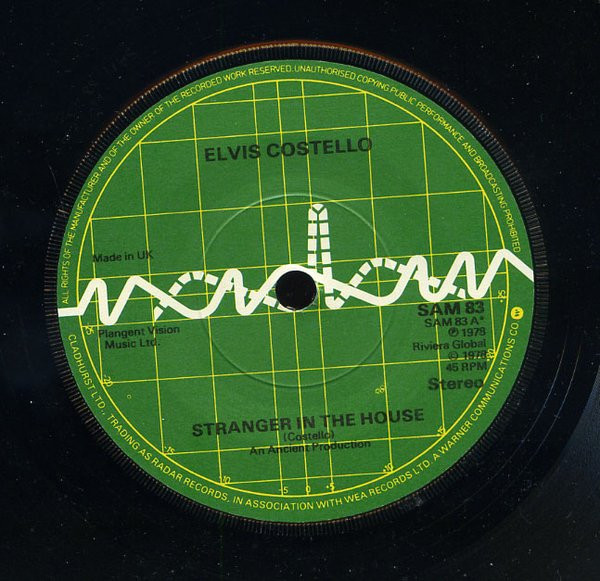
So early buyers should not have been surprised when they opened up This Year’s Model to find a “free single” containing a live version of his take on The Damned’s Neat Neat Neat coupled with his own full-on country song Stranger In The House. All pedal steel licks, honky tonk piano and heart-breaking lyrics that Nashville veterans would have been proud of, he wrote the song with country music superstar George Jones in mind. The track was left off his 1977 debut album as it was considered “commercial suicide” at the time, but incredibly EC eventually went on to record it as a duet with Jones for the country star’s 1979 LP My Very Special Guests.
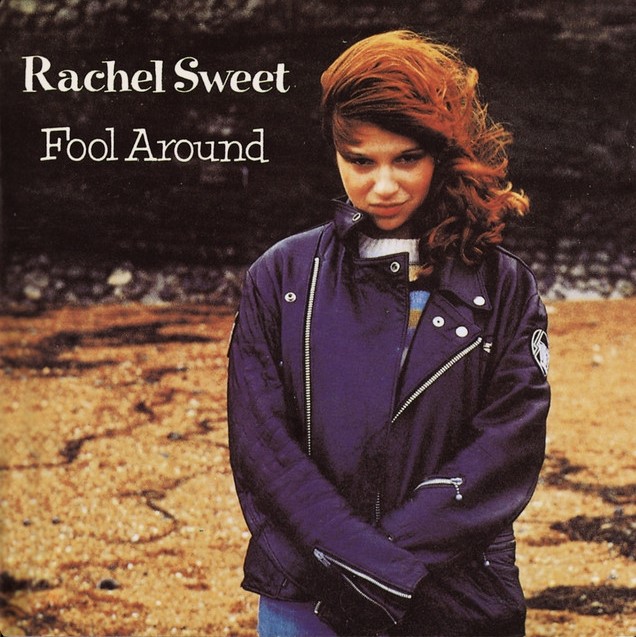
If Costello, Lowe and Dury were the lead names in the first wave of signings at Stiff Records in 1977, the second wave in 1978 was spearheaded by Jona Lewie, Lene Lovich and Rachel Sweet. Akron-based Sweet had been swept up by Stiff when they signed Devo from that city although her pedigree was country music – a long way from the sound of Devo. Although only 16, she had been recording in the US since she was a kid so was not phased to be joining the 1978 Stiff Tour, travelling the length and breadth of the UK by train with Lovich, Lewie and good old Wreckless Eric. I think there was a gig in Dingwall – that’s the town north of Inverness, not the London club! On the back of that tour, Sweet had a modest hit with her single B-A-B-Y, a US hit for Carla Thomas back in 1966. And when she went into the studio to make her debut album Fool Around, she chose to record her version of Stranger In The House. She slows the tempo and changes the phrasing from the original, while musically the producer Liam Sternberg adds strings, organ, mandolin and even a sax solo to the arrangement. In my view, the sadness of Costello’s lyric seems to gain more prominence through the twang in her young but expressive voice.
Almost Blue – Diana Krall (2004)
Original: Imperial Bedroom (1982)
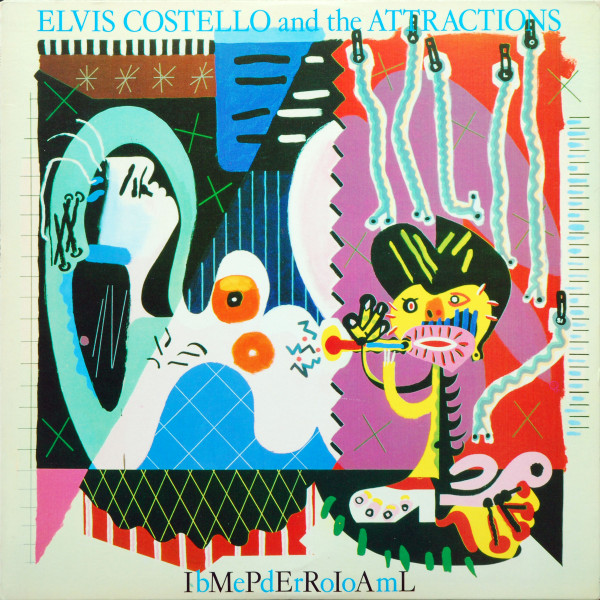
The choice of Almost Blue for the title of the first of Costello’s many ‘career departure’ LPs in 1981 was driven by the ‘blue’ mood of the record. It contained only melancholy country songs, none of which were titled Almost Blue. But the album cover art was a homage to American jazz guitarist Kenny Burrell’s Midnight Blue and this must have planted the seed in EC’s mind that Almost Blue was a great title for a jazz number. So, when Imperial Bedroom appeared as his seventh album in 1982, among all the revelatory baroque pop and art rock numbers was a brilliant, sorrowful jazz track called Almost Blue. Ever the musical magpie, Costello had written the song at home on his piano while leaning heavily on legendary jazz trumpeter Chet Baker’s haunted version of the 1931 Ray Henderson/Lew Brown song The Thrill Is Gone. The track stands out on Imperial Bedroom because Geoff Emerick’s glorious production is toned right down to the basics, creating a sombre, smoky lounge-style song with piano, upright bass and brushed drums. I know Costello’s singing voice can grate with some people (particularly on his higher register), but his lower register vocal performance on this song is outstanding. “Almost blue/Almost doing things we used to do/There’s a girl here and she’s almost you/Almost”.
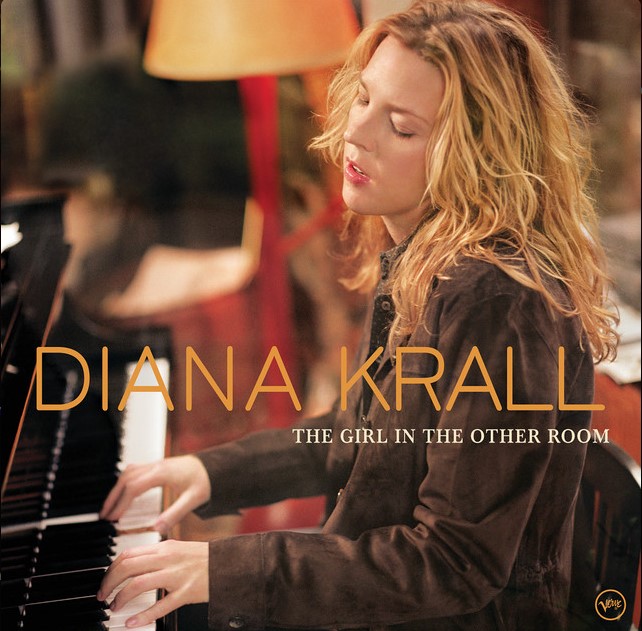
With all these covers of EC’s songs, it was probably inevitable that his missus would get in on the act. Canadian jazz pianist and singer Diana Krall married Costello in 2003 and at the time she was emerging as one of the major stars of the jazz world – her 2001 LP The Look Of Love had reached the top ten in the US album charts. Although more used to recording jazz standards, Krall worked with Costello writing songs for her seventh studio album The Girl In The Other Room released in 2004. Six of the twelve songs on the record were co-writes but Krall also decided to include some covers of songs performed by contemporary writers like Tom Waits, Joni Mitchell and Bonnie Rait. She also included her own version of her husband’s Almost Blue. Not surprisingly she introduces her own piano introduction and drops the tempo of the original very slightly. And, although she changes the key from minor to major, her version doesn’t lose the melancholy of EC’s recording. Her vocal stretches some of the phrasing slightly and she is blessed with a sultry jazz voice which compliments the musical backdrop perfectly.
Fun Fact(s): Having been the inspiration for Almost Blue, Chet Baker went on to provide Costello with the stunning trumpet solo which closes EC’s version of Shipbuilding on his 1982 Punch The Clock album. Baker would also return the Almost Blue compliment by recording the song himself in 1987. Real jazz fans (that’s you, John N!) might want to cop an ear to Baker’s playing on an 8 minute live version of the tune recorded in Tokyo some nine months before he died.
Last Word
So if you’ve made it this far thanks for sticking with it – I hope you didn’t get too bogged down in all my trainspotter Costello-geek stuff and found that the music was worth it. I am writing this post early as, by the time you read this, I am going to be in what looks like it might be sunny Perthshire for the wedding of my friends Gordon and Fiona this weekend. Before that, I will have been at the Theatre Royal in Glasgow on Thursday night to watch EC perform some selections from his songbook with the amazing Steve Nieve on piano. I’ve lost count of the number of times I have seen Costello on stage and, as his ticket prices continue to rise, I keep saying I’m not going next time. But I do.
Six more tunes have now fallen into the deep pit of joy that is the Master Playlist which is moving inexorably towards 500 songs.
AR


 Week In Sound
Leave a comment