Fresh from a couple of wee skippy dances in a funny hat and trousers round the Maypole, WIS kicks the month into action with six great tunes. Enjoy!
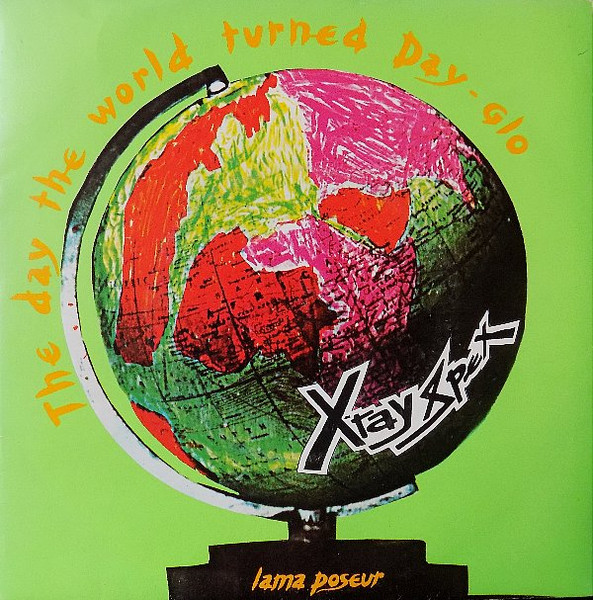
The Day The World Turned Dayglo – X-Ray Spex (1978)
After a couple of weeks where the vibe was laid back, the blog snaps back with a quick 1-2 opening of in-your-face, late 70s attitude this week. As I was celebrating my 51st birthday in 2011, I recall being very saddened to read of the death from cancer aged 53 of Marianne Joan Elliot-Said otherwise known as Poly Styrene. As a young ex-hippie itinerant traveller, Poly had seen the Sex Pistols perform at the Pier Pavilion in Hastings in July 1976 and, like many others at that time, was inspired to form her own punk band. The band’s name was chosen from those adverts in the back pages of American comic books which promised ‘fun at parties’ for $1. Born in Bromley in 1957 to a Somali father and a Scottish-Irish mother, Poly was one of the most memorable front-women to emerge at that time. She didn’t conform to the accepted image of a woman in pop music with thick braces on her teeth and a love of junk-shop clothes and she had a distinctive voice that, according to John Lydon, could cut through steel plate. Like the recent debate in these pages about Bjork, it was something you either got – or you didn’t get, and I was firmly in the former camp.
X-Ray Spex were a high energy punk band formed around the usual guitars/bass/drums axis but with the unusual and differentiating use of saxophone – originally played by a 16 year old girl who named herself Laura Logic before she left to go back to school. I had intended to playlist their raucous, feminist-statement debut single from 1977 Oh Bondage Up Yours! but sadly it’s not currently available on Spotify. So you’ll have to click here to hear Poly’s amazing “Some people think little girls should be seen but not heard” introduction.
So I have gone for the band’s second single, released in March 1978 when it reached the giddy heights of No 23 on the UK chart and got them on TOTP. By this week in 1978 they had got the opening slot on the bill at the huge RAR/ANL Victoria Park gig which The Clash joined belatedly and Joe Strummer infamously sported his Brigade Rosse t-shirt. Like many of their songs, Poly’s witty lyrics on Daylgo address the rise of an unchecked consumer society and its impact on the world. Long before the ‘climate crisis’ became common parlance, she has her eye firmly on the impact of carbon on the environment: “The X-rays were penetrating through the latex breeze/Synthetic fibre see-through leaves fell from the rayon trees”.
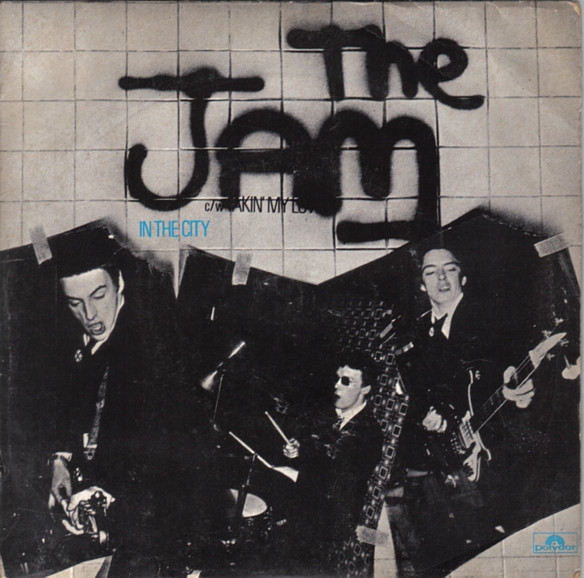
In The City – The Jam (1977)
The second in the opening salvo of late 70s attitude is the incendiary debut single by The Jam which was released on 29 April 1977. Forty-seven bloody years ago and some days it feels like yesterday – how does that happen? And yes, I am well aware there was a Paul Weller track on the blog a couple of weeks back after I saw him live, but this is only the second tune by his first band to get playlisted in over a year. And, never mind 47, it is light years in sound terms from his recent work. Although Weller does a couple of Jam tracks in his current live show, he is not an artist that looks backwards. Aged 24, he split the band in 1982 at the height of their fame and success, issuing an handwritten statement saying: “I want all we have achieved to count for something, and most of all I’d hate us to end up old and embarrassing like so many other groups do.”
The blistering In The City certainly counted for something. By reaching No 40 in the UK singles chart, it began a run of 18 consecutive top forty hits including four number ones, all in the days where you had to go to a shop and hand over cash for your records. As a song, it absolutely flies out of the traps, full of snarling mod-punk power with the guitar, bass and drum parts starting sequentially until, after four bars of ensemble playing, Weller’s rasps his fantastic opening line “In the city, there’s a thousand things I wanna say to you”. And we’re only twenty seconds into the song! It only lasts another two minutes but is crammed full of overdriven Rickenbacker guitars, harmony vocals and symbol crashes while the 18-year-old Weller tells the world “the kids know where its at”. I had just turned 17 and I believed him!
To get a sense of the incredible attack the band brought to playing live in those early days, this link takes you to film of them playing In The City at the Electric Circus in Manchester in June 1977. Introduced by the late Tony Wilson on Granada TV’s So It Goes, the clip actually begins with him finishing an interview with Poly Styrene and Oh Bondage is playing in the background. Serendipity!
Lynn and I were lucky enough to visit the 2015 exhibition on The Jam in London’s Somerset House, curated by Weller’s sister Nicky which took its name from a line from In The City. About The Young Idea was also the title of a brilliant band documentary which I highly recommend if you ever find it lurking on BBC4 on a Friday night – here is the link to the trailer.
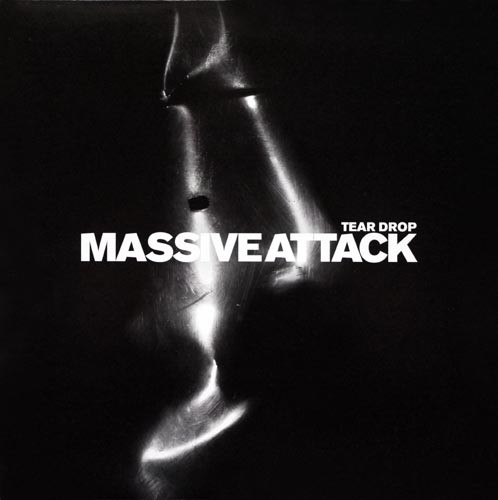
Teardrop – Massive Attack (1998)
OK – after the sonic blast of the first two choices, something different. I’ve talked on a few occasions of how the late 90s were a bit of a musical wilderness for me as our kids were born in 1995 and 1997 respectively and family became the most important thing. However, this week I stumbled across what might well be the last compilation cassette tape I ever made, probably dating from 1999. I’d been doing them since I was in my twenties but by the late 90s, mixtapes were being overtaken by the CD-R as desktop computers started to come with drives that allowed ripping and writing of tracks. I always gave my mixtapes a (often pretentious) title and this one laboured under the moniker Kitchen Sink Dramas – A Compilation. I guess I was reflecting a life where nights spent at gigs were now replaced with more mundane domestic tasks!
One of the tracks on the tape was Teardrop by Massive Attack which was released this week in 1998 and so on to the blog it goes. The music was initially written by Andrew Vowles with the intention of Madonna performing the vocals but his two other bandmates wanted Elizabeth Fraser from the Cocteau Twins to bring her breathy, ethereal vocal to the song as they felt she would suit the haunting feel of the melody better. They were right! The composition was developed from a simple harpsichord riff played over a pendulum-like beat. The drum sample’s very audible pops and crackles were taken from a old vinyl copy of Sometimes I Cry, a 1973 recording by widely sampled jazz pianist Les McCann. Fraser wrote the lyric herself and it’s a typically dense, undecipherable text which she says was inspired by the work of French philosopher Gaston Bachelard. No, me neither. As she was recording the song, she heard of the death by accidental drowning of singer Jeff Buckley, who she had formerly been in a relationship with. She comments that the songs’ mournful feeling came to be about him.
In case anyone other than Lynn is the slightest bit interested as to what we were listening to back then, I’ve recreated the contents of the TDK C60 cassette as a playlist at this link: Kitchen Sink Dramas. It’s mostly music from across the 90s but there are a few odd 80s throw-back tunes which I was presumably listening to at the time. For the avoidance of doubt, the compilation title was not directly related to the final track by Loudon Wainwright III. Life with two very young children who never slept through the night led to some stress but it never reached that point!
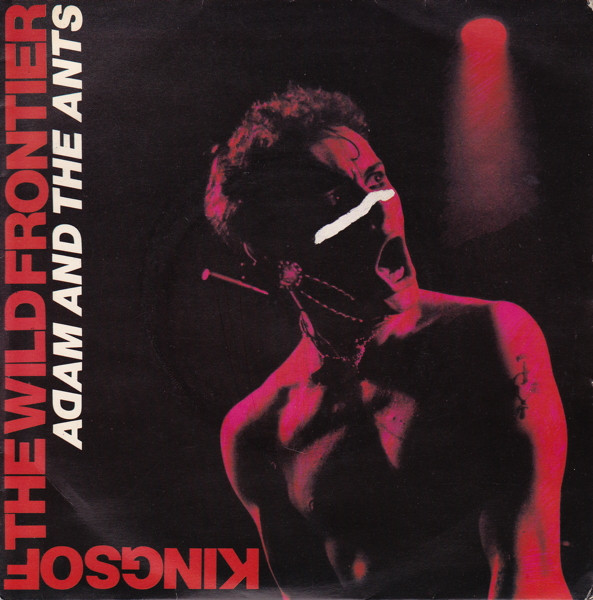
Kings Of The Wild Frontier – Adam And The Ants (1980)
Among the musical birthdays this week, I spotted that guitarist Marco Pirroni was 65 on 27 April. Although his career began playing with Siouxsie and the Banshees at their debut gig at London’s 100 Club in 1976, he made his name as Adam Ant’s collaborator in a commercially successful run of records in the early 80s.
Stuart Goddard was the lead singer of the terribly named London pub rock band Bazooka Joe. In November 1975 they played a gig at Central Saint Martins College of Art and Design where their support act was the first live performance by a group called Sex Pistols. Like Poly Styrene above, Goddard was so blown away by what he saw and heard that he decided to adopt the stage name Adam Ant and form a new band called The Ants. The first incarnation of this new band was ingrained in Malcolm McLaren’s King’s Rd punk scene with Adam getting a small role in Derek Jarman’s movie Jubilee. With a constantly changing line-up, their fetishist image acquired a cult following and a couple of singles and the LP Dirk Wears White Sox achieved modest indie success.
In early 1980, McLaren persuaded the Ants to quit working with Adam and join his new band Bow Wow Wow. Adam then formed the Ants Mk2 and brought in Marco Pirroni as guitarist and co-writer and they signed a joint publishing deal to work on new material. This material got them a recording contract with CBS and their first release was Kings Of The Wild Frontier in July 1980. With twin drummers playing a thunderous Burundi beat, the song was as built on Pironni’s Duane Eddy-style guitar lick which he had modelled on the sound in Ennio Morricone’s The Good, The Bad and The Ugly. Adam’s lyric was an attempt to encourage those alienated from society to form a “new family” through a strained metaphor on the repression of native Americans (“I feel beneath the white/There is a redskin suffering/From centuries of taming”) but I’m not entirely sure he pulled it off. However, those drums, that twanging guitar and all the whooping and shouting made the whole thing sound incredibly exciting – and that white stripe across Adam’s face was a stroke of marketing genius! See the single cover above and them performing it live in Manchester in 1980 here.
Kings didn’t chart at that point but made enough waves in the student discos of the UK (hello, John St Union!) to allow their follow-up single, the similarly wild-sounding Dog Eat Dog, to reach the top ten. The LP adopted the Kings title and by the time the more poppy next single Antmusic, hit No2 in the chart, the nation’s “Antpeople” had formed that “wild nobility” that Adam was on about. The Kings single got a second release in February 1981 where it reached No2, while the LP went to No1. For the next year or so, Adam Ant and Marco Pirroni could do no wrong commercially and they were named Songwriters of the Year at the 1982 Ivor Novello Awards for Stand And Deliver. But nothing quite reached the excitement of their first recordings and hence Kings Of The Wild Frontier is playlisted this week.
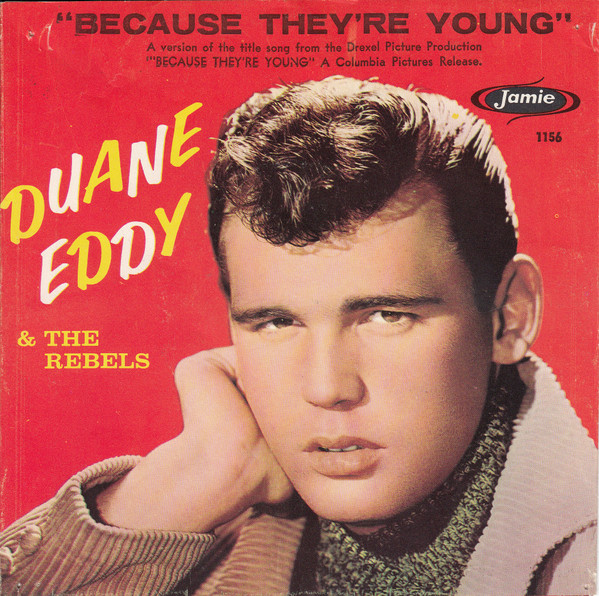
Because They’re Young – Duane Eddy & The Rebels (1960)
No sooner have I referenced Duane Eddy’s guitar playing style in the piece on Marco Pirroni above, than the news of his death at the grand old age of 86 was announced on Thursday this week. There was widespread news coverage of his passing and all of it featuring the same word. Twang. Because as far as Duane Eddy was concerned, the Twang’s the Thang, as the title of his 1959 LP was to proclaim. Eddy and his long-time producer Lee Hazlewood were responsible for popularising a particular rock’n’roll guitar sound that would go on to inspire everyone from George Harrison to Bruce Springsteen. In the rock’n’roll fifties, it was unusual for an instrumentalist to become famous but, as Eddy released only instrumental records, the focus was very much on him.
Eddy was famous for playing a 1957 Chet Atkins Gretsch 6120 guitar which he had upgraded to from a Gibson Les Paul that he bought in the early 50s. He preferred to play his lead parts on the bass strings and the hollow body of the Gretsch gave a low, reverb-heavy sound. In the days before electrical effects were available in the studio, Hazlewood would increase the twang by deploying an echo chamber with directional microphones to capture further reverberations. Famously, when recording his first single Movin’ ‘n’ Groovin in Phoenix in 1958, the studio had no echo chamber so Hazlewood brought in a 2,000-gallon steel water tank and recorded the sound from Eddy’s amp inside it. The opening riff, which Eddy had nicked from Chuck Berry, was then nicked by the Beach Boys for Surfin’ USA. There then followed a series of twang-heavy hit singles over the next five years like Rebel Rouser and Peter Gunn – Eddy’s cover of Henry Mancini’s TV show theme. Long after his brief period of fame had ended, Eddy was to have a hit with a further cover of Peter Gunn in 1986, this time with Paul Morley and Trevor Horne’s Art of Noise.
To mark his passing, I have chosen to playlist Eddy’s biggest hit single from 1960 Because They’re Young, partly at the prompting of my mate Ken who considers it ‘a great side’. It made a popular theme tune for several US rock radio shows in the 60s aimed at the youth market. The tune was also the theme to the 1960 movie of the same name but without any twang – it was performed in pop orchestral format with lyrics sung by James Darren. However, Duane Eddy & The Rebels made a cameo appearance in the film playing his hit Shazam. As well as featuring a young Doug McLure (yes, Trampas in The Virginian!), the movie starred Dick Clark as a high school teacher trying to make a difference in the life of his students. At the time, Dick Clark was the host of the TV music show American Bandstand, which brought rock’n’roll into the living rooms of middle America. Here is Clark introducing Eddy playing his 1964 single Guitar Child to an audience of three hand puppets on a fence. I’m sure it made sense to someone.
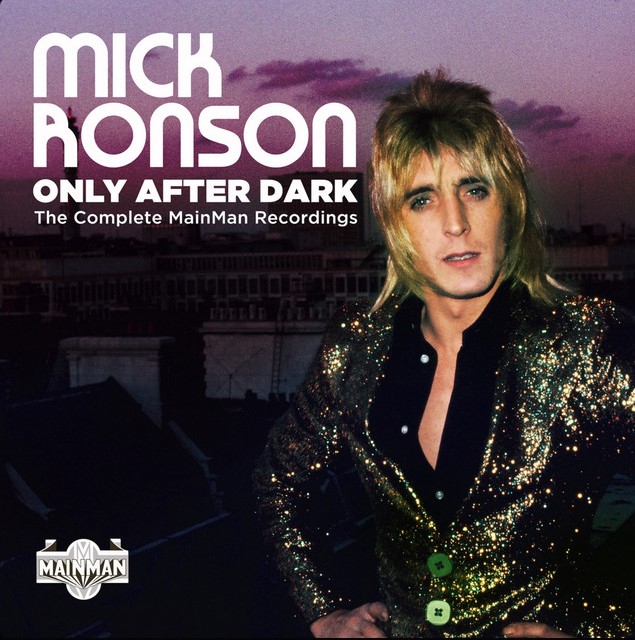
I’d Give Anything To See You – Mick Ronson (1976)
This week marks the 31st anniversary of the death of another great guitar player, Mick Ronson, ‘the Spider with the platinum hair’. He was diagnosed with liver cancer in 1991 and died on 29 April 1993 aged just 46. I have written about Ronson on the three occasions I have playlisted songs from Ziggy Stardust and Aladdin Sane because he was so fundamental to Bowie’s work on these career-defining records, as he was on The Man Who Sold The World and Hunky Dory. He was so much more than the guitarist in the Spiders From Mars or The Hype as they were known for the pre-Ziggy records. He worked closely with both Tony Visconti and Bowie on the arrangements of the music, particularly the strings which really lift the songs.
Starman was released as a single this week in 1972 and I was tempted to playlist it as the image of Bowie with his arm around Ronson’s shoulders while sharing a mic on that legendary Top Of The Pops performance is burned into my brain. But I wanted the focus to be on Ronson and to playlist something from the many things he did in addition to working with Bowie for four years. I thought of the incredible guitar solo he provided to Elton John for Madman Across The Water which Reg is rumoured to have dropped as he (correctly) believed it outshone him. I also considered his work on Lou Reed’s Transformer LP as producer, arranger and guitarist – that guitar on Viscious in pure Ronno. Or his jobbing guitarist role on Dylan’s 1975 Rolling Thunder Revue? And then there’s his long partnership with Ian Hunter which saw him briefly join Mott the Hoople to play on their final single, Saturday Gigs. This then led to them doing several records together as a duo. Once Bitten Twice Shy has Ronson all over it and their appearance together with Bowie to perform All the Young Dudes at the Freddie Mercury Tribute Concert in April 1992 was all the more poignant due to Mick’s obvious ill health.
But, although it will be unknown to just about everyone, I’ve decided to playlist something from Mick Ronson himself from his limited solo work. I bought his second solo LP Play Don’t Worry in 1975 and there is some great stuff on there including the shoulda-been-a-hit Billy Porter. But I’d Give Anything to See You is a wonderful track from sessions he recorded in 1976 which didn’t get released until a 2019 anthology of his work. It’s very much an old school rock ballad with a big solo but the guitar playing throughout the tune is just spell-binding.
On a final note, following Ronson’s death, Ian Hunter did what Ian Hunter does and wrote a song. Michael Picasso is a deeply personal eulogy and one of the saddest songs I’ve ever heard. The lyric is incredibly moving and uncompromising in its story of losing someone you love to cancer: “You turned into a ghost/Surrounded by your pain/And the thing that I liked the least/Was sitting ’round Hasker Street/Lying about the future.” Good night, Michael Picasso, indeed.
Last Word
Travelling to a midweek wedding means the next blog is going to be a shorter(!?) themed edition prepared in advance – so let’s hope no-one close to my musical heart croaks next Thursday. When I say prepared in advance, I haven’t decided what the theme is going to be yet but I’m hoping inspiration will strike very soon!
In the meantime, this week’s tunes have been put in their proper location at the end of the Master Playlist. Big shout out here to my sister Susan who decided a couple of months back that she would download the Master Playlist to her phone so she could belatedly listen to it. She told me this week that she has just completed listening to the full thing, in order from the start – all 25 hours of it. A feat of some considerable endurance! I haven’t asked her how often she reached for the skip button, though…
AR


 Week In Sound
Leave a reply to daveheatley Cancel reply