Back in 1960, the 26 of April was a Tuesday but the six tunes playlisted by your humble scribe this week don’t really scream out ‘grace’. Enjoy!
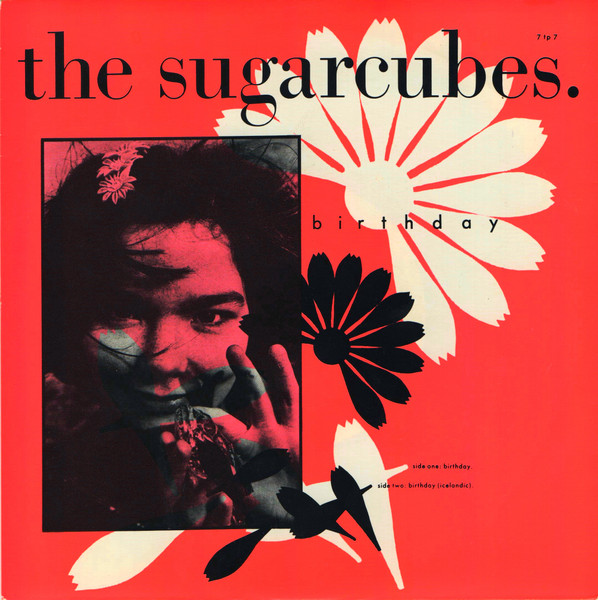
Birthday – Sugarcubes (1988)
Happy Birthday to me! As I hinted last week, you’ll be pleased to hear I am not going to inflict the Beatles song about the age I have finally reached on you. I have a lot of love for Paul McCartney as a writer and musician but he can have some real brain freezes and When I’m Sixty Four is a good example. I usually dip into Ian Macdonald’s brilliant and encyclopaedic Beatles tome Revolution In The Head when I am writing up a Fabs track. He describes every song listed in the order of when they started recording them and let’s just say Sixty Four’s musical hall pastiche gets less than a page. Whereas the preceding Strawberry Fields (they started work on Sixty Four during breaks in trying to record it) gets a whopping eight pages of forensic detail. And also, while I tick some of the boxes (losing my hair, obv!), it will still be a wee while before a Vera, a Chuck or even a Dave will be available for my increasingly arthritic knees.
Instead, I’ve gone for something which is as far from Maca’s “comic brass fob-watch” of a song as you can get and playlisted the birth anniversary tune produced by Sykurmolarnir, or The Sugarcubes to you and me who don’t speak Icelandic. Birthday was their first international single released in August 1987 and announced them, and probably more specifically Bjork, to the world. It was the Single of the Week in the inky pages of NME and Melody Maker and was included in all the end of year ‘best of’ lists, topping Peel’s Festive Fifty listener-voted chart. Listening to it again now, her voice still surprises – even after her thirty plus year career. Those shrieks and gasps coming from the back of her throat. Those sometimes inaudible lyrics which tumble out and implore you to listen but make no real sense other than as a series of images seen through the eyes of the five-year-old whose birthday it seems to be. “Thread worms on a string/Keeps spiders in her pockets/Collects fly-wings in a jar/Scrubs horse-flies and pinches them on a line.” The band provide no more than a rhythmic framework for her to perform over with the bass dominant on melody while the guitar shimmers behind it and that other-worldly muted cornet has those strange wails pulled out of it. Avant-garde pop, indeed, and not really conducive to blowing out candles on a cake, but I’ll give it my best shot.
Johnny B. Goode – Chuck Berry (1958)
There was some great news from deep space this week. Having managed to scramble its communication system more than 15 billion miles away from earth, some clever bastards (© Ian Dury) in NASA managed to remotely re-code a faulty chip on one of the three old computers on board the Voyager 1 spacecraft. Useable data was now reaching mission control in Pasadena again and the most distant human-made object in existence was back talking sense again after five months of what NASA said was “gibberish”. Voyager 1 is so far outside our solar system in interstellar space that it takes over 22 hours for a radio signal to reach the craft and another 22 for its response to get back to earth. That’s a slow conversation, but I do have people on WhatsApp with even slower response times than that. And they message in gibberish, too.
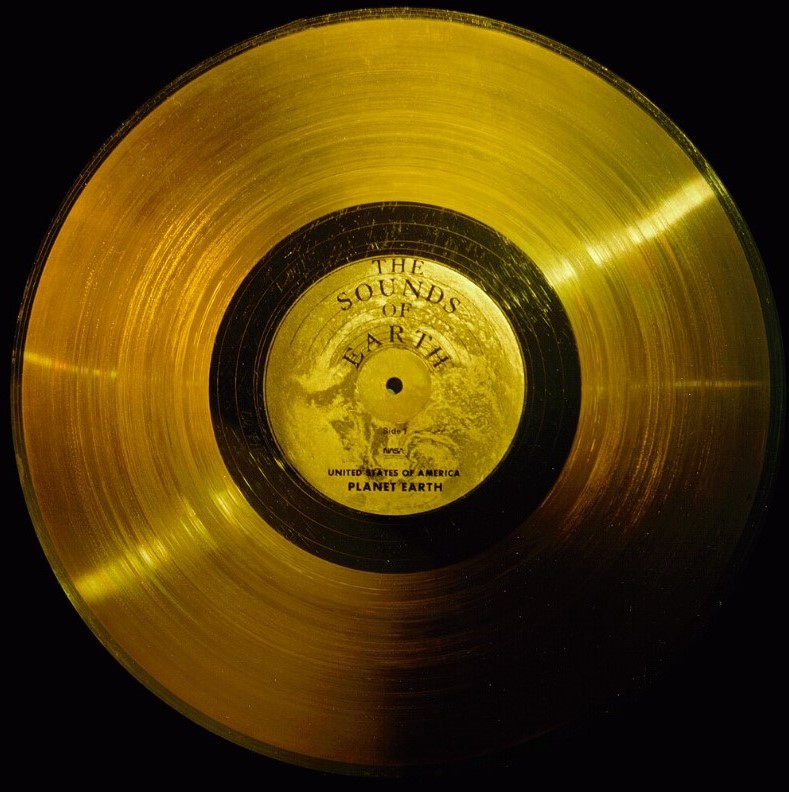
Voyager 1 and its sister craft Voyager 2 were launched way back in the summer of 1977 when most computers were the size of a filing cabinet (big boxes where we used to store bits of paper, younger readers) and had less processing power than the phone you are probably reading this nonsense on now. Another downside to being created in the 70s is that the information they put on each craft for anybody/anything that finds them to understand where they came from was embedded on a gold-plated record. With a hole in the middle. As you can see above, it was called The Sounds Of Earth. I’m not sure whether it plays at 33 or 45rpm but hopefully there is a vinyl revival going on in Ursa Minor when Voyager 1 gets there in 40,000 year’s time. Otherwise, they are going to struggle to hear Chuck Berry perform his signature tune among an eclectic list of other pieces of music.
Considered to be one of the most recognisable songs in the history of popular music, it was written and recorded by Berry in 1958 and released as a single on Chess Records. It was seen as the first rock’n’roll song about rock’n’roll stardom, a genre copied by many thereafter, notably major Berry-fan Ian Hunter of Mott the Hoople. But that’s a whole other playlist. Berry had originally written the semi-literate, Louisiana log-cabin dwelling Johnny as a ‘coloured boy’ but changed the lyric to ‘country boy’ to get radio airplay – it was 1958 after all. Covered by every high school band in the world (including the one in my school!), it is cleverly deployed in the 1985 film Back To The Future where Marty McFly performs it and a fictional cousin of Berry calls the young Chuck from the phone in the hall to let him listen to the song. However, I’m not sure if they are ready for it in Ursa Minor.
A Forest – The Cure (1980)
As well as my birthday this week, it’s also the 65th birthday of Robert Smith. So that seems like a perfect excuse to playlist something by The Cure who have only featured once before on the blog back in March last year. I was banging on about ticket prices for gigs and his attempt to cap some tickets at affordable prices so I picked a live version of the upbeat Just Like Heaven to playlist. This time I’m going to back to the start of Smith’s career and pick something from the band’s early, more downbeat days. I toyed with 10.15 Saturday Night, the much-loved b-side of the debut single but decided against it – not before I found out the original Small Wonder pressing of that record I have is worth £85 online!
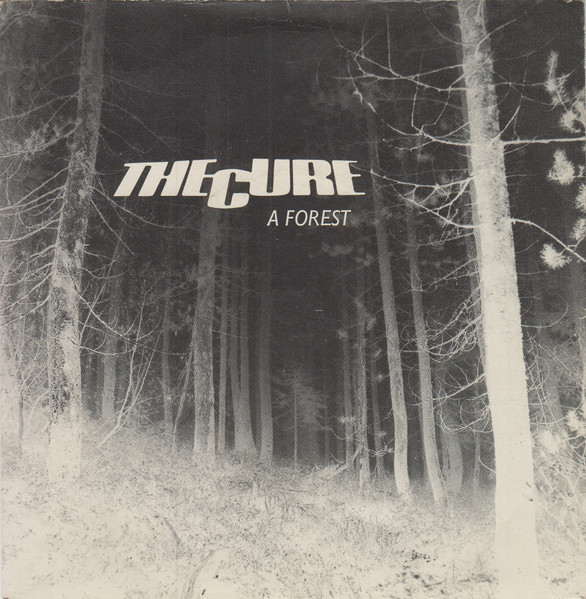
In the end, I had to go for the brilliance of A Forest as it’s the point where Smith really set the controls for what the band was to become. Turning his back on their scratchy, unfocussed first album, as he was writing, Smith was apparently listening to Bowie’s Low as well Van Morrison’s Astral Weeks and Nick Drake’s Five Leaves Left. Somehow this all meshed together to produce the dark, minimalist songs which form the second Cure LP Seventeen Seconds. It’s sleeve and that of it’s only single A Forest are determinedly monochrome to reflect the sense of absence and futility in the music, with lyrics full of cold rooms and time passing slowly. Smith said A Forest was based on a dream about being trapped in the woods looking for something just out of reach. Although it moves at a fair pace on Simon Gallup’s instantly recognisable bass-line, throwing every studio effect they could get their hands on at it gives it a sense of endless looping greyness. Having been drawn into the trees to find a girl, Smith then finds himself lost and alone: “The girl was never there/ It’s always the same/ I’m running towards nothing/Again and again and again and again”.
The song gave the band their first charting single (No 31) and, although in later years they lightened up a wee bit (I give you Friday I’m In Love), it remains their signature tune and a mainstay of live sets where it can be stretched and extended to suit Smith’s mood. The 1980 7inch single edit skips the intro, drops bars between verses and fades out during the final guitar solo, so I am playlisting the full 5:55 version from the LP which was also on the 12inch release. Listen out for my favourite bit at the end when the bass is left playing alone for four bars before echoing away into oblivion. It’s all so gloriously gloomy!
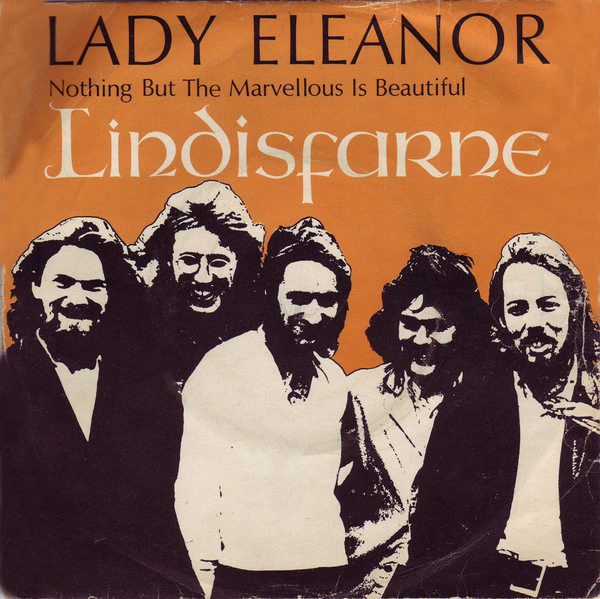
Lady Eleanor – Lindisfarne (1971)
Lynn and I spent last weekend down in beautiful Northumbria where the long range weather forecast had suggested that it would be dry and reasonably warm. Well one out of two wasn’t bad. There was a biting cold wind blowing off the North Sea such that, while people in the West of Scotland were doing their gardening in their t-shirts, we were wrapped up in every layer we brought with us (including hats). We were based midway between Bamburgh and the Holy Island, although we also nicked down to a tiny village called Low Newton-by-the-sea and walked out to Dunstanburgh Castle. Huge waves and lots of interesting birdlife. Having been there before, what we didn’t do was go out to the Holy Island and visit Lindisfarne Castle but we could see it along the coast from a long way off.
It was kind of inevitable that my mind turned to the early 70s folk-rockers from Newcastle and that I would be attempting to hum their tunes as I walked headlong into the wind. Although now only a footnote in UK music history, for a brief period in the early 70s the band were really big news and a hugely popular live act. Fronted by Rod Clements and much-admired main songwriter Alan Hull, their second album Fog On The Tyne topped the album charts for a month and was the eighth best-selling LP of 1972, a time when record sales were enormous. The Clements-penned Meet Me On The Corner reached No 5 in the singles chart and prompted the re-release of Lady Eleanor, their second single from 1971, which was written by Hull and went on to reach No 3. However, the follow up LP didn’t sell as well and the band followed that well worn-path of tensions, splits and reformations over the next few decades. Although Alan Hull died from a heart attack in 1995 aged 50, the 76-year-old Clements still plays with a version of the band – they have 40 UK dates scheduled from now until the end of the year! I have decided to playlist the gentle acoustic Lady Eleanor as, even though I began buying T.Rex records in 1971, I recall being very taken by the wistful close harmonies and the mandolin playing when these hairy men performed the song on Top Of The Pops.
In 2021, there was a fantastic BBC documentary made about the life of Alan Hull which was beautifully presented by current Geordie wunderkind Sam Fender. Fender had covered Hull’s glorious Winter Song in 2020 just before his mainstream breakthrough and his touching journey into the musical past was interspersed with glowing tributes to Hull’s songwriting from the likes of Elvis Costello, Dave Stewart and Peter Gabriel. It’s not available on iPlayer now but if you are intrigued by this trailer Lindisfarne’s Geordie Genius, the full doc is available on YouTube.
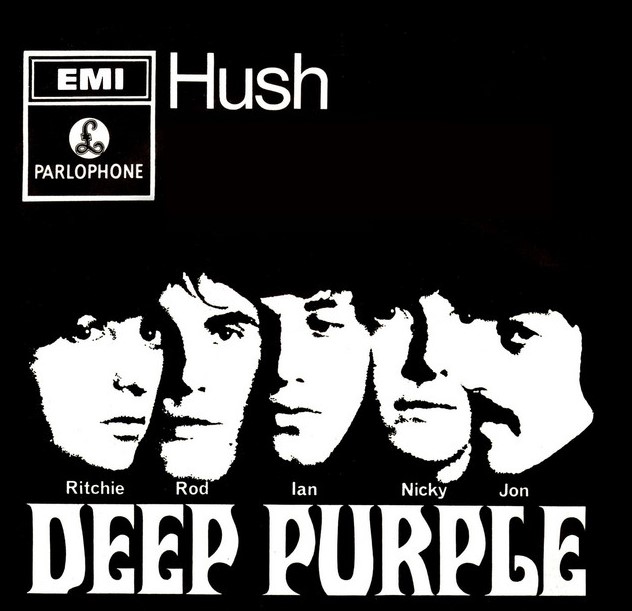
Hush – Deep Purple (1968)
On 24 April 1934, American engineer and inventor Laurens Hammond filed a patent for an “electrical musical instrument”. He was so keen to get it into manufacturing that the documentation was delivered by hand to the patent office in Chicago by his fellow inventor John Hanert. And so began the life of one of the most distinctive sounding instruments in popular music, the Hammond organ. Hammond and Hanert had developed their instrument from the large and unwieldly Telharmonium invented back in 1897, which used huge revolving electric alternators to generate tones that could be transmitted by wire. They reduced the scale of the alternators to make it more manageable and, when combined with the amp in a Leslie speaker, it produced an amazing sound.
Originally marketed to churches as a lower-cost alternative to wind driven pipe organs, it quickly became popular with jazz trios who could use it to fill their sound out to be like bigger bands. Jazzer Jimmy Smith is credited with creating the classic sound with the drawbar settings he adopted on his Hammond B3, particularly his use of the harmonic percussion feature. By the 1960s, the instrument was being incorporated into many genres of popular music, appearing on records by blues, soul, reggae and rock bands, particularly so-called ‘progressive rock’. The instrument featured strongly in last week’s Al Green track Love and Happiness but probably its best-known use in soul music (or in any genre, for that matter) is on the enduring instrumental Green Onions by Booker T & the MGS.
I wanted to playlist something that illustrated the Hammond’s use in rock and toyed with Gimme Some Lovin’ by The Spencer Davis Group or Time Of The Season by the Zombies. But in the end I opted for Deep Purple’s cover of a song written by Joe South for American country- pop singer Billie Joe Royal. Hush was recorded by the first incarnation of Deep Purple before they turned to heavy rock and became “the globe’s loudest band” in the early 70s. The line-up featured long-term organ player John Lord who was classically trained and he stars on Hush‘s psychedelic wig-out which was a hit single in the US but not in the UK. It starts with the distant howls of a wolf and, early in the tune, Lord’s stylised stab chords on his organ feel like the low growls of that animal. While Ritchie Blackmore’s guitar licks feature throughout, it’s when Lord unleashes his solo at 2:50 that the full raw power of the Hammond B3 roars out of the speakers.
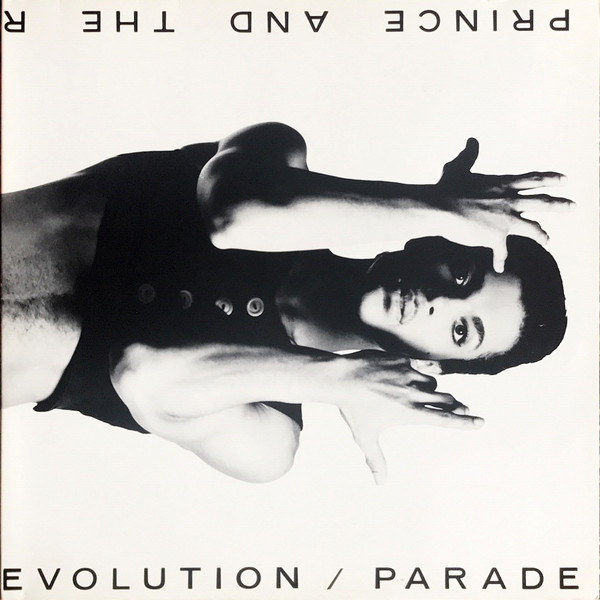
Sometimes It Snows In April – Prince & The Revolution (1986)
I’ve been saving this one since the start of May last year when I realised it wasn’t April anymore and I’d missed the moment. The moment, from a WIS point of view, being that the date of this track’s recording (21 April 1985) is the same as the date of Prince’s death (21 April 2016). Given that it has April in the title, that’s a ‘three cherries in a row’ moment for this blog (actually four if you link it to title of the movie it came from!), so you can see why I’ve been waiting so patiently.
With the snow still falling on the tops of the Scottish mountains this week, this is the closing track from Prince’s eighth album Parade which was the last time The Revolution was billed as his band. Like his breakthrough album Purple Rain, this collection was a film soundtrack, this time for the movie Under The Cherry Moon, where Prince both starred and directed. Absolutely panned by the critics, it was a box-office flop as crowds stayed away in their droves from his vision of a romantic musical comedy-drama shot on the French Rivieria. However, on the upside, at least the music did well. The album sold over a million copies and lead single Kiss was a huge global hit, considered to be one of his finest songs. In truth, it needed to be a success as the previous album Around The World In A Day had not set the heather on fire critically, despite having two terrific singles in Raspberry Beret and the excellent but rarely heard on the radio Pop Life.
Sometimes It Snows was not released as a single, although after his death airplay and streaming took it into the charts in some European countries. Prince wrote this introspective acoustic ballad with Wendy & Lisa from The Revolution and the narrator recounts memories of Christopher Tracy, the gigolo character he portrayed in Under the Cherry Moon. It’s a beautiful song and I love the way they insert that unexpected B flat chord (I looked it up) in the middle of the third line of the chorus before it returns to main chords in the final line. “Sometimes I wish that life was never ending/But all good things, they say, never last”.
Prince’s engineer Susan Rogers supervised the recording and tells of how the studio lights were dimmed and candles were lit and Prince stood between Lisa’s piano and Wendy on acoustic guitar and sang it live. It’s such a stark recording that the mics picked up Wendy’s chair creaking as she played. However, Prince wanted the sound left in the mix as he liked it. I always thought the noise you could hear was the sound of Wendy’s fingers sliding on the guitar strings but maybe it’s her chair. It’s still a beautiful record.
Last Word
The (very few!) Swifties among the WIS readership will notice that the launch of the blessed Taylor’s latest release has gone unmarked on this week’s blog. In truth, I’ve been struggling to get my head around its 2 hours of tortured poetry and, Blue Nile references notwithstanding, none of the tunes really stood out on a first a listen through. I see today that The Pet Shop Boys have attempted to link themselves to the Swift hype by having a pop at her music (not her lyrics, notably) while they were blitzing the media peddling their new LP Nonetheless on their 40th anniversary in music. Maybe I’ll dabble in these areas next week, but don’t count on it…
Meanwhile, my selection of well-aged songs from this week have dropped into the deep ocean of the Master Playlist.
AR


 Week In Sound
Leave a reply to WIS 10 Jan 2025 – Week In Sound Cancel reply