We’re back with another bumper edition of the blog with songs linked to plays, books, anniversaries and ….theoretical physics? Enjoy!
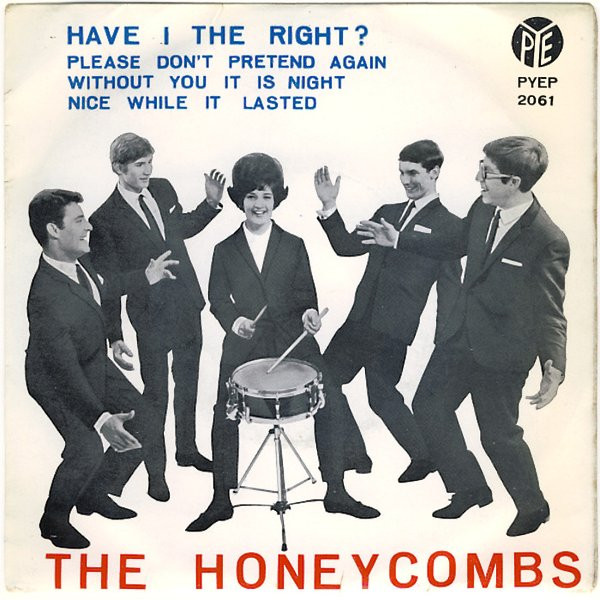
Have I The Right – The Honeycombs (1964)
Although streaming services are the musical equivalent of a lock-in at the sweet shop sweet, good radio broadcasts are still a great way to listen to music. I think I’ve mentioned before that The Undertones’ bass-player Mickey Bradley has a great show late on Friday night on BBC Radio Ulster which you can hear via BBC Sounds. His choice of top tunes and his perfect Derry radio voice make it a fine listen. He also uses X to post an image and a comment as he plays each track and there is a small but enthusiastic group of followers who ‘live- post’ about the music, which Mickey often joins in with.
During last week’s show, I realised that WIS had missed the anniversary of the birth of revolutionary 60s record producer and sound engineer Joe Meek. So I’m putting that right now and shamelessly nicking this Honeycombs track played by Mickey to mark the occasion. Meek was a pioneer who assisted in the development of techniques like overdubbing, sampling and reverb. The NME called him the greatest producer of all time commenting that he “was a complete trailblazer, attempting endless new ideas in his search for the perfect sound.”
Meek is probably most famous for the appropriately spacey sound he got on The Tornados 1962 instrumental hit Telstar, named after the satellite. That got to No 1 in the UK as did the more earth-bound Johnny Remember Me by John Leyton in 1960. Have I The Right was his last No 1, all three having been recorded in his rented apartment in Holloway Rd in London. Dominated by the drumming of Honey Lantree, Meek apparently supplemented the beat by recording the rest of the Honeycombs stamping their feet on his stairs with mics fixed to the bannisters with bicycle clips! Meek was a troubled genius, though – he was bi-polar and suffered from bouts of deep depression. Tragically, during one of these periods in 1967, he had an argument with his landlady which led to him shooting her and then he turned the gun on himself.

No Sell Out – Malcolm X/Keith LeBlanc (1983)
The announcement of the death of American drummer and record producer Keith Le Blanc last Friday morning came too late for last week’s blog so I am picking this up now. Inspired to take up the drums in his early teens having seen Ringo with The Beatles on TV, Leblanc went on to become the session drummer with Sugarhill Records in the early 80s. In particular, he played drums and programmed the beats for Grandmaster Flash & The Furious Five’s debut long player The Message, including the title track single which was a top ten hit in the UK in 1982. In the mid 80s, he left Sugarhill and teamed up with London-based dub producer Adrian Sherwood to form Tackhead, an industrial hip hop group who had some minor indie hits in the UK. Leblanc would go on to provide drumming, writing and production skills for a huge range of musicians like Nine Inch Nails and Tina Turner, Depeche Mode and Annie Lennox.
I really became aware of him while he was working at Sugarhill but independently made the incredible No Sell Out record with rivals Tommy Boy Records. The story goes that he had heard Flash playing on his ‘Wheels of Steel’ decks mixing some beats with the single repeated line “Do you feel lucky, punk?” from the movie Dirty Harry. He found the spoken word and beat combo interesting and began listening to recordings of Malcolm X speeches and experimenting with various newly available drum machines. Leblanc finalised his composition mainly using words from the speech Malcolm X gave after the firebombing of his house in 1965, and the single was released in Nov 1983. A white guy using a dead black activist’s words in a pop tune initially caused some consternation among the civil rights movement but Malcolm X’s widow wrote a supportive sleeve note for the record. As one of the earliest sample-based records, the UK music critics loved it and Melody Maker, Sounds and NME all made it their ‘single of the week’. Radio airplay was harder to come by but, when I heard first it, I thought it was an extraordinary record – and I still do. I loved the loop at the end of the line: “What I say might sound like I’m stirring up trouble/But it’s the truth”. Sales were reasonable and it made No 60 in the UK chart, with my copy of the single being added to several of my mixtapes that year.
Full disclosure – Mickey Bradley also played this track on Friday night to mark Le Blanc’s passing but I had already decided to playlist it this week. I’m not nicking all his stuff – honest!
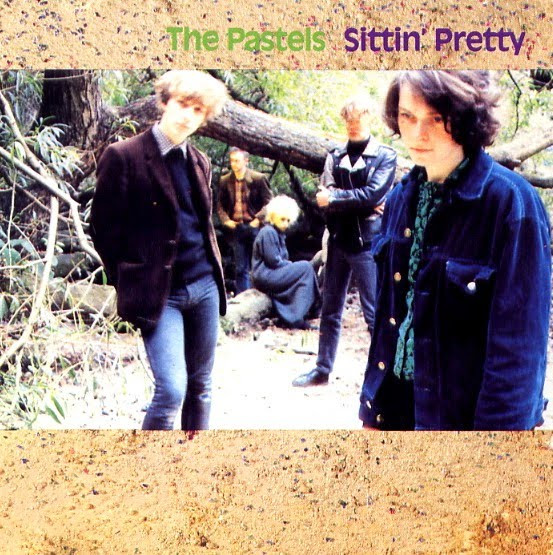
Nothing To Be Done – The Pastels (1989)
On Saturday night, Lynn and I were at the Traverse Theatre in Edinburgh to see the play This Is Memorial Device on one of its four sold out nights on a short tour that began at the Tron in Glasgow the week before. It’s now heading for three nights in Aberdeen next week before its final performances over two weeks in London Riverside Studios. Grab your tickets now, London readers! We had missed it on its Fringe First-winning run in 2022 in the Wee Red Bar at the Edinburgh Book Festival. So we were really glad to be there on Saturday as it was a tour-de-force, one man performance from The Thick Of It, Line of Duty and Slow Horses actor Paul Higgins.
The play has been adapted from the 2017 debut novel by David Keenan which presents the fictional history of Airdrie’s mysterious, 80s post-punk legends Memorial Device, “the greatest band you’ve never heard of”, who apparently nearly supported Sonic Youth once. I have to confess that I have not yet read the book but I understand that the story is pieced together through the memories of “a litany of misfits, artists, drop-outs, small-town visionaries and musicians”. In the play, Higgins is excellent as former fanzine writer Ross Raymond who takes the audience on a “hallucinatory journey, back to the hopes and dreams of early adulthood” as the blurb says. On a stage full of memorabilia (guitars, drums, stage clothes, LPs, cassette tapes, etc) Raymond builds the legend through tales of fear and loathing in Lanarkshire. The instruments are live and get occasionally strummed by Higgins to enhance a storyline with further audio visuals provided by some Stephen Pastel-penned music and videos of interviews with some of those aforementioned small-town visionaries. It’s totally immersive and, while it’s a love letter to Airdrie in the early 80s, it also manages to be hugely evocative for me of that period in Paisley when local bands were forming and breaking up and it all seemed so important.
I have ordered a copy of the novel as I write this but have found a playlist on Spotify which claims to present “the music that inspired the book by David Keenan”. I’ll find out soon enough if these post (and pre)-punk tunes do that but I’ve plucked one from the 147 tracks on there to playlist. Given Stephen Pastel’s involvement with the play soundtrack (which isn’t due for release until June), it seemed appropriate to lift Nothing To Be Done from The Pastel’s 1989 LP Sittin’ Pretty. Later to be covered by Teenage Fanclub and Paulo Nutini, this version is very much The Pastels.
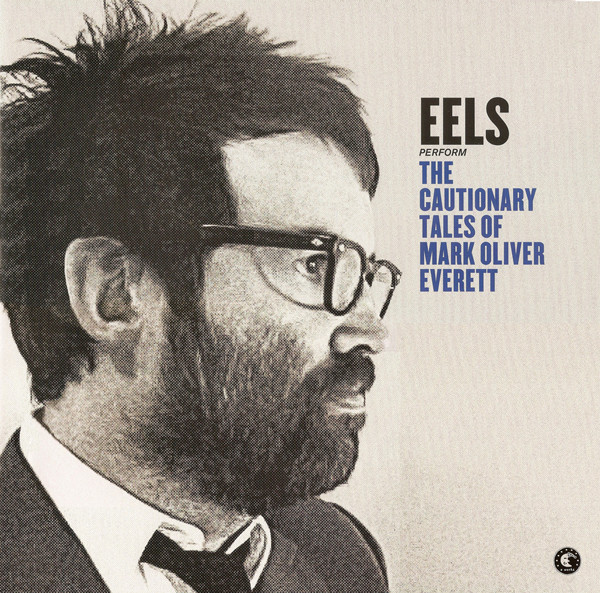
Parallels – Eels (2014)
Over the course of this week, we have completed watching the eight episodes of the mind-bending sci-fi thriller series Constellation which is on Apple TV. I am not happy at the money these corporate streaming services take off you, but it has to be said they do make some elegant and classy dramas and Constellation is no exception – the trailer gives you a taste of it here. Astronauts return to earth and their families after an accident in the International Space Station and, to coin a phrase, things are not what they seem. It’s part pyscho-thriller, part science-noodle and all played out in a dread-filled atmosphere through a series of disorientating, fractured scenes which blend flashbacks with hallucinations. It doesn’t half screw with your head, though – during the time we watched it, my dreams were vivid and filled with weird incidents and misplaced people. It’s a slow build to the end, but eventually you realise that quantum physics are at play and that space has moved Einstein’s goalposts as parallel universes collide. The scenes in the family’s remote cabin even allow a riff on Schrodinger’s cat which appears both dead and alive, of course.
It very much put me in mind of the award-winning documentary made by musician Mark Oliver Everett (known as E) who is the frontman of Eels. E was the son of physicist Hugh Everett III was considered by some as one of the most important scientists of the 20th century. His 1957 PhD thesis proposed what became known as the ‘many-worlds’ interpretation of quantum mechanics. A reclusive, studious man who barely spoke to his children, he died of a heart attack at 51 in the family home and it was the 19-year-old E who found him. In 1996, E’s sister took her own life and her suicide note saying she was going to meet her father in a parallel universe. By 2007 when E was an established musician with several critically acclaimed albums under his belt, he published his autobiography, Things The Grandchildren Should Know. Inspired by this, he decided to make a documentary about his father’s life and work. Parallel World, Parallel Lives was jointly produced with BBC Scotland and BBC Four and allowed E to go on…erm… parallel journeys to to understand both his father and his theory. It was a glorious watch (“The more I get to know him, the more I like him”) and the film won a BAFTA in 2008 – see the trailer here.
A few years later, Eels released their eleventh studio album The Cautionary Tales of Mark Oliver Elliot. Tucked away on there was this playlisted track which appears at first to be a typical sad Eels song about a lost love who is “out there somewhere“. But the title and lyric suggest, to my ears at least, that this is a meditation on parallel lives lived in parallel worlds. “Woke up lost in a world I didn’t know/I shook it off and I’m trying to make a go/Ever get the feeling that the story isn’t done/And you know that you are not the only one”.

Higgs Boson Blues – Nick Cave & The Bad Seeds (2013)
And sticking with the subject of science, the death of theoretical physicist Peter Higgs was announced on Tuesday this week. A quiet and incredibly modest man, he reluctantly became the most famous scientist in the world in 2013, winning the Nobel prize at the age of 83. Back in 1964, as a young mathematical physics lecturer at Edinburgh University, Higgs published a theory suggesting that the universe contained all-pervading particles that essentially held everything together. The search for this particle at the core of the universe began and over the years it attracted many millions of research funding, including the construction of the CERN Large Hadron Collider below Geneva. As governments needed something to focus their funding on, his name became associated with the particle, or boson, being searched for. He was uncomfortable with this, believing himself to be only part of a global scientific grouping developing the theory. However, as an atheist, he disliked it “the God particle” description coined by others and accepted the Higgs boson term. When the boson’s existence was eventually proven in the Collider, it was fitting that Higgs’ vision was rewarded with the recognition he deserved.
There is an exhaustive obituary in the Guardian by his biographer but I would direct you to a much more personal piece featuring my friend and WIS guest blogger Ken Macdonald. Back when he was BBC Scotland’s Science Correspondent, Ken made a wonderful documentary on Higgs and, on Wednesday this week, he was invited on to the Radio Scotland morning news programme to talk of his memories of the physicist. To hear Ken briefly explain the science and paint a picture of Higgs as a self-effacing craft ale lover who did some clever sums, click BBC Sounds here and scroll to 1:13:45. It’s ten minutes of life-affirming broadcasting.
Nick Cave & The Bad Seed had released their fifteenth album Push The Sky Away in February 2013, ten months before the Nobel Prize announcement. The standout track was Higgs Boson Blues, an incredible existentialist narrative, typical of Cave’s stream of consciousness style. It’s a hallucinatory ‘talking and driving’ song with Cave on the road to Geneva, groaning and crooning his way through obtuse imagery such as: “If I die tonight/Bury me in my favourite yellow patent leather shoes/With a mummified cat and a cone-like hat/That the Caliphate forced on the Jews“. Quite what Peter Higgs would have made of it, I am not at all sure, but I was with Ken watching Cave perform it with The Bad Seeds in Glasgow in 2017, so it seems appropriate to playlist it this week.
Sam Stone – John Prine (2000)
OK – no science or plays adapted from novels for this last track – back to a simple anniversary. It is four years this week since the great John Prine passed away at the age of 73. After beating two bouts of cancer in 1998 (neck cell) and 2013 (lung), Prine died from complications caused by COVID-19. This is actually Prine’s second appearance on the blog, although the first was in the Christmas Special week when one of his quirky festive tunes made the twelve alternative cuts chosen then. As arguably one of the most influential country-folk songwriters of his generation, this time I’m going for one of his signature songs.
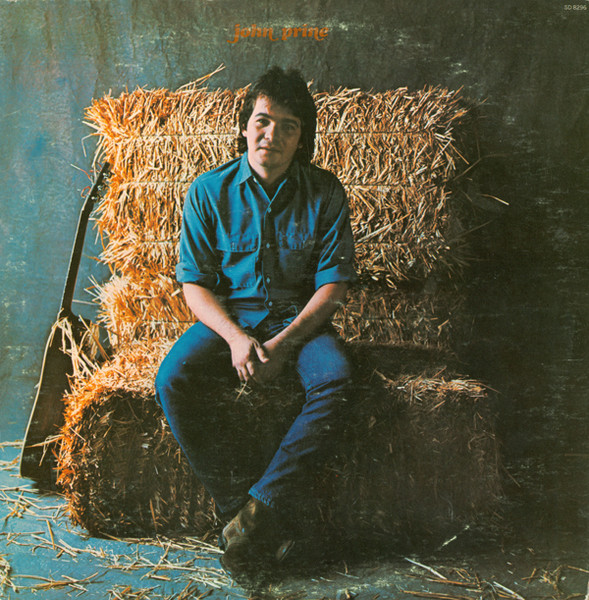
Born to Kentucky parents in Chicago, Prine’s reputation for songwriting grew in the city’s folk scene to the point that Kris Kristofferson asked him to open a show for him in New York in 1971. Atlantic Records exec Jerry Wexler was in the audience that night and signed Prine the next day. His self-titled debut album was released that year to great acclaim and talk of “the next Dylan”. Zimmy seemed to agree as he turned up unannounced for one of Prine’s New York shows to promote the album and played some harmonica with him. The LP included several songs that Prine would play throughout his long career and be widely covered by other artists. Songs like Paradise (about the environmental damage of surface coal mining in Kentucky) and the beautiful, yearning Angel From Montgomery (recorded by Bonnie Rait and played by her at last year’s Black Deer Festival – see WIS23Jun23).
Voted one of the ten saddest songs of all time by Rolling Stone Magazine, Sam Stone tells the poignant tale of a Vietnam veteran who returns home to his family injured and develops a morphine addiction. The opening line of the chorus kicks you right in the guts (“There’s a hole in daddy’s arm where all the money goes”) and Prine goes on to lay out the downwards spiral of his life to his inevitable demise through an overdose. Although the illustration above is the debut album cover, I’ve playlisted a re-recorded version which Prine released in 2000 after his return to performing following his first round of cancer treatment. The surgery to his neck had affected his vocal chords and added a gravelly tone to his voice, which makes the song even more moving – if that were possible.
Lynn and I were lucky enough to see Prine perform Sam Stone and Paradise in Dublin in 2002 when he appeared in a singer’s circle with Emmylou Harris, Steve Earle and Elvis Costello in the Concert For A Landmine Free World. The final verse of Paradise has the lyric: “When I die, let my ashes float down the Green River/Let my soul roll on up to the Rochester Dam”. After his death in 2020, this wish for his ashes was fulfilled and in 2022 a park by the Rochester Dam was dedicated to him.
Last Word
Last week’s increase in word count has followed through into this week’s offering and my only excuse/mitigation for this continued verbosity is that there has been a lot going on and somehow it all kind of flowed out of me. It’s also been pissing down with rain again. Maybe next week will be drier…
As the Master Playlist continues to grow, I’m toying with the idea of splitting it into smaller, more manageable “Volume 1, Volume 2” lists of, say, 200 tunes each? Not sure but for now this week’s six have been added to the big pile at the link below.
AR


 Week In Sound
Leave a reply to Liz Gault Cancel reply