So we’re finally back on the (occasional) horse and this edition of WIS brings you six familiar-ish songs performed differently by the original artist. Enjoy!
First Word
So the blogging sabbatical that preceded the long playlist of 2025 tracks issued at the end of December has continued into 2026. Over the last two months, I’ve had several ideas for themes that would suit the original WIS six-song format, but I just didn’t find the time (or indeed make the time) to write them up. But, finally, I’m going to dive back into this blogging lark with a theme around songs where artists have released alternative versions to the more familiar ‘original’ versions. I am not presenting these as being ‘better’ versions, just that they are noticeably different in approach, and that’s what makes them worth a listen. See what you think…
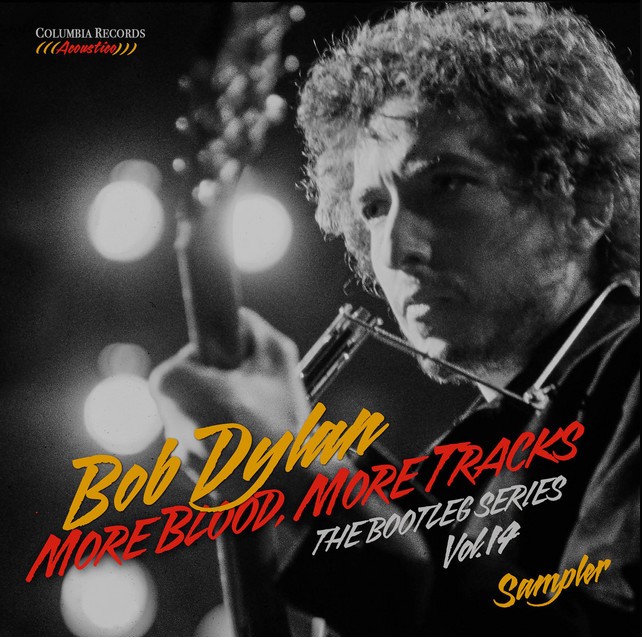
Tangled Up In Blue (Take 3, Remake 3) – Bob Dylan (1974)
More then any artist, His Bobness has been positively forensic in his approach to make every alternative version of his songs available to the world. His long-running Bootleg Series began back in 1991 with the snappily titled Volumes 1–3 (Rare & Unreleased 1961–1991) which came either as 5 vinyl records or 3 of those new-fangled CD things. Last year, Volume 18: Through An Open Window (1956-1963) was issued as a whopping 8 CD set, although he kindly selected some highlights to fit on a more modest 4 LP set.
The original version of Tangled Up In Blue was the opening song on Zimmy’s acclaimed 1975 album Blood on the Tracks. It was released as a single which reached No31 in the US Billboard chart and, although doing nothing in the UK, it became one of Dylan’s best-known songs. It was recorded in Minneapolis in December 1974 and features a full backing band (including two other guitarists and a keyboard player) and Bob attacks the vocals in the way that only he does.
The alternate version I’ve included here was recorded three months earlier in September 1974 in New York and appeared for the first time in 2018 on The Bootleg Series Vol. 14: More Blood, More Tracks. It is much more sparse in its arrangement than the ‘original’ with Dylan’s guitar and harmonica only supplemented by a bass, way back in the mix. In response to the instrumentation, Dylan’s vocal track is restrained and, in my humble opinion, much more appropriate for the haunted imagery of the lyric. Despite what I said above, I do actually think the alternative is better in this case!
This is not the first appearance of the song on the blog. Back in WIS 12 May23, I included a fine version by Fife’s own KT Tunstall as one of six female covers of Dylan songs. It came from a live BBC session where she does that cool thing, creating the percussion track on the body of her acoustic guitar using a tape loop. She also sounds like she’s having a ball singing the song.
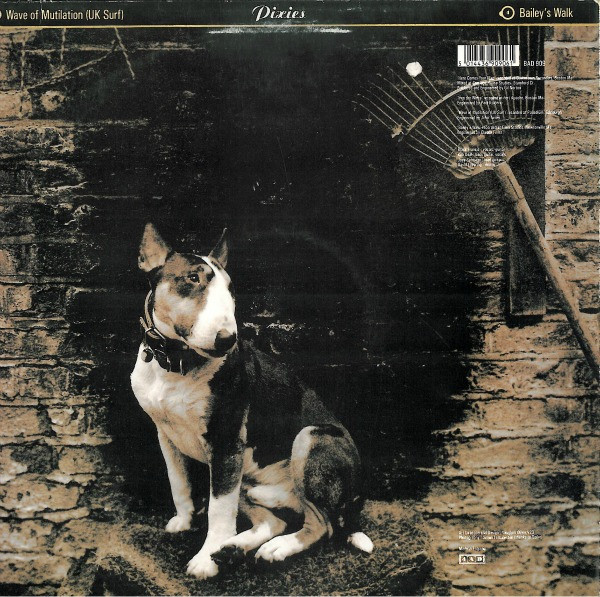
Wave of Mutilation (UK Surf Version) – Pixies (1989)
When this song came into my head as a candidate for this playlist, I did a quick check back into the dusty archives of the blog to find that Pixies have only been featured once before, when Gigantic was playlisted in WIS 17May24. And that was to mark the death of producer Steve Albini! So, with a measly second appearance long overdue for what I referred to back then as “the influential Boston noise-merchants”, I present one of their most restrained tunes!
In its original form, Wave of Mutilation was the third track on their second (and arguably best) full-length album Doolittle, released in 1989 – the first recording I ever owned on Compact Disc, fun fact fans. I’m not sure what format Kurt Cobain had it on, but he’d obviously listened to it a lot before putting its quiet/loud dynamic into Smells Like Teen Spirit. Although seen as part of the late 80s wave of experimental US guitar rock, Pixies never quite fitted in to any of the sub-groupings – they weren’t former hardcore, they didn’t come from Seattle and, although from the east coast, they were far from New York hipsters. But in Gil Norton they linked up with a producer who took their big sound and their weird, often violent-sounding lyrics and compressed their layers of melodic guitars and ferocious vocals into an impossibly thrilling whole.
The track was apparently written by Black Francis after reading about unsuccessful Japanese businessmen committing murder-suicides by driving off the end of ocean piers. Despite this and its disconcerting title, Wave of Mutilation is probably one of the more accessible songs on the album. Unlike say, the screamathon of Tame or Crackity Jones’ furious pace, Wave of Mutilation has a disarming, almost gentle dreaminess to it. Sure, there is heavy reverb on the guitar tracks and David Lovering’s thundering drums are pushed up in the mix, but underneath it all, there is clearly a pop tune in there. The band seemed to have cottoned on to this because they started performing an alternative version of the song during encores on the Doolittle tour. This slower, acoustic take on the song first appeared on a BBC session that the band did for John Peel in May 1989. It was subsequently released a few months later as the b-side of the Here Comes Your Man single, having been given the subtitle “UK Surf Version”. Dick Dale it ain’t.
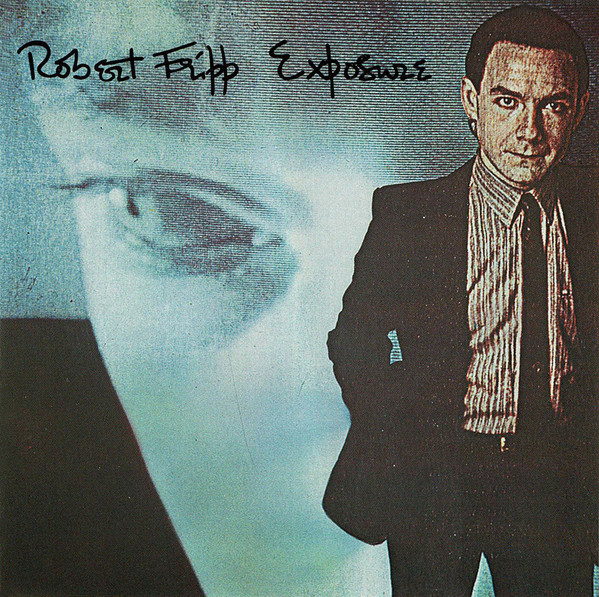
Here Comes The Flood (Exposure Version) – Peter Gabriel (1979)
Way back in 1977, when the musical tectonic plates were shifting beneath our feet, I was in a relationship with a Genesis fan. Yes, while I was manning the barricades of the punk rock revolution, I was stepping out with someone who had been listening to Supper’s Ready on repeat. [It was easy to do that as the track’s 23 minutes running time took up virtually all of Side 2 of the Foxtrot LP.] It was far from the most straightforward relationship and this wasn’t helped by our musical differences. With my (admittedly in retrospect foolish) ‘Year Zero’ tendencies, we had to work hard to find some common listening ground.
It was never going to be Buzzcocks, but I could just about be persuaded to have the first of the four self-titled solo LPs by Peter Gabriel on her turntable of a winter’s evening. It was released in 1977, two years after he quit Genesis and began his slow, steady move into world music. It’s the one with the car on the cover and the mega-hit single Solsbury Hill, which drew the musical line under his time with prog rock. Underneath my obsession with The Clash, I was always a sucker for a dramatic build to a melodic chorus, so album closer Here Comes The Flood was a guilty pleasure of mine that year. Apparently, it was written after a dream where “the psychic barriers which normally prevent us from seeing into each other’s thoughts had been completely eroded, producing a mental flood.” Quite!
The original production by Bob Ezrin took Gabriel’s piano opening and threw everything at it – layers of synths, rumbling percussion, the London Symphony Orchestra strings and a rock guitar solo by guitarist Robert Fripp. Possibly not surprisingly, Gabriel believed the final recording strayed too far from his original demo. So he re-recorded a simpler version while working on Fripp’s first solo album Exposure, released in 1979. Featuring Gabriel’s vocal and piano supplemented only by some nuanced synthesiser work by Brian Eno, the track was recorded using the ‘Frippertronics” tape delay and looping system which Fripp developed with Eno. The power in the song that emerges very much supports the ‘less-is-more’ approach.
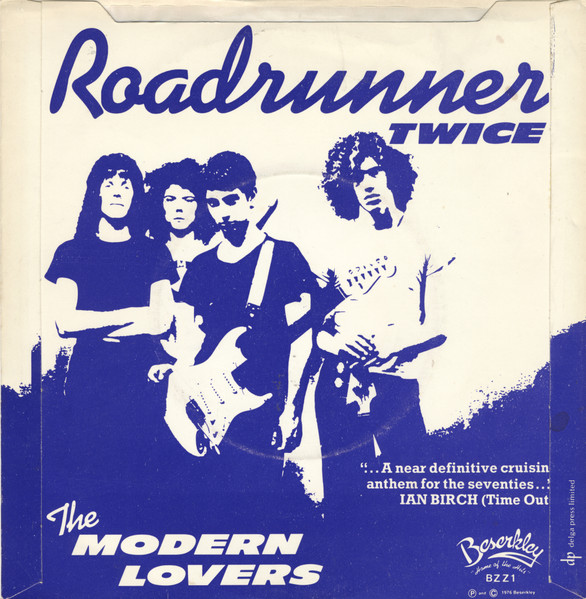
Roadrunner (Twice) – Jonathan Richman & The Modern Lovers (1976)
I often refer and link back to old WIS posts held in the archive but there has never been any wholesale post recycling on this blog. However, in choosing this next alternative version of one of my all-time favourite songs, I am faced with a dilemma. Back in WIS 19May23, I playlisted Roadrunner (Once) and the accompanying post exhaustively set out the history of the tune, its multiple versions and just how brilliant it is. So I could just stop here and let you all click on the link to the old post and read all about it there. But, given my natural verbosity, I suspect many of you will struggle to get to the end of this edition of WIS without hunting back through an old one. But, trust me, if you love this tune as much as I do, click that link above – it’s gold dust!
The song was written by Richman in 1970 and, even though Roadrunner (Once) was not recorded until 1974, I consider it to be the ‘original version’ of this ode to the delights of Massachusetts Route 128. My argument being that it was the version that received the airplay in 1977 when it, rather fantastically, became a No 11 UK hit single. The alternate Roadrunner (Twice) was a demo of the song from 1972, recorded with the Velvet Underground’s John Cale producing, and it was on the flip side of said hit single. The brilliance of Richman’s two-chord reverential pastiche of the producer’s band’s Sister Ray shines through both versions, but there are clear differences. (Once) has a cleaner, more radio-friendly acoustic feel where Richman’s vocal beckons you into the story, especially in his lowered tone in that terrific dropped section: “Can you feel it out in Needham now?”. On the other hand, the alternate (Twice) reflects its producer with a much darker, raw proto-punk take on the tune. It’s faster with a more urgent vocal part behind the drums. And the murky electric guitars are driven by what sounds to these cloth ears like a Farfisa organ noodling away. There is no dropped section and the once/twice refrain ends with Richman proclaiming somewhat wonderfully: “I’m in love with rock’n’roll/And I’ll be out all night!”. Which all goes to prove you can never have too many versions of “the best record ever made”, as per the euphoric quote from Capital Radio’s Nicky Horne on the cover of the single.
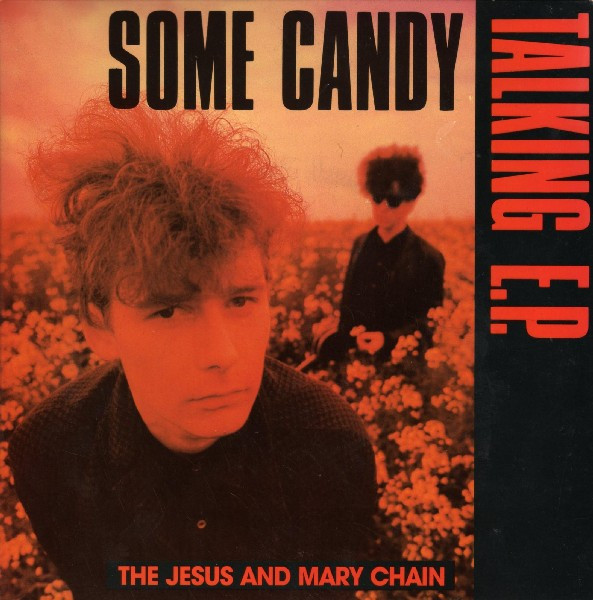
You Trip Me Up (Acoustic) – The Jesus and Mary Chain (1986)
I don’t want you to think I’m recycling things too much but this is another track has which has a throw back to an old blog. WIS 16Aug24 presented six tracks themed around an old mixtape of mine called Flowers & Chocolates which I created in 1986. As the First Word explained in that blog, this tape came from the days when “awkward men like me struggled with more conventional romantic overtures and relied on the medium of music to woo the woman of their dreams.” If you click the link above, you will see that the tape worked and forty years later Lynn and I are still together.
One of the tracks that made that oh-so-carefully curated mixtape was the acoustic version of Some Candy Talking by “East Kilbride noise-merchants” The Jesus and Mary Chain. [You’ll see I somewhat tiredly reached for the same language I had used to describe Pixies three months earlier!]. The tune was taped from the second single in my limited-edition, double-pack 1986 release of the Some Candy Talking EP that included a number of acoustic versions of tracks on the band’s debut LP Pyschocandy. I am returning to this EP for this blog.
The original version of You Trip Me Up was the third single by the much-hyped Jaz and Maz boys and came with the trademark distorted guitars buried behind a wall of howling feedback throughout its two and a half minutes. Despite this, it crept to No 55 – not bad for 1985 when the daytime Radio 1 airwaves dominated the UK chart.
The playlisted alternate version presents the song in a much more radio-friendly acoustic form. Slightly slower and stripped of the electrical shenanigans, it extends its three-chord melody to two minutes and forty two seconds. Somewhat unfairly at the time, my view on the band was that they only really had one tune – but, boy, what a tune it was!
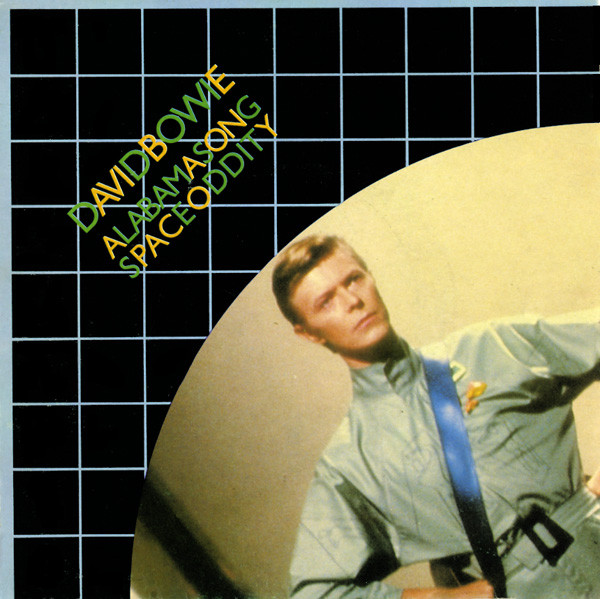
Space Oddity (Kenny Everett Version) – David Bowie (1979)
Released as a single in July 1969, Space Oddity can be seen as the point where the Dame’s career erm… lifted off. Rushed out by record label Philips the week before Apollo 11 touched down in the Sea of Tranquility, it gave Bowie his first UK hit single, reaching No 5. It would be three years before he charted again with the similarly celestial-themed Starman. As a space-obsessed nine-year-old, I vividly recall hearing Space Oddity on the radio at the time and was thrilled by its “countdown” intro and all the quirky electro sci-fi sounds. The song’s dramatic narrative struck a chord with the young me as well – the shock of that dead circuit and the plaintive repetition from Ground Control: “Can you hear me, Major Tom?”
The alternative version playlisted here was recorded ten years after the original and was broadcast with an accompanying video as part of a Thames TV New Year show called Will Kenny Everett Make It To 1980? Seems strange now, but Everett was a big name in TV in those days and Bowie had used his show in April 1979 to debut an early version of Boys Keep Swinging. It was his first new music since the Heroes album in October 1977 and he looked fantastically cool as he smoked his way through the performance.
It is interesting that Bowie chose to end his imperious 70s period with the tune that started it all, albeit as a new recording. Apparently he wanted to remove all the studio trickery from the original and take it back closer to the acoustic guitar version he first performed it as. The lift-off sequence is replaced by silence as Bowie walks across the video set to pick up another guitar. The thing that leaps out at me is that Bowie sings the opening section in a higher register than the original and changes the phrasing at times, bringing a real vocal intensity to this ostensibly acoustic recording.
The 1979 version of Space Oddity was released on the b-side of Bowie’s next single in February 1980, his much-maligned version of Alabama Song taken from Bertolt Brecht and Kurt Weill’s 1930 opera Aufstieg und Fall der Stadt Mahagonny. Bowie historians tend to ignore the single but it reached No23 in the UK charts, presumably on account of the b-side! By the end of that year, the Dame was back at No 1 with Ashes to Ashes, where a coked-up Major Tom reappeared from his tin can, reflecting his creator’s “all-time low” period of drug withdrawal in Berlin.
Last Word
Well, in all that time off, I’ve clearly not lost my ability to spew words all over the page – probably not helped by the long gestation period. If anyone has made it this far, thanks for giving up 15 mins of your day and battling through it all. Maybe next time out, I might be a bit briefer. But whenever that happens, I wouldn’t bet on it.
Adding these six tunes to the WIS Master Playlist takes it to over 700 fabulous tunes – click the link below to immerse yourself in its magnificence. A bientot, mes amis!
AR
If you enjoyed this, there is plenty more where that came from. Subscribers receive a link in their inbox every time the blog is published. You wouldn’t want to miss it, would you?
WIS FREQUENT FLIER TAG CLOUD
Allison Russell Amy Winehouse Aztec Camera Billy Bragg Blondie Brandi Carlile David Bowie Eels Elton John Elvis Costello & The Attractions Emmylou Harris Everything But The Girl Ezra Collective Faces Gang of Four Gil Scott-Heron Jason Isbell and the 400 Unit John Grant Johnny Cash John Prine Lucinda Williams Madness Nick Cave & The Bad Seeds Nick Lowe Paul Weller Prefab Sprout Public Service Broadcasting Ramones Sparks Steely Dan Steve Earle Talking Heads Taylor Swift The Beatles The Clash The Cure The Decemberists The Go-Betweens The Jam The National The Rolling Stones The Stranglers The Waterboys The Who Wilco
WIS VAULT SEARCH


 Week In Sound
Leave a comment