As the calendar moves round to yet another Friday, here we all are again wondering where the time goes. Enjoy!
First Word
This week’s edition begins with the noisy art-punk of The Mekons and ends with the joyful disco sheen of Melba Moore. Both of these tunes are huge favourites of mine and, not for the first time, I expect many of you will be left wondering how such radically different tunes can co-exist in my musical head. I don’t really have an answer to that other than they do.
It’s probably down to many things – the quality of the writing and playing, the production and arrangement of the instrumentation, the lyrical content, the vocal sound, the age I was when I heard them and what was going on in my life. There are many great blogs out there where people write brilliantly about the music they love, but most of them are locked into one particular genre or another. WIS has always sought to break down the barriers and present great songs from all musical spheres. It’s what it’s all about.
Where Were You – The Mekons (1978)
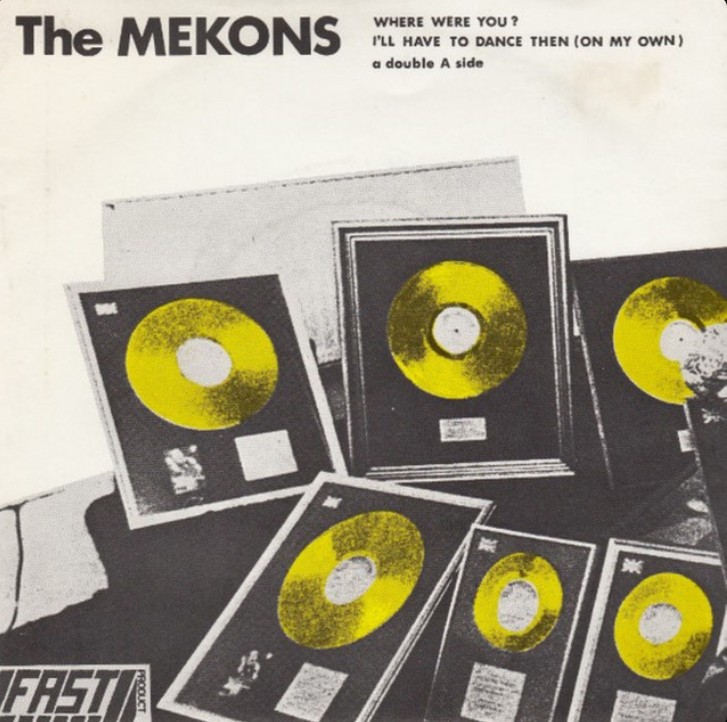
We’re kicking off with a simple throwback to last week’s blog where The Human League’s debut single was playlisted. I reminisced about Fast Product and noted the importance of this short-lived Edinburgh label in the history of post-punk. It was created by erstwhile Rezillos roadie Bob Last and, as well as releasing the League’s Being Boiled, Fast issued two other notable debuts – the incendiary Damaged Goods EP by Gang of Four and Never Been In A Riot by The Mekons. Both these bands (and the great Delta 5 – see WIS 5Jan24) emerged from the post-punk scene at the University of Leeds in the late 70s. The Gang of Four EP was playlisted in WIS 20Oct23 and they also featured on this blog’s first ever issue WIS 24Feb23.
Although The Mekons were geographical contemporaries, they formed less as a band and more as an art collective who operated on the principle that anyone could get on stage and play. This meant their sound was more chaotic and their bare-bones punk approach can be heard on Never Been In A Riot, which was written as a satire on the Clash debut single White Riot, with art school conceit. Recorded live ine one take on a tape deck in a remote cottage with no mixing, it’s a scratchy, off-tune, off-time track which established their reputation. But it was the tremendous follow-up single Where Were You that really resonated and the single FAST7 was an essential purchase to aspiring young hiptsers like me in 1978. The recording was still raw and slightly shambolic, but its extended two-chord guitar intro with that marvelous build on the snare roll is still one of my favourite openings to a record. It does somewhat stumble at the end, though! The lyric is strangely romantic and at odds with the music, an obsessive but dejected tale of abandonment: “When I was waiting in the bar, where were you?/When I was buying you a drink, where were you?/When I was crying home in bed, where were you”. It will not be to everyone’s taste but I love it.

Pinball – Brian Protheroe (1974)
While niche acts like The Mekons fired up my 19-year-old musical sensibilities at the end of the 70s, back at the start of the decade things were very different. I heard this tune on the RadMac show last weekend and I was immediately transported back in time. Although I liked my ‘rock’ music then, it was (with the possible exception of the Sensational Alex Harvey Band) chart-orientated rock that I could hear on the radio that most interested me. Radio 1 held sway in those days and I recall that Edinburgh-born Stuart Henry had a show on a Saturday morning. He used to open by playing two newly released records in a row – without talking in between. Trust me, it was novel in those days on daytime radio. And, each week, he always seemed to play the two records that were interesting me most at the time – the latest Bowie or Bolan or Roxy or something.
I’m pretty sure it was on Henry’s show that I first heard Pinball and I was absolutely captivated by it. Its acoustic, soft-rock pop vibe was not my normal ploughed furrow, but the lyrics just tumbled out the radio and into my head and I couldn’t shake them. I think it was the first time I noticed the absence of a chorus in a song. It just has some looping verses, the last of which does this call and response trick using the lines of the previous verses in the left and right channels and leads to the brief “I feel like a pinball” refrain in the coda. Studying the lyric now, it’s fair to say that Dylan wasn’t fretting – but something you sing over and over in your early teens gains emotional depth as your hormones swill about. “Got fleas in my bedroom, got flies in my bathroom/And the cat just finished off the bread/So I walk over Soho, and I read about Monroe/And I wonder was she really what they said?” Listen out for that cat meow!
Set in a time when pale ale was deeply unfashionable (and out of the reach of 14 year olds), I still have the single in its plain sleeve with that wonderful green Chrysalis label. It got enough airplay to push it slowly into the chart creeping up to No 22 and then, like Brian, disappearing forever.
Dreaming – Blondie (1979)
We return to the end of the decade for the third 70s choice in a row this week. It’s not that long since I was paying tribute to a drummer who forged his name in the 70s when WIS marked the passing of Rick Buckler of The Jam. And now this week it was announced that Clem Burke of Blondie had died of cancer at the age of 70. Unlike the tidy efficiency of Buckler’s work, Burke was a versatile and stylish drummer, and it was a no-brainer for me that Dreaming was going into this week’s playlist to pay tribute to his art.
Burke was hired by Chris Stein and Debbie Harry just as they formed Blondie in New York in 1974, when he responded to an advert they placed looking for a “freak energy” drummer. He stayed with them as a core member through to the breakup in 1982 and then rejoined when they reformed in 1997 – he was working with them on a new Blondie LP due this year when he fell ill. He wasn’t involved in the writing of their songs but, in announcing his death, Stein and Harry described him as the “heartbeat of the band”.
Burke was an anglo-phile, in love with 60s British music and he played left-handed on right-handed kit as Ringo had done in the Beatles. He was also enthused by the common aesthetic of the NYC ‘new wave’ scene at CBGBs and Max’s Kansas City, where Blondie honed their act among the Ramones, Talking Heads and Television. In the late 70s, UK ears were more attuned to their sound than those in the States, and the band first broke here with their early singles and debut LP. Denis, Presence, Dear and Picture This were huge hits and they became a fixture on Top Of The Pops. With Harry’s looks the main focus at the front of the stage, the rest of the band adopted a dark suit, skinny tie look which fitted with the times.
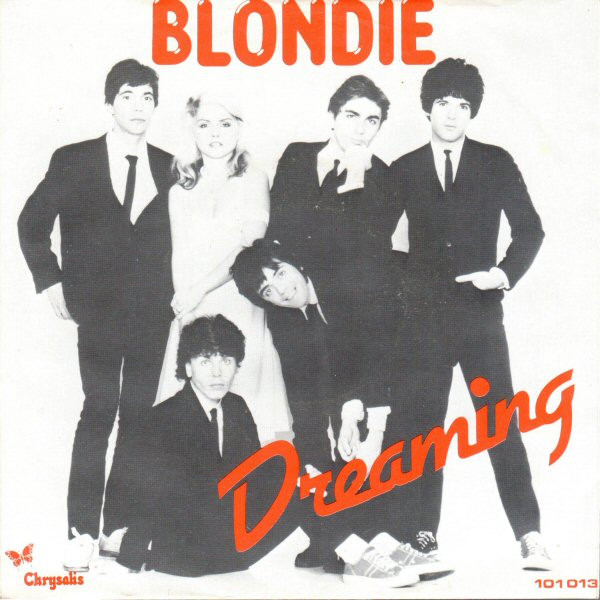
Mainstream global success followed, and by the time their fourth LP Eat To The Beat came out in 1979, Harry was an international star and naturally she appeared on the cover of the LP’s lead single Dreaming. The recording is probably Burke’s career highlight in terms of his drumming, so I am illustrating it with a Benelux issue of the single which adopts an old 1978 publicity photo with a young Clem looking rock’n’roll cool on the right hand side. Anyone who listens to this and can’t hear the man’s “freak energy” in those gloriously clattering drum patterns needs to get their ears syringed. Terrific stuff.
Traveling Alone (feat. Jason Isbell) – Kathleen Edwards (2025)
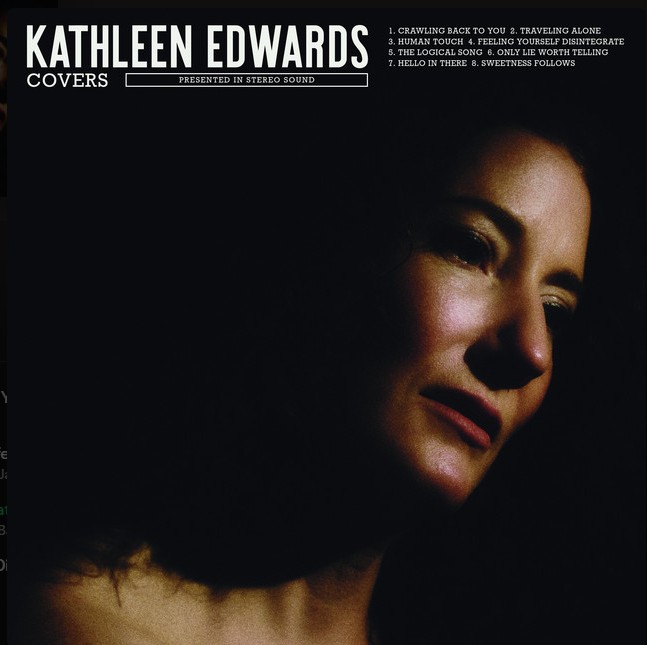
Having indulged myself in three songs from the 1970s, I felt we needed to come flying forward to the present day with the choice of something new from 2025. But, while the date of this release from Canadian singer-songwriter Kathleen Edwards is March this year, the track comes from her eight song Covers EP. It contains tunes written and performed by the original artists over the last fifty years by the likes of REM, The Flaming Lips and even Supertramp. In my defence, I’ve chosen the most modern song, a track written by Jason Isbell for his 2013 album Southeastern.
I first came across Edwards and her distinctive voice via her 2008 LP Asking For Flowers where the title track and the great I Make The Dough, You Get The Glory pressed my Americana buttons. So to hear her cover another of my favourite Americana artists and, what’s more, have him sing on it was very pleasing indeed. Edwards had opened for Isbell a few times so they vaguely knew each other. However, when she sent a demo of her cover of Traveling Alone to his manager, she was surprised and thrilled when Isbell came back and offered to sing on the studio recording. He went on to offer to produce her new album of her own songs which is due out later this year.
Isbell wrote the songs on Southeastern just after he left rehab clean having kicked the alcohol addiction that began while he was in the Drive By Truckers in the 2000s. It’s a gripping series of deeply personal songs that look forward positively, if tentatively, to a life of sobriety rather than wallow in the dark days of his addiction. In Traveling Alone, he seems to draw parallels between the demands of living with his demons and the weary and lonely life on the road as a musician. The hopeful chorus seeks a companion in this journey.
Edwards’ Covers EP also includes her version of Springsteen’s Human Touch and Isbell tells the story of meeting The Boss for the first time, a couple of years after his Southeastern LP was released. Bruce told Isbell that his son had played him the record and that he really liked one of the songs – he then proceeded to sing the chorus of Traveling Alone to Isbell, who could not believe he was hearing Springsteen sing his words back at him. That must have been quite a moment.
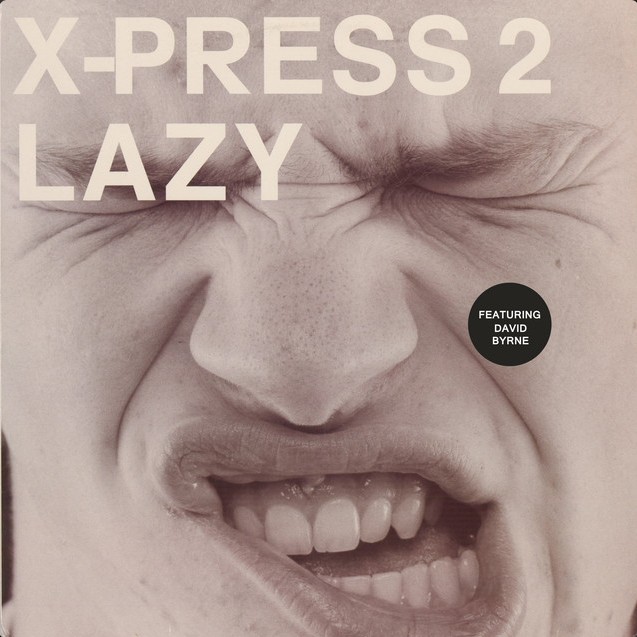
Lazy (feat. David Byrne) – X-Press 2 (2002)
Sticking in the 21st century, incredibly, it is 23 years ago this week when British House duo X-Press 2 released what turned into a huge hit single. Lazy reached No 2 in the UK singles chart and then went on to win an Ivor Novello award for its writing. Released in a series of formats 12″ vinyl and multiple CD sets, it amassed a number of remixes. So much so that when you search for the single on Spotify and click on the link, it presents you with a page containing 14 different mixes ranging in length from 3:46 (Acapella Mix) to 10:53 (Freeform Reform Remix). Notable among the total running time of 1hr 43mins(!) are the Fatboy Slim Remix, the Norman Cook Dub Mix and the Moguai Remix. Turns out Moguai is a German DJ and, somewhat sadly, it was not a miss-spelling of the Scottish post-rock band – I would have loved to have heard that one. The good news in all of this is that I have playlisted the 4:17 Radio Edit, but real enthusiasts can find the rest of the mixes here.
Apparently, David Byrne had written a set of song lyrics but had the vision that his song of overt slothfulness could be set to “a throbbing beat” which would result in a “dancefloor filled with energised bodies”. To provide that backdrop beat, Byrne approached X-Press 2, who comprise DJ Diesel and DJ Rocky. I was mildly amused to see that both their real names are Darren, which is maybe why they adopted the stage names. They do know their way around a dance beat though, as the tune they came up with really moves. They worked with Byrne remotely on either side of the Atlantic exchanging ideas and eventually came up with what turned out to be an anthemic track, beautifully mixed and produced by the Darrens.
It had a daft video (which reminded me of Wallis and Gromit, without the plasticine) and the chart success meant they even appeared on Top Of The Pops with Byrne singing reasonably passively among the two stationary DJs staring at computer terminals. I was lucky enough to see Byrne perform it more energetically on stage in Glasgow as part of his jaw-dropping American Utopia tour a few years back. There is a live recording from Broadway here but the show was also filmed by Spike Lee during his residency on Broadway and you can see a clip on YouTube of Lazy being performed. It actually comes as two songs together but you get the added bonus of first watching the ensemble present the… erm… utopian Don’t Worry About The Government from Talking Heads’ debut LP 77. That’s a song title that hasn’t aged well in the US, has it?
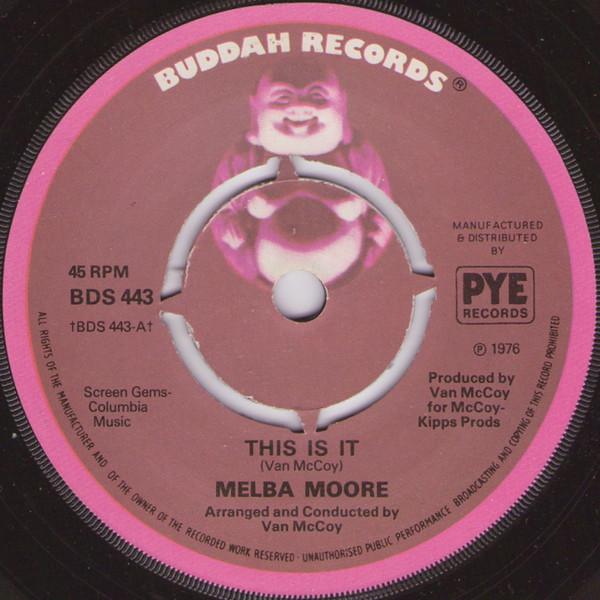
This Is It – Melba Moore (1976)
And back we go to the 70s for our final track this week as it is 49 years since the UK release of this joyous disco classic which filled the dance floors of glitzty nightspots across the country. And by reaching No9 in the UK singles chart, this meant Melba Moore’s This Is It was also a fixture at youth club discos in community centres and church halls the length and breadth of the land. However, for some reason, unlike other songs from this era, it didn’t make it onto the standard wedding DJ playlist and you don’t often hear it these days. WIS is putting that right today.
Harlem-born Moore first came to prominence as a Tony award-winning actress on Broadway in the 60s. She signed with Mercury Records in 1967 and released a number of soul records without chart success and went back to acting. Her singing career re-ignited after signing to Buddah Records in 1975, a move which was orchestrated by her husband and manager Charles Huggins. Huggins also managed to persuade veteran writer and producer Van McCoy to work with Moore in 1976, following his own UK chart success the previous year with The Hustle. Moore was seeking a disco sound and McCoy wrote, arranged and produced This Is It for her.
Last week’s blog featured the Philly sound and referenced the development of the disco hi-hat rhythm. The drumming on the verses of This Is It is a perfect example of this. Elsewhere, McCoy’s string arrangement soars while the backing singers swoop around the melody like angels. Moore’s vocal is just glorious – an uplifting and soulful life-affirming statement of love. She sings it with such passion in her voice, like she really means it: “This is it/Oh, this time I know it’s the real thing/I can’t explain what I’m feeling/I’m lost for words, I’m in a daze/Stunned and amazed by your loving ways”. And how about the ending? That’s how to finish a record.
Last Word
Just a heads up that over the next couple of weeks I am planning some ch..ch..changes to the format of WIS. I am still working on finalising these but, by next week’s edition, I’ll be in a position to reveal all.
In the meantime, things progress as normal so I will probably forget to add these six tunes to the Master Playlist until someone nudges me.
AR
If you enjoyed this, there is plenty more where that came from. Subscribers receive a link in their inbox every Friday evening at 5pm UK time. You can’t start the weekend without it.
WIS FREQUENT FLIER TAG CLOUD
Allison Russell Amy Winehouse Aztec Camera Billy Bragg Blondie Brandi Carlile David Bowie Eels Elton John Elvis Costello & The Attractions Emmylou Harris Everything But The Girl Ezra Collective Faces Gang of Four Gil Scott-Heron Jason Isbell and the 400 Unit John Grant Johnny Cash John Prine Lucinda Williams Madness Nick Cave & The Bad Seeds Nick Lowe Paul Weller Prefab Sprout Public Service Broadcasting Ramones Sparks Steely Dan Steve Earle Talking Heads Taylor Swift The Beatles The Clash The Cure The Decemberists The Go-Betweens The Jam The National The Rolling Stones The Stranglers The Waterboys The Who Wilco
WIS VAULT SEARCH
 Week In Sound
Leave a comment