Published just in time for you all to beware the Ides of March tomorrow, here is this week’s selection of corking cuts. Enjoy!
First Word
As you will see below, chronological circumstances dictate that this week’s selection opens with a couple of classic 1977 punk tracks. Those of a nervous disposition can skip ahead but where would be the fun it that, eh? See you down the front jumping about with everybody else…

Neat Neat Neat – The Damned (1977)
I’m sure it’s just the age I’m getting to but there just seems to have been a steady stream of influential musicians from my formative years going off to that great rehearsal room in the sky recently. Last Friday the death of guitarist Brian James was announced and my Blue Sky feed lit up with comments on one of the founding members of The Damned. Despite the Pistols and the Clash grabbing all the media attention, they became the first punk band to get a single released – the astounding racket of New Rose in October 1976 (see WIS 6Oct23). They were also the first to get an LP released titled Damned Damned Damned. Both were issued by Dave Robinson’s Stiff Records label and produced by Nick Lowe – that man again! Brian James wrote the single and all the original tracks on the LP bar one.
The Damned differed from their previously mentioned peers as they neither sought to make trouble nor took an overt political stance. Alongside the gloriously named Dave Vanium, Rat Scabies and Captain Sensible, James was part of a four-man fun machine with a cartoon-like quality to their image and sound. Their debut LP cover was a head shot of all four of them splattered with cake and cream with Scabies licking it off the top of Sensible’s head. Their song titles were suitably daft as well – eg Smash It Up, Stretcher Case Baby and the playlisted Neat Neat Neat, their second single, also written by James. The title was apparently inspired by a Jim Morrison ad-lib on a Doors live album and it and the lyric has no deep meaning other than it’s quite…erm… neat. Played at a ridiculous speed with a great opening bass riff topped off with a trademark Vanium howl, it sounds like Eddie Cochrane on amphetamines with a manic Chuck Berry guitar solo. All very much in keeping with the time it was made.
Fascinating Fact: While on the infamous Stiff Records package tour in late 1977, Elvis Costello and the Attractions performed Neat Neat Neat on three occasions in their short set, with Blockhead Davey Payne on saxophone. A live recording of their slower, darker take on the song was on the B-side of the 7″ single included with early pressings of the band’s second LP This Year’s Model. Costello enigmatically dedicates the tune to Chris Millar, the real name of Damned drummer Rat Scabies.
Can’t Stand My Baby – The Rezillos (1977)
I spent the evening of International Women’s day on Saturday in a packed La Belle Angele in Edinburgh re-acquainting myself with one of my favourite female artists.
Forty seven years ago, in August 1978, I borrowed my mum’s wee Fiat and for the first time in my life drove to Edinburgh from Paisley with a couple of school pals. With no more than a paper street map, we somehow managed to find our way to Tollcross as we had tickets for a club called Clouds which was promoting a gig by The Rezillos. We were big fans of their 1977 singles and I had bought their debut LP earlier that summer. The band formed in Edinburgh in 1976 and they were fronted by a dynamic duo going under the stage names of Eugene Reynolds and Fay Fife. Dunfermline-born Sheilagh Hynd had originally adopted the name Candy Floss but changed it to reflect where she was from – “fae Fife”. They liked to describe themselves as a “new wave beat group” and sounded like a punky mixture of 50s rock’n’roll, 60s beat music and 70s glam with songs penned by Luke Warm (future Human League songwriter Jo Callis). They adopted a retro space-age comic-book look in their manic stage shows and they were terrific that night in Clouds.
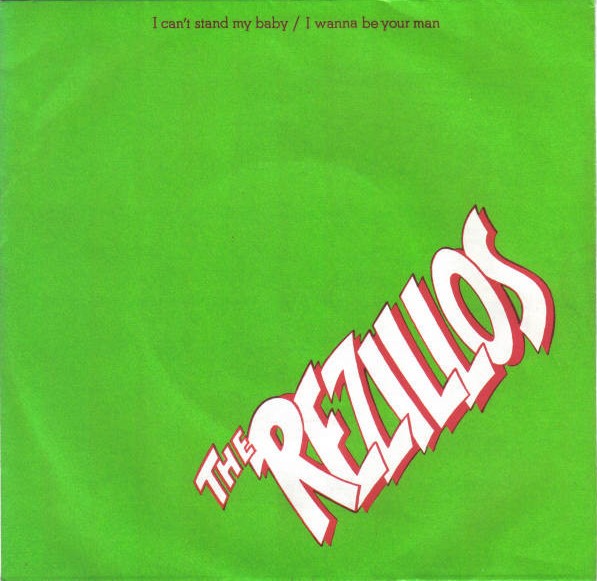
Both Reynolds and Fife remain at the front of the band and, like their audience, are no longer the stick-thin kids they were in the 70s. However, all these years later, they perform with the same energy they had back then, with Fife looking particularly magnificent as she strutted and frugged her way around the stage having a great time. One of many highlights in the set was her performance of their classic debut single, I Can’t Stand My Baby. Recorded in a top-floor tenement flat in Bruntsfield in south-west Edinburgh, the single was released in August 1977 on Sensible Records. The song was re-recorded in a real studio for the debut LP named Can’t Stand The Rezillos but I have playlisted the raw original single version where Fife’s accent comes across loud and clear in the brilliant opening verse: “I can’t stand my baby/It’s a real drag/I think I’m going crazy/I’m gonna go radge”. I think I can safely say this is the only occasion where the word radge is deployed in popular music. For those unfamiliar with Scottish slang, radge (pronounced “raj”) can be used as both an adjective and a noun, generally meaning a person who is wild, unpredictable, or behaving in a crazy or angry way. So, now you know!
GMF – John Grant (2013)
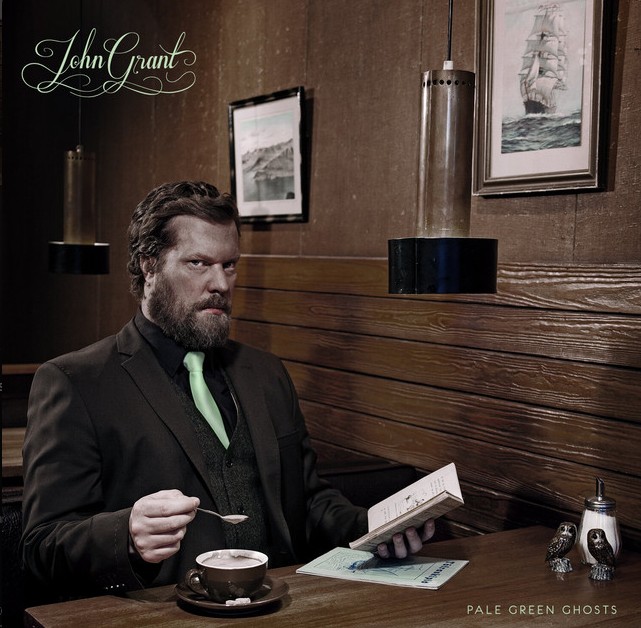
After all that snotty energy, a change in tone is required, I think. However, if your nervous disposition brought you here, I trust it’s able to cope with some coarse language – if not you may want to skip forward again. This week in 2013 saw the release of the second solo album by the former frontman of The Czars, John Grant. Titled Pale Green Ghosts, it was recorded in Reykjavik in 2013 with a host of Icelandic musicians and Sinead O’Connor providing backing vocals. Grant had been lauded by the critics in 2010 for his deeply personal, debut solo LP Queen of Denmark whose lush 70s sounds made many ‘album of the year’ lists (and was featured on WIS 20Sep24). His second recording was again a critical success, voted No2 album of the year by no less than The Guardian newspaper, commenting on the “spectacular landscapes John Grant paints” with his music where “minimalist beats meet John Barry strings and stark 80s synths mix with high melodrama – then you add lyrics about heartbreak and homosexuality, tons of swearing and black humour, and a voice to melt the bones.”
The sweeping, confessional GMF ticks several of these boxes, notably the swearing one, although I know there was a radio-friendly mix created called GMF (Greatest Living Creature) which doesn’t even attempt to conform with the original’s cussing abbreviation. That being said, Grant’s rich, sonorous voice (aided by O’Connor’s delicate harmony lines) pretty much renders the profanity neutral. His disarmingly honest, self-aware lyric sets out his narcissistic self-obsession with great humour: “Half of the time I think I’m in some movie/I play the underdog, of course/I wonder who’ll they’ll get to play me, maybe/They could dig up Richard Burton’s corpse”. But by the time it reaches the end, repeating the declaratory and apparently conceited chorus, the song leaves you with the nagging feeling that it might not be what it seems – it might actually be a song of self-loathing from a desperately sad lost soul, yearning to be loved.
Via Chicago – Wilco (1999)
I’ve talked on several occasions about the late 90s being my lost years as my kids were born in 95 and 97. Both of them were terrible sleepers making day-to-day living hard enough without time for good things like listening to music, going to gigs and buying records. I’ve also confessed on several occasions to being a Wilco fan-boy so it’s interesting to see that the record where I ‘discovered’ the band was released this week in 1999. I must have been slowly emerging out of the darkness by this time as I recall how it happened quite clearly.
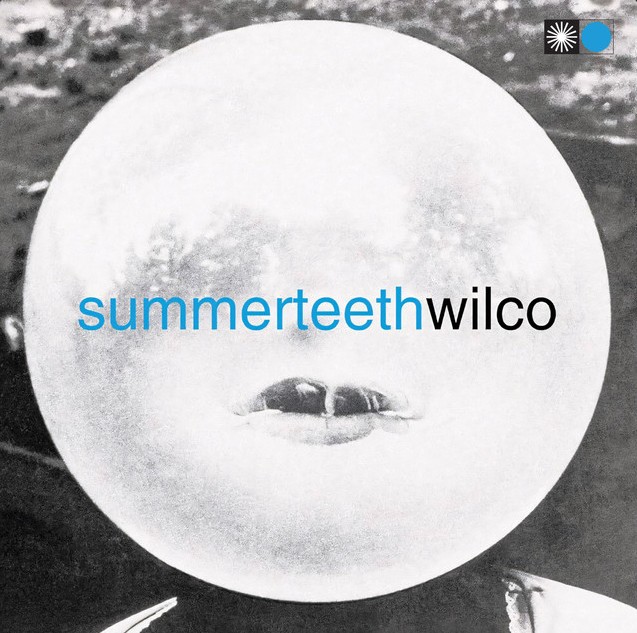
I was vaguely aware of Jeff Tweedy and Jay Farrar’s alt-country band Uncle Tupelo having heard praise for their 1990 LP No Depression but I had missed news of their acrimonious split in 1992 and Tweedy going on to form Wilco in 1994. I had also missed that Wilco had released two albums of more rock-orientated songs by 1996 and were building a following. In early 1999, I picked up a copy of a music magazine while in the supermarket and managed to find some peace and quiet to actually read it. Inside, there was a glowing 5-star review of Wilco’s third album Summerteeth and the track I have playlisted came in for particular scrutiny.
I read that this record had moved their sound onto more complex layered arrangements. On the track Via Chicago, the reviewer commented that throughout the song there is a guitar gently feeding back and squalling behind the other instruments. And then as verse three begins everything in the mix starts to lose focus, the drums fall off the beat, the keyboards start to slide and it sounds like the whole thing is going to collapse in on itself. And then it doesn’t. After a great piano solo, verse four starts to do the same thing before bursting into Tweedy’s glorious just out-of-tune guitar solo and then it meanders off to the “searching for a home” coda. A song that nearly falls apart but doesn’t, you say? It sounded brilliant to me so I bought the record on the basis of the review and have never looked back!
This LP was the start of a three album run of more experimental music where some critics used the lazy ‘Americana Radiohead’ phrase to describe their work. However, even today, when they play Via Chigaco on stage, the band really plays up the off-kilter, dissonant sections and the crowd love it. There’s a great live version here and I’m looking forward to hearing them play it again at the Royal Albert Hall this summer.
And I haven’t even mentioned that opening couplet or the Jack Moebes cover photo on the album…
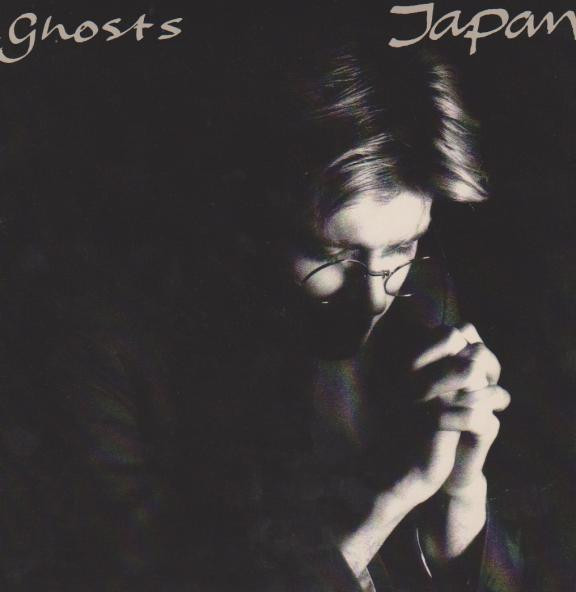
Ghosts – Japan (1982)
Another anniversary this week tells it is 43 years since Ghosts by Japan was released as a single. The third 7″ to be lifted from their final studio album Tin Drum, it was their biggest hit and probably one of the strangest pieces of music to go into the top five of the UK singles chart.
The band was formed as a high-school glam rock band in 1974 in Catford, South London by brothers David and Steve Batt and Andonis Michaelides. They signed with legendary German record label Hansa in 1976 and adopted the stage names David Sylvian, Steve Janner and Mick Karn. By the time they began releasing records in 1978, they had developed an androgynous look but their two LPs and four singles were commercial flops as their early Bowie/Roxy/T-Rex schtick was ignored at a time of bands like The Damned and The Rezillos. Though, somewhat ironically, they were… erm… big in Japan.
In 1979 the band then shape-shifted into electonic, art-pop music and Giorgio Moroder was persuaded to co-write and produce the one-off single, Life in Tokyo. It wasn’t a hit at this time and neither was the Quiet Life LP and its singles but these set the tone for the sound that would give them some success. A move to Virgin Records in 1980 for their Gentlemen Take Polaroids album coincided with the arrival of the New Romantic groups more in keeping with their made-up look and this assisted their popularity. Although the band hated being associated with the likes of Spandau Ballet and Duran Duran, arguably Japan’s synth sound from Life in Tokyo and Quiet Life informed much of what these bands went on to produce. So it was no surprise when they were re-released to provide Japan with some minor hits.
But it was 1981’s Tin Drum that was the defining record of Japan’s career, really highlighting those signature sounds – Karn’s fretless bass, Janner’s intricate percussion and Sylvian’s elegant baritone. The LP went top ten and The Art of Parties and Visions of China singles hit the lower end of the top forty. And then came Ghosts – an intensely personal lyric by Sylvian set against a haunting drum-less arrangement of synths, apparently influenced by German composer Staukhausen. So, not very Top of the Pops friendly! I love the discordant synth part it opens with and the marimba lines which provide the rhythm in the chorus. Listening to it again this week, it remains sparse and mesmerising in its delivery and Slyvian’s vocal is masterly. “Just when I thought I could not be stopped/When my chance came to be king/The ghosts of my life blew wilder than the wind”.

Nelson Mandela – The Special AKA (1984)
After the punky start, the vibe has stepped down a couple of levels over the last three choices, so what better way to wind it back up than finishing on the joyous sound of the definitive political record from 1984 – and it doesn’t involve Bob Geldof.
The original line-up of The Specials had fragmented after the release of Ghost Town in 1981 when Terry Hall, Lynval Golding and Neville Stapes left to form Fun Boy Three. Over the next few years, founder and musical director Jerry Dammers reverted back to the band’s original “AKA” name and drafted in a number of on/off collaborators for a series of more political but less successful singles like War Crimes and the great Racist Friend. In 1983, Dammers attended the Mandela 65th birthday gig at the Ally Pally featuring Hugh Masekela and Julian Bahula and his eyes were opened to Mandela’s political imprisonment. At that time, Mandela’s plight was not widely appreciated by those outside politics and the cause of the ANC in pushing back against the apartheid regime was not politically supported by the UK government through sanctions.
Dammers wanted to raise awareness and he developed a set of lyrics to fit a simple “vaguely Latin-Africa tune” he had already written and asked Elvis Costello to help him produce it. With young unknown Stan Campbell on the lead vocal, Costello roped in the brilliant Afrodiziak (Claudia Fontaine, Caron Wheeler & Naomi Thompson) to sing the gloriously simple but hugely uplifting chorus, while Dammer’s terrific trumpet line was played by regular Specials collaborator Dick Cuthell. The single was released on 8 March with a sleeve providing information on the Anti-Apartheid Movement. The following month it reached the UK top ten and, although banned in South Africa, it was hugely popular there due to it being played at football matches which were communal black gatherings.
Over the next few years, the song would form part of a political awakening in relation to South Africa and notably the formation of the Artists Against Apartheid movement. When Mandela was released in February 1990 and attended a celebratory concert at Wembley later that year, Dammers was introduced to him as the person who wrote (Free) Nelson Mandela. “Ah yes,” Mandela said, “very good.”
Last Word
Just going to finish with a quick apology to anyone trying to use the Blog Post Summary tab at the top of the page – the software seems to be screwed up and the list of blogs and their contents is out of order and duplicates content endlessly. I’m still trying to sort out how to resolve this!
Next week is going to be a theme week but, for now, the Master Playlist is lurking just below the waterline at the link below.
AR
If you enjoyed this, there is plenty more where that came from. Subscribers receive a link in their inbox every Friday evening at 5pm UK time. You can’t start the weekend without it.
 Week In Sound
Leave a comment