No 1 in a series of guest blogs has Marion de Voy returning for a second bite of the cherry, picking the platters that matter. Enjoy!
First Word
When my old pal gave in to my pleadings to have another shot at WIS, I settled on the ‘California’ theme in anticipation of a forthcoming trip to Los Angeles to visit old and dear friends and to see the West Coast for the first time. Writing this, with images of the horrific wildfires on every news channel, it is more appropriate for it to be a tribute to the firefighters and other first responders, and all those who have lost homes and businesses. By the time this is published, the fires will (hopefully) have been extinguished, but the devastation will remain. Our thoughts are with everyone affected.
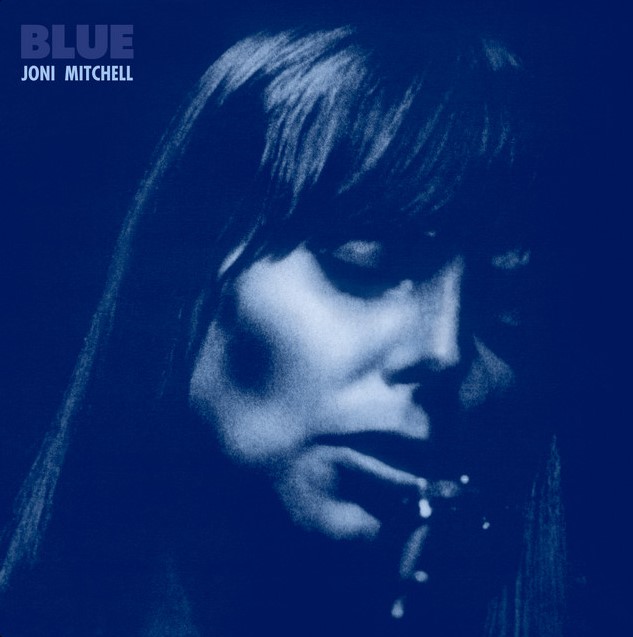
California – Joni Mitchell (1971)
What better way to start than with Joni Mitchell, making her first ever visit to WIS. Born in Canada in 1943, Joni Mitchell rose to prominence in the 1960s, and is one of the most influential musicians to emerge from that period. Initially known as a songwriter, her lyrics were sung by such luminaries of the time as Judy Collins, who had a major hit with Both Sides Now and Fairport Convention, who included Eastern Rain on their 1969 album What We Did On Our Holidays; the voice of Sandy Denny was ideally suited to convey Mitchell’s gentle and melancholic lyricism. By the late 1960s, Joni Mitchell was an integral part of the Los Angeles folk-rock scene, but over time, her work diversified to embrace other genres from jazz fusion (she collaborated with the great jazz bassist and composer Charles Mingus on her 1979 album Mingus, considered her most experimental and jazz-centric work), to the smooth pop sound of 1974’s Court and Spark, a personal favourite.
California first appeared on Mitchell’s album Blue, released in 1971, and was also released as the second single from the album. She described it as a “letter back home”, and indeed the song’s lyrics chart both her geographical distance from and her longing for a return to California – the first verse was apparently written in France, the second in Spain and the final verse when she had returned to California, all written from a close personal perspective that typifies Mitchell’s approach to lyric writing. According to Rolling Stone, the song “jumps along in quick bursts” but the refrain is “flowing with tango elements”. With Mitchell’s unmistakeable voice and vocal range, it is considered to be one of the highlights of Blue.
As well as featuring James Taylor on guitar, and Russ Kunkel on percussion, ‘Sneaky Pete’ Kleinow played pedal steel guitar for this track. A member of the Flying Burrito Brothers, he also worked as a session musician for a bewildering array of bands and solo artists including (but definitely not limited to) Joan Baez, Stevie Wonder, the Rolling Stones and Leonard Cohen. Perhaps he’s also the legend behind the name of a renowned haunt for gigs in Edinburgh’s Cowgate; I hope so.
Joni Mitchell gave up touring and released her last album of original songs on 2007. She suffered a rupture of a brain aneurysm in 2015 that was reportedly catastrophic and led to a long recovery period, but remarkably she has since returned to making occasional public appearances.
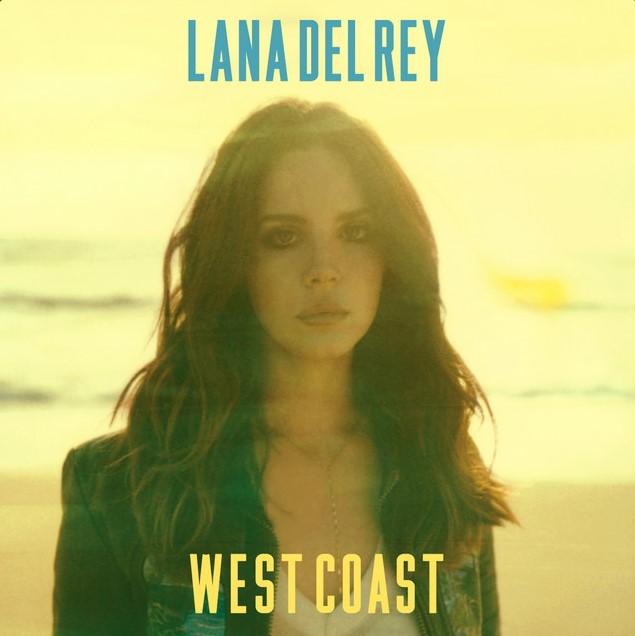
West Coast – Lana Del Rey (2014)
From one of the greatest songwriters of the 20th century, we move to Lana Del Rey, who was named as the “Greatest American Songwriter of the 21st Century” by Rolling Stone UK. I’m not sure about that, but West Coast is a seductive song that beautifully showcases Del Rey’s smoky voice. Originally an East Coast girl, born in Manhattan and raised in upstate New York, the West Coast of America nevertheless seems like a natural home for her style of music, and her exploration of Hollywood glamour (her name was inspired by the actress Lana Turner) and doomed romance.
I first became aware of her with her second album, 2012’s Born to Die, a polished but somewhat gloomy affair that became the first of six number one albums in the UK. West Coast is from her third studio album Ultraviolence, from 2014, produced by Dan Auerbach of The Black Keys. Its subject is a woman who is torn between her lover and ambition, alive as she is to the possibilities that the West Coast could perhaps afford her, as brought to mind by references to “their silver starlets, their Queens of Saigon”. The latter lyric is also used in her song National Anthem and although not entirely clear, it’s thought to be a reference to the lost glamour of the American golden age in the 1950s and 60s, before the US pulled out of the Vietnam war and the city was renamed as Ho Chi Minh City.
The song’s sound is more guitar-orientated than her earlier work, and is particularly notable for both its unusual phrasing and the shift in tempo between the verse and the chorus; it’s been described as a ‘two-in-one’ song. Certainly, it’s complex, lyrically and musically, and it’s none the worse for that.
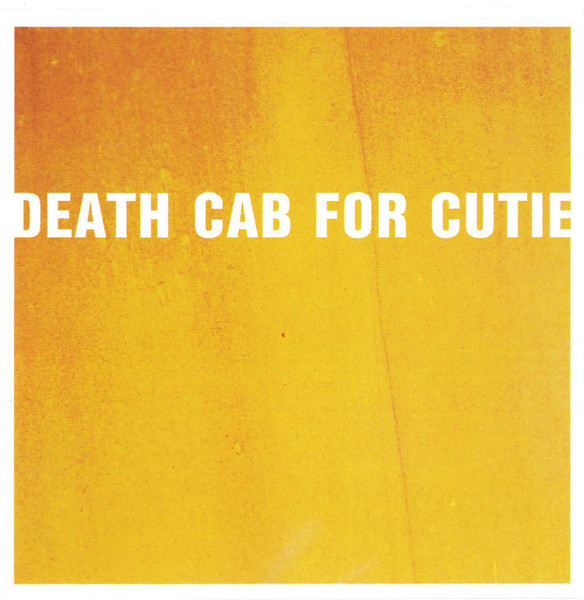
Why You’d Want To Live Here – Death Cab For Cutie (2001)
Death Cab for Cutie (or DCFC as I’m too lazy to type it out in full each time) find Los Angeles somewhat less appealing than Ms Del Rey, if the lyrics of Why You’d Want to Live Here are anything to go by. Despite the initial suggestion in the title that the song may be outlining Los Angeles as a place you’d want to find yourself (see also a similar contradiction in Gabriella Climi’s Sweet About Me), Why You’d Want to Live Here is an excoriating take-down of Los Angeles as dirty, smoggy, shallow and monstrous, even if, as some have opined, it was in fact an attempt by the band’s Ben Gibbard to persuade a girlfriend not to end their relationship and move here. Possibly, but however you read it, there’s not much love for LA in the song, viz: “It’s a lovely summer’s day/I can almost see a skyline through/A thickening shroud of egos/Is this a city of angels or demons?”
DCFC has been around since 1997, although it originated as a solo project by Gibbard, only being expanded into a group on winning a record deal. This track was written by Gibbard and appeared on DCFC’s third studio album, The Photo Album, released in 2001. Since then, the band has gone on to be considered one of the outstanding American indie bands and as “flag-bearers for literate and contemplative indie rock” according to The Irish Times in a 2019 article.
There’s an intensity to the guitar work driving this song that is unusual for this band, but combined with Gibbard’s expressive vocal delivery, and ‘not-missing-and-hitting-the-wall’ lyrics, it’s a memorable track that sticks around for a long time after hearing.
While this is DCFC’s debut on WIS, Ben Gibbard, the originator and mainstay of the band, has been mentioned in more than one edition of the blog before now (firstly in WIS 13Sep24 and again in WIS 4Oct24, where he was described by our genial host as an “American indie luminary”). Time for his band to have its hour in the California sun, then.
Fun fact: the name Death Cab for Cutie is taken from a song of the same name by the Bonzo Dog Doo Dah Band. With more than just a nod to Elvis Presley, the song tells us of a woman who goes out for a night on the town without her lover. The driver of her cab is so distracted by her beauty that he runs a red light and both are killed. Of course it’s her fault for leaving her lover on his own and causing the distraction. Just sayin’….
Having said that, reading up on the song was a great excuse to revisit the strange and interesting world of Neil Innes and Viv Stanshall on Spotify.
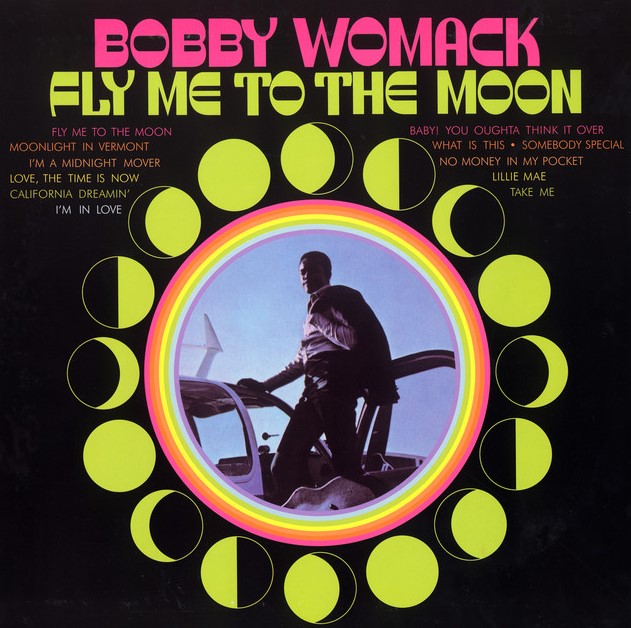
California Dreamin’ – Bobby Womack (1969)
And now for a complete change of tone, and the first of only two tracks in this edition of WIS that meet my original aim of including only unusual covers of ‘West Coast’ songs by artists such as the Beach Boys and the Mamas and the Papas. This song was written by John and Michelle Phillips in 1963 when they were living in New York during a cold winter and yearning for the warmth of the California sun. Although the version released by the Phillips as members of the Mamas and the Papas is probably the best-known, it was first released by Barry McGuire who appears to be channelling Kris Kristofferson in his rendering of the song.
Bobby Womack’s cover of California Dreamin’ takes a completely different approach; gone are the close harmonies of the Mamas and the Papas, and instead Womack’s voice takes centre-stage. It starts off slow and a little sad, with just a strum of a guitar before Womack’s rich baritone comes in. It builds gradually, with the introduction of the organ and the brass helping to move the song from its initial bluesy feel to a soul sound. As the tempo picks up pace and Womack shifts to sing in a higher register, the transformation is complete. On release in 1968, it charted in the top 20 of the R&B charts, and it remains a stand-out version of a song which has been covered hundreds of times, by everyone from Nancy Sinatra to David Hasselhoff.
From its beginnings in the 1950s as a singer in his family group, Bobby Womack’s career spanned more than 60 years and multiple styles before his death in 2014. He was also a prolific songwriter; amongst many other notable successes, along with his sister-in-law Shirley Womack, he co-wrote the Rolling Stones’ first number 1 hit, It’s All Over Now.
Despite such a long and successful career, Womack was not nominated for a Grammy until 2011 when he was nominated for Best Short-Form Music video for Stylo by Gorillaz, featuring Mos Def and Bobby Womack.
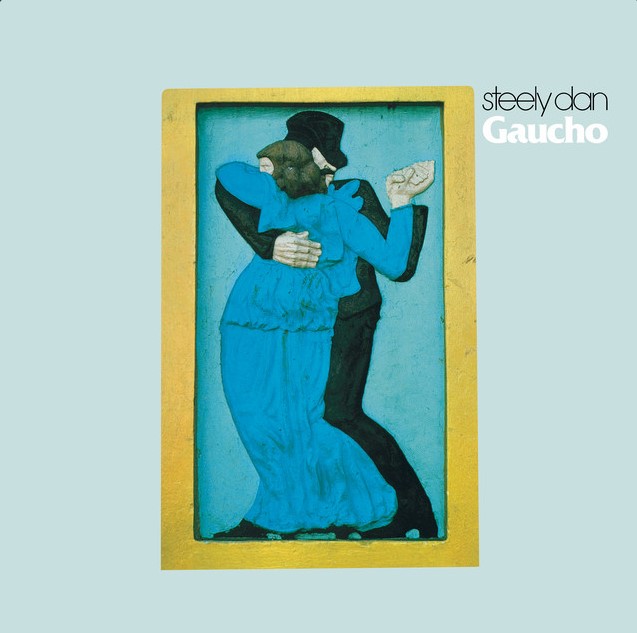
Babylon Sisters – Steely Dan (1980)
By the end of the second bar of this song, you know you’re listening to Steely Dan. Their cool, sophisticated sound is unmistakeable, along with their wry humour and trademark cryptic lyrics; more on that point shortly. At its inception in 1972, Steely Dan included guitarists Denny Dias and Jeff Baxter and keyboardist David Palmer along with Walter Becker on bass and Donald Fagen on keyboards and vocals. Later they worked with other musicians such as Michael McDonald of the Doobie Brothers but Becker and Fagen were the core of the band from the start and after the release of their third studio album, Pretzel Logic, they decided to stop touring and become a studio-based band.
Their style shifted over the years, but much of their influence comes from rock, blues and jazz. Their 1977 album Aja gained the respect of many jazz musicians, as evidenced by Woody Herman recording an album of Becker/Fagen songs in 1978. Although Steely Dan didn’t perform live between 1974 and 1993, their popularity continued to grow as their albums became critical favourites; I have fond memories of Friday nights in my friend Alan Linn’s parents’ house listening to Do It Again and Reelin’ in the Years (and it would be remiss not to also mention Blue Oyster Cult’s Don’t Fear the Reaper at this point). The band eventually disbanded in the early 1980s, but retained a cult following. They made a successful return to the stage in the early 1990s.
Babylon Sisters was included on the follow-up album to Aja, Gaucho (1980). The internet tells me that Gaucho marked a significant stylistic shift from Becker and Fagen’s earlier music, but it seems to me that although their style developed over the years, it never strayed too far from its roots. I chose this song because (a) it’s Steely Dan and (b) it’s set in/around Los Angeles (also with references to San Francisco, Santa Ana and Tijuana in Mexico), but I hadn’t reckoned on the opacity of the lyrics, which I’m still not sure I understand. Certainly, there are indications that it concerns an older man with a younger woman – or is there more than one younger woman, the Babylon Sisters of the title. Is he trying to persuade her/them that it’s a meaningful encounter, or is he trying to persuade himself (“This is no one-night stand, it’s a real occasion”)? He has been warned that he’s making a mistake (“My friends say no, don’t go for that cotton candy”) but he doesn’t appear to be listening as the Babylon Sisters chorus returns with gusto. After many listenings, I’m still no clearer so I’m going to go with a comment I found on a Reddit chat and say “It’s a beautifully impressionistic song with no ‘true’ meaning. It’s a pastiche of absurd post-modern tropes.” So there. I couldn’t have said it better myself.

God Only Knows – David Bowie (1984)
This is the only other song in this edition that is a cover of a well-known ‘California’ song, God Only Knows by the Beach Boys. It has always intrigued me, because of the impact of the contradiction inherent in its lyrics. The singer seems first to acknowledge, almost coldly, that this love may not be forever, and that life would go on if it ends, before going on to make heartfelt and moving declarations of love. That shift from a casual acknowledgement that relationships can change to ‘cri de Coeur’ creeps up on you, and makes it, to my mind, a timeless and beautiful love song. Apparently Paul McCartney cries every time he hears it.
I listened to various covers, and was close to choosing the simple, jolly version sung by the Mona Lisa Twins, but David Bowie’s cover had never occurred to me until my friend Luise suggested it as a possibility, and it instantly felt like the right choice.
Bowie has featured fairly regularly on WIS, and I don’t think there is much that I can add to what has been said about him before, but purely by chance, I find myself writing this on 10 January 2025, the 9th anniversary of his death, unbelievably, so I am glad to be able to bow in his direction today.
A few words about this version of the song, though. Bowie originally recorded it in 1973 and again in 1984, when it was included on his Tonight album. He has swapped the order of the original lyrics, with the song now starting with the words “If you should ever leave me” , and “I may not always love you” relegated to the start of the second verse. This change doesn’t work for everyone, but I don’t think it changes the impact of the song significantly.
Nevertheless, it is fair to say that it was not well-received on release, with one observer calling it “overwrought and unsympathetic” and “a low point in Bowie’s career”. Perhaps the passage of time has altered perception, or perhaps the remastering of it in 2018 has made a difference, but to my mind Bowie’s voice sounds magnificent in this recording, and he does credit to a timeless classic.
MdV
Last Word
So, that was Marrion’s fab choice of tunes – next week, Dave Heatley selects his crucial cuts. Don’t forget all the tunes from the last two years are on the Master Blog at the link below.
AR
If you enjoyed this, there is plenty more where that came from. Subscribers receive a link in their inbox every Friday evening at 5pm UK time. You can’t start the weekend without it.


 Week In Sound
Leave a comment