And we’re back as close to normal as this nonsense ever gets with another six diverse tunes and more words than you can shake a stick at. Enjoy!

Billy Bentley – Kilburn & the High Roads (1975)
The blog about The Useful Shoes last month got some good reader responses and put me back in touch with our bass player Robbie Peterson for the first time in a wee while. As we exchanged messages, he referred to the death in June this year of his bass-playing cousin Charlie Sinclair, someone who had never come up in conversation during our years in the band. He then sent me his obituary from the brilliant Other Lives page in the Guardian, where they publish obits written by friends and colleagues of people less in the public eye. I was captivated by Charlie’s story and, having done some more research, I wanted to belatedly mark his passing in this week’s blog.
Although having worked with folk singer Roy St John and done some recordings with a post-Monkees Davy Jones which were never released, Charlie’s most notable role was that he had been the bass player with the highly influential pub-rock band Kilburn & the High Roads. Formed by Ian Dury in 1970, their anarchic live mix of 50s rock’n’roll, 60s pop and music hall styles was legendary on the London pub circuit and even got them a slot supporting The Who on their Quadrophenia tour in late 1973. Charlie joined the group in 1975 and played on Handsome, the first and only studio album by the band, which also featured future Blockhead sax player Davey Payne and Keith Lucas who went on to change his name to Nick Cash and form punk band 999. Charlie is front and centre on the album cover above and in the centre of this great photo in the National Portrait Gallery collection. The Kilburns were a unique disability-inclusive band with Dury physically impacted by his childhood polio and drummer David Newton-Rohoman who walked with crutches. Charlie was born with the genetic disorder achondroplasia which restricted his growth but, although this meant his Fender bass was as tall as he was, Robbie tells me he was a brilliant musician.
On the LP, Charlie gets a co-write credit with Dury on Father, a typical blast of Dury London lyrical gymnastics: “Needing a bleeding boot up their behinds/That will bloody shift them double quick”. But I’m going to playlist another song that is so London that it actually teeters on the brink of parody, which might have been what Dury intended. Billy Bentley (Promenades Himself In London) – to give it its full title – is led off by Charlie’s bass and, after Dury borrows from Arthur Askey for his ” ‘allo playmates” intro, it takes us on a day trip round The Smoke. Kicking off with all the “well gorblimeys” and “how’s your fathers” you could wish for, it then takes us “down the Grove” and “up the Archway” before finishing up for the day with a “shocking ‘eadache” and “starving ‘ungry”! Famously, Vivienne Westwood made Dury a gold, boxing-style dressing gown with Billy Bentley written on the back which he still wore occasionally on stage during his later performances with the Blockheads.

Electra – Public Service Broadcasting (2024)
With themed weeks and the blog’s short hibernation, I’ve missed out picking up on a couple of great gigs I’ve attended in the recent past. One of those was the awesome performance of Nick Cave & The Bad Seeds at the Hydro in Glasgow a couple of weeks back. Having been standing transfixed near the front of the stage the last time the Bad Seeds played there in 2017, I was slightly concerned that my seated position some considerable distance from the stage was going to make the show less impactful this time. Not a bit of it. Assisted by some brilliant camera direction fed to the stage screens, the band’s mixture of muscular ferocity and precision playing reached all the way round the vast arena as did the irresistible energy of Cave himself. The band feature regularly on the blog and so I’m not going to playlist a track but I am going to offer you a link to an interesting piece inspired by the gig written by my pal John McTaggart who saw the Dark Lord in all his majesty for the first time.
The other gig was the sold-out performance at the Barrowlands by Public Service Broadcasting which my son Angus had got tickets for us for my birthday. I’ve seen them several times and they were terrific again with a performance based around their new project The Last Flight, written about the final voyage of American aviator Amelia Earhart in 1937. Along with her navigator Fred Noonan, Earhart was attempting a 27,000 mile circumnavigation of the globe nearer to the equator than anyone else had achieved. But, on the second last leg between Papua New Guinea and the tiny Pacific Island of Howland, her plane disappeared and has never been found. The album is a bit of a departure for PSB who have finally found a powerful and inspiring woman’s story to focus on. Further, due to a patriarchal dearth of the recorded source material they normally deploy, the record required actor Kate Graham to voice Earhart’s dialogue. Writer J Willgoose Esq has also adopted lyrics in some of the tracks with female vocal parts provided by Bright Magic collaborators Eera and Andreya Casablanca, as well as Kate Stables from This Is The Kit.
The band continues to enthrall on stage and the incredible drumming by the legendary Wrigglesworth is front and centre to their sound. Bass player JF Abraham also shines with turns on keyboards and his flugelhorn and Eera joined the band on this tour, handling all the female vocal parts. But the undersung work of set designer and visual artist Mr B is what makes the show a unique audio visual experience. While the Bad Seeds visuals are done remotely from the stage, Mr B is up there as part of the band, mixing the images and, at one point, moving around the stage filming live clips of the band which drop into the various screens. On this tour, the screens are arranged to look like the cockpit of the Lockheed Electra plane flown by Earhart and it’s a feast for the eyes and ears. So I’m playlisting the track about the world’s first bi-motor transport plane which has Earhart declaring “I could write poetry about this plane”. It’s an optimistic and uplifting track about the future of technology in the early 20th century – listen to her declare: “How marvelous is a machine and the mind that made it?”.
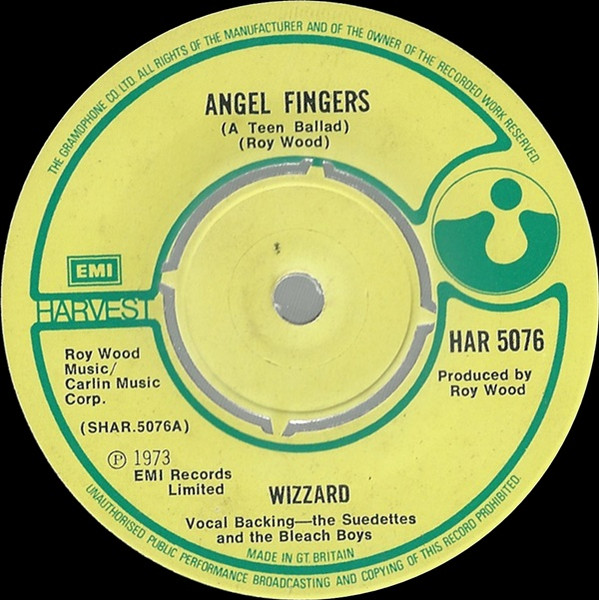
Angel Fingers (A Teen Ballad) – Wizzard (1973)
Most of the songs I playlist from the sixties and ealry seventies are tunes I discovered later in life as I was only ten when the 70s began. My focus in those days was music I heard on daytime Radio 1 and saw once a week on Top of the Pops. I wrote in WIS 19Apr24 about the first single I bought with my own money being Jeepster by T.Rex in November 1971 which set me off on a glam rock/pop vibe for quite a period. Unlike my other pals, it wasn’t Marc’s mob that became my favourite band – strangely, I adopted Wizzard as my group of choice and Roy Wood became my first musical hero. Born in Birmingham, Wood was 77 years old last weekend and I had to mark this occasion with playlisting something from the great man.
He first came to my attention through the terrific California Man single which was a hit for The Move in May 1972 and was a great favourite of my primary school pal Mike Clark. We had no idea Roy Wood had written it as a pastiche of Little Richard (his favourite musician) and Jerry Lee Lewis (Wood’s bandmate Jeff Lynne’s favourite musician) – we just loved the honk of those saxophones on TOTP. We also had no idea that Wood had written The Move’s late 60s baroque pop hit singles (Flowers In The Rain, Fire Brigade, Blackberry Way) and that, while still in The Move, he and Lynne had been making pop classical recordings with a side project group they called the Electric Light Orchestra. However, when a single called 10538 Overture from this side project ended up in the UK top ten in August 1972, we knew something was afoot, although Wood teaching himself to play the cello for that recording and its incredible outro was something I only discovered in later years.
Incredibly, within weeks of the single’s release, Wood fell out with the band’s management and left Lynne with ELO while he went off and formed a new band, Wizzard. I was hooked by this point and, when they released the terrific racket of Ball Park Incident in November 1972, it became Wood’s third top ten single in 12 months but with three different bands – surely some kind of… erm… record? The band’s sound was rooted back in 50s rock’n’roll but with added classical instrumentation and came wrapped up in Wood’s Phil Spector-on-steroids, everything-but-the-kitchen-sink production style. His image became steadily more wild – painted face, huge coloured backcombed hair and beard and crazy clothes – and the pictures of him I had on my bedroom wall drove my mum mad. For a while, Wizzard’s run of six top ten singles (including two No 1s) suggested Lynne got the raw commercial deal in the ELO split but Wizzard’s pop perfection burned briefly but brightly. I have chosen to playlist their third single Angel Fingers (A Teen Ballad) which was a No 1 hit but got a bit forgotten as it came between their first No 1 (See My Baby Jive) and that Christmas song they did. I loved Angel Finger’s thundering Be My Baby drums, the pizzicato strings in the sax solo and the daft “teen” lyrics which I had on my wall in the form of the cut-out-and-sing-along full page advert for the single. “Will Dion still be so important to you on your wedding day?” And what about the backing vocals at the end credited to the “Bleach Boys” leading into the French horn flourish to finish? Crazy but it works.
I thought I was the only Roy Wood fan at school until I discovered that Graeme Curtis who lived across the railway bridge from me was also hooked by the mad, multi-instrumental genius of the man. After 45 years, when I finally went with my pal Tony to see Wood play live in the Pavilion Theatre in Glasgow in 2017, I hoped that ‘Cuzzie’ was somewhere in the crowd enjoying the huge nostalgia rush as much as I was.
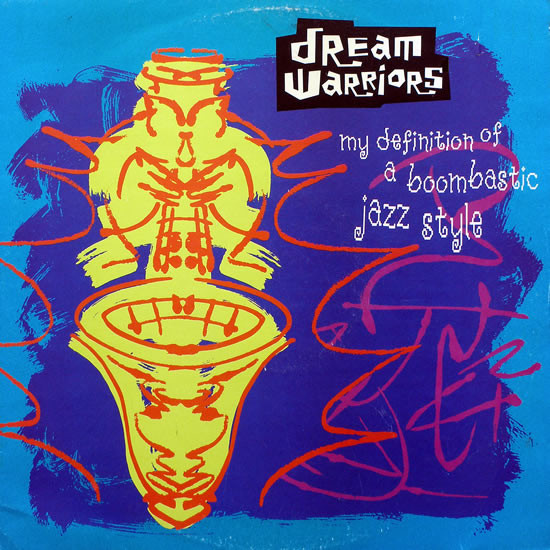
My Definition Of A Boombastic Jazz Style – Dream Warriors (1990)
Poor Quincy Jones. After a stellar 90 year life in music with 28 Grammys as a musician, composer, producer and arranger, as well as being the first black composer to find acceptance in Hollywood, his recent death was marked by the mainstream media with endless footage of that Thriller video. The Guardian’s obituary by Adam Sweeting took the time to paint Jones’ incredible story and is well worth a read at the link. But for those of you not disposed to do that, I am going to shamelessly reproduce their summary paragraph of his work outside producing other people’s records:
“He worked with jazz stars such as Count Basie and Dizzy Gillespie, became a friend and collaborator of Frank Sinatra, and developed a flourishing career as a composer of soundtracks for film and TV. He enjoyed success under his own name in styles ranging from big-band jazz and swing to pop, soul and funk. He became an influential music business executive, a successful entrepreneur in film and TV production and launched the music magazine VIBE.”
In its detail, the obituary states that the movie Austin Powers prompted a revival of Quincy’s 1962 track Soul Bossa Nova which was also used as a theme for the 1998 football World Cup in France. Jones had recorded the track for his Big Band Bossa Nova album released in 1962 by Mercury Records. He is quoted as saying it took him twenty minutes to compose the hip-shaking piece that prominently features a Brazilian drum called a cuíca, which produces a high-pitched squeaky timbre responsible for the distinctive “laughing” sound in the first bars. The same instrument makes a similar contribution to Paul Simon’s Me And Julio Down By The School Yard.
What the obit failed to mention was that Soul Bossa Nova had been revived eight years earlier in 1990 when Canadian hip hop duo Dream Warriors extensively sampled it for their debut single My Definition Of A Boombastic Jazz Style. The single was the second to be lifted from the Toronto jazz rapper’s first album And Now The Legacy Begins and charted at No 13 in the UK, causing me to purchase the album at the time. So, rather than reach for the obvious, WIS is going to mark the passing of Quincy Jones by playlisting the Dream Warriors track. You all know how Thriller goes…
Fascinating Fact: Dream Warriors’ first single, the great Wash Your Face In My Sink sampled large chunks of Hang On Sloopy by Jones’ old mate Count Basie, along with a few lines nicked from Prince’s When Doves Cry and Lynn Anderson’s Rose Garden. It might be a made-up memory but through the haze of the years I recall someone telling me they hated the song as they thought the lyric “wash your face in my sick” was totally unacceptable!!

Powderfinger – Neil Young & Crazy Horse (1979)
The first of two very different tunes dating from 1979 to close this week’s blog marks the second appearance on WIS for grizzly old folk rocker Neil Young. Like Roy Wood above, Young is well into his eighth decade – he turned 79 years old on Tuesday so he’s nearly into his ninth!
To mark his birthday, I’ve reached for his much-vaunted Rust Never Sleeps album which he recorded with his long-term associate band Crazy Horse. Young’s recording techniques focus on the spontaneity of capturing music ‘as live’ with minimum overdubs. My piece on 1977’s Like A Hurricane in WIS 31May24 noted that the released version of that tune was a recording of the band’s first run-through of the recently written song played together in the rehearsal room – he never liked any subsequent attempts to record it. Two years later, most of the songs for Rust Never Sleeps were recorded during live stage performances and tidied up for release with studio overdubs. It gives the record an instinctive, natural feel.
The LP has an ‘acoustic’ Side A and an ‘electric’ Side B, with increasing amounts of distortion being applied to the guitars as Side B continues. Side A opens with a track titled My My, Hey Hey (Out of the Blue) where Young’s melancholic voice declares “It’s better to burn out than fade away” against some percussionless strumming and picking, with a characteristic harmonica solo. Side B closes with essentially the same song retitled Hey Hey, My My (Into the Black) but by this point the distortion pedals have been turned up to 11 and Young strangles a trademark wailing solo out of his guitar against a wall of noise. And both are excellent songs!
I am also very fond of the time-shifting, surreal beauty of Pocahontas on Side A, which emotionally throws back to the majestic Cortez the Killer from his 1975 album Zuma. But I’ve decided to flip over to the opening track of the electric side and playlist Powderfinger, a song many consider to be among Young’s finest work. There is inevitably some distortion on the guitars but you can still hear the strings resonating and the backing vocals shine. It tells a heartbreaking posthumous first-person tale of family bonds and violence where a young man is left alone “to do the thinking” in a hopeless situation. It is cinematic in scale and uses Young’s guitar solos to build the tension to the moment when action is taken and in one harrowing moment “I saw black and my face splashed in the sky”. The solo kicks off again and then the last verse provides a moving epitaph to wasted youth: “Just think of me as one you never figured/Would fade away so young/With so much left undone”. Young tells of writing the first line of the song in 1967 and finishing it in 1975 when he sent it to Ronnie Van Zandt of Lynyrd Skynryd to record on their next record. But Van Zandt was killed in a plane crash and it never happened.
After all that depressing stuff, there is a need for a fun fact, I think. The apparently enigmatic title of the album was given to Young by Devo vocalist Mark Mothersbaugh who recalled it as a slogan from his graphic arts career promoting a rust-proofing product for cars called ‘Rust-Oleum’.
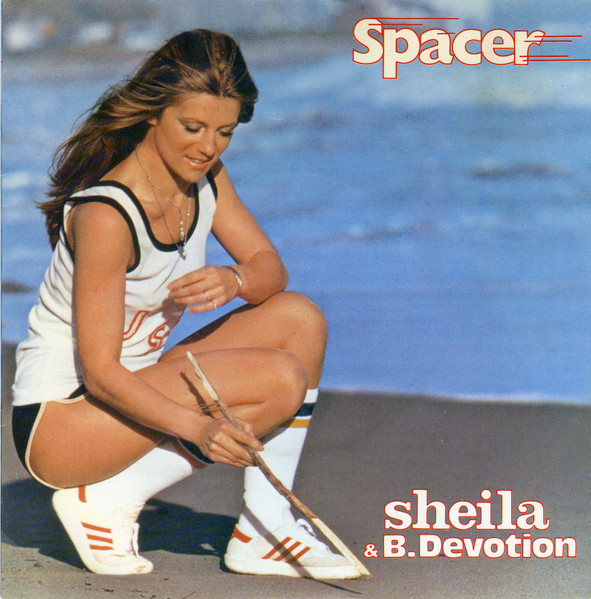
Spacer – Sheila & B. Devotion (1979)
When I saw that this single had been released 45 years ago this week in 1979, I knew it was the perfect opposite of the Neil Young tune and felt it had to go in as the final track on the blog as an uplifting tune to start your weekend – I challenge you not to shake your ass to this. For years, I was convinced this was a song by a euro-disco singer called Sheila B. Devotion but a little bit of searching on t’internet has shown I was only partly correct.
The story starts back in France in the early sixties when record producer and songwriter Claude Carrere started working with a 16-year-old singer called Annie Chancel. In 1962, they recorded a cover of Sheila, a US No 1 that year written and recorded by Tommy Roe. Carrere suggested Chancel adopt Sheila as her stage name and the record was a top ten hit in France. The follow-up single, L’Ecole Est Finie became the first of many French No 1s for Sheila collaborating with Carrere over the next twenty years, all released on the record label that took his name. With her girl-next-door ouevre, she became part of what was known as yé-yé music, a ‘bubblegum pop’ style widespread in Southern Europe and based on British and American rock’n’roll. The name came from the expression ‘yeah yeah’ popularised by British beat bands.
However, in 1977 she started singing in English and changed her style to a pretty tacky Euro-disco sound, teaming up with a team of three male dancers known as Black Devotion. She then became known as Sheila and B. Devotion although in some countries the records were attributed to Sheila B. Devotion or even S.B. Devotion. The name change didn’t make atrocities like her disco cover of Singin’ In The Rain sound any better but, in 1979, she somehow lucked out when Nile Rodgers and Bernard Edwards agreed to write, arrange and produce a collection of songs for her, including Spacer. Chic were at the peak of their powers and brought the magic dust of those bass riffs and guitar chops to the party – no sign of a Crazy Horse distortion pedal anywhere! The opening piano figure defines the record and it peaks when Nile Rogers decides to unleash that classy solo at the end. It sold 5 million copies across Europe but surprisingly only got to No 18 in the UK chart.
Sheila went on to a TV career and wrote books but still turns her hand to music and remains widely popular in France today. Incredibly, she toured her 60th anniversary compilation album in 2022 at the age of 77 and Spacer was one of the ‘Songs of France’ played at the opening ceremony of the 2024 Paris Olympics.
Last Word
Just reflecting on this week’s blog prior to going live on Friday afternoon, I think these six tunes are probably the oddest collection of songs that have ever featured on one edition of WIS. It wasn’t intentional – it just turned out this way. So I really hope you found something you enjoyed if you have ploughed through it all. If not, there is always next week…
Odd or not, all six of them have been tipped into the box full of records known as the Master Playlist and are now lurking there to ambush you when you press shuffle. You have been warned.
AR
If you loved this, there is plenty more where that came from. Sign up above to receive a link in your inbox every Friday evening at 5pm UK time. You can’t start the weekend without it.

 Week In Sound
Leave a comment