A couple of busy weeks ahead mean I’m dropping into theme mode for at least this week where you’ll find songs related to books. Enjoy!
First Word
Being away over the summer, we pretty much missed the Edinburgh Festival but over the last week we managed to squeeze in a few events at the Book Festival. After a couple of years in limbo at the College of Art, it has just moved to a wonderful new venue at Edinburgh University’s recently opened Futures Institute in the old Royal Infirmary Building on Lauriston Place. Lynn’s friend (and WIS reader!) Irene has a role on the Board of the Book Festival and over the last few years we’ve found ourselves attending more of the fascinating author interviews/Q&A sessions put on by the Book Festival rather than edgy late-night comedy or cabaret shows in the Fringe. I was going to say it was an age thing (and it probably is) but a statistically indeterminate look around the venue this week suggests we tend towards the lower end of the Book Festival demographic!
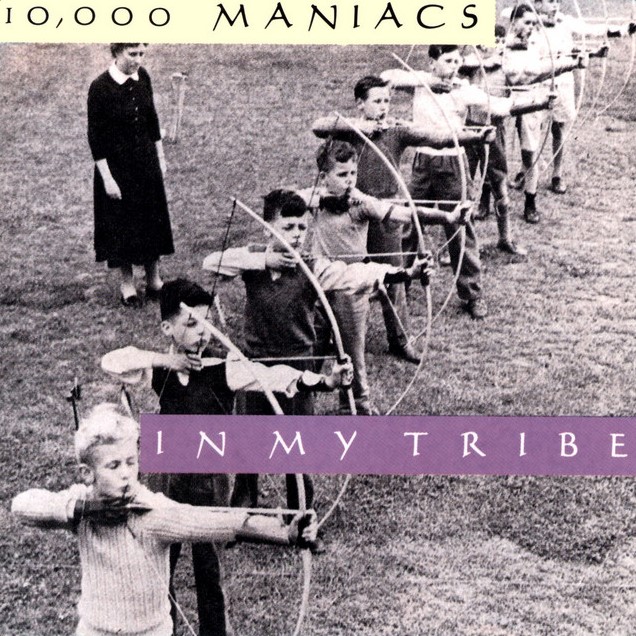
Hey Jack Kerouac – 10,000 Maniacs (1987)
I suppose nearly everyone who reads books has to go through their Jack Kerouac phase – mine was very short and it was my old friend Mark who led me into it. As we were leaving school, Mark had got himself a dog-eared copy of the hipster bible of the beat generation On The Road, which he was encouraging everyone to read. A quick flick through it suggested that this stream-of-consciousness tale of Sal Paradise, Dean Moriarty and their road trips was maybe a tough starting point. So I elected to begin with Maggie Cassidy, Kerouac’s largely autobiographical tale of his high-school relationship with a girl whose real name was Mary Carney. I recall enjoying it, but I never did get round to picking up On The Road – maybe after this blog, I will.
Kerouac had a major impact on the music of the 1960s with artists like Bob Dylan, The Beatles and The Doors all crediting him as a significant influence on their music and lifestyles. He is referenced in many songs, a favourite of mine being Van Morrison’s Cleaning Windows where he tells us his Christmas books included “Kerouac’s Dharma Bums and On the Road”. But I’m going to start the playlist this week with one of the stand-out tracks from In My Tribe, the 1987 LP by 10,000 Maniacs. This album was another from that summer of 1987 when I met Lynn and which I talked about (at length!) a couple of weeks back. I don’t own the album but have an old tape of it with the track listing written in a different hand. I suspect I knicked it from my old flatmate (and WIS guest blogger), Mike Lynch. He’ll probably comment on this post telling me he’s been looking for it for ages and can I send it back to him – in Adelaide.
Anyway, In My Tribe was the band’s breakthrough record in the US and, although not a big seller in the UK, my memory was that it was on at every party I went to back then – maybe due to the company I kept. Written by guitarist Rob Buck and singer Natalie Merchant, Hey Jack Kerouac is a gloriously melodic tribute to the author, with the band’s jangly folk-rock sound benefitting from the pop polish it got from producer Pete Asher. Merchant’s distinctive vocal is mixed up front and I’ve always enjoyed her opening verse: “Hey Jack Kerouac, I think of your mother/and the tears she cried, they were cried for none other/than her little boy lost in our little world that hated/and that dared to drag him down, her little boy courageous”. Kerouac had died young at 47 through medical complications brought on by alcohol abuse and his French Canadian mother Gabrielle inherited most of his estate.
Trainspotter Fact: English indie-pop band The 1975, took their name from random scribbles found on the back page of band leader Matt Healy’s second-hand copy of On the Road that were dated “1 June The 1975”.
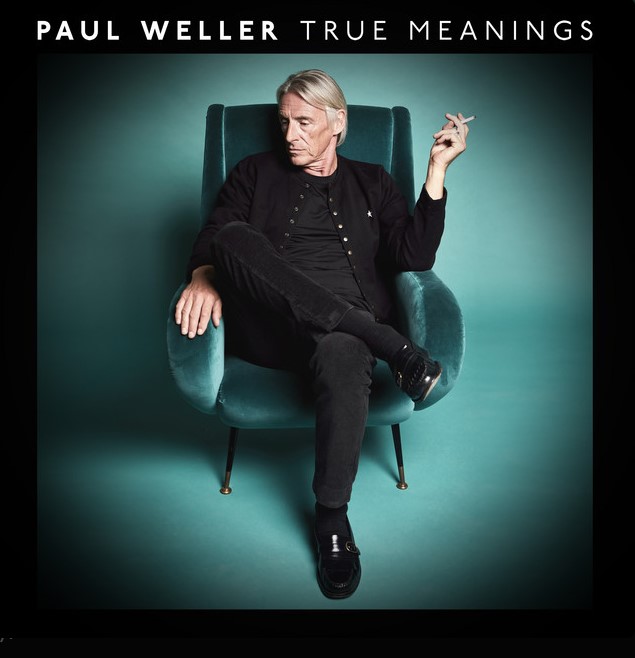
Books – Paul Weller (2018)
This next choice is something I’ve only discovered relatively recently. Following those other two bands he was in (what were they were called again?), Paul John Weller has had a long and illustrious career in the UK as a solo artist. The first half of this period was filled with albums that reflected his guitar-orientated, soulful rock style. But, as he turned 50 Weller began to get more adventurous in his music and, since then, has produced some excellent records adopting a more avant-garde approach to his sound. His 2010 LP Wake Up The Nation was nominated for the Mercury Prize and among its many joys were experimental psychedelic electronica pieces. He began collaborating with a wide range of different artists and seemed to be having a ball. This musical restlessness and shapeshifting continued throughout the decade and took another turn when he released True Meanings as he turned 60 in 2018. In a throwback to the likes of English Rose on All Mod Cons, this LP was an acoustic-driven set of pastoral songs but enhanced by strings and horns. It was recorded with a dizzying array of guests from Rod Argent to Danny Thomson and the critics loved it.
Books is taken from True Meanings and, in my view, it shows that Weller remains a brilliant songwriter even after all these years. For this track, his guitar playing is supplemented by the use of sitar, tampoura and Indian violin in the way that George Harrison might once have done. They lend the song a kind of drone-like quality, that supports his delicate vocal track. He is joined on vocals by singer-songwriter Lucy Parton and the ubiquitous Noel Gallagher provides the harmonium. The song is an attack on organised religion commencing with the question: “What is this book/That swells with fables/On oceans of ages/Of changing truths”. The verse reaches the conclusion that “Enough’s enough/This can’t go on/And stop these wrongs/Where has love gone?”. It is all quite beautiful.

Paperback Writer – The Beatles (1966)
WIS doesn’t really like doing the bleedin’ obvious but, on this occasion, it’s going to do just that. The mention above of the more esoteric style of one of the guitarists in the Beatles offers a useful counterpoint to this much-played track written by their bass player. Paperback Writer was recorded in April 1966 and released as their 12th UK single at the end of May. Having decided I would consider it for the blog, I played it for the first time in ages and was actually quite taken aback by how good it sounded through my Sonos system in the house. McCartney’s bass is mixed really loud and his bassline is very busy. And, as usual, I love Ringo’s drumming. So in it goes.
As I do with all songs by the Fabs, I turn to the bible that is Ian Macdonald’s Revolution In The Head for the inside story. It is safe to say he is not a fan of this one, saying “its air of contrivance sounds flashy after the ideal balance of form and feeling in (previous single) We Can Work It Out.” Hmmmm. OK. He tells me that Macca swapped his trusty Hofner bass for a solid-bodied long-scaled Rickenbacker for the recording, allowing him to play the high-register parts. Recording engineer Geoff Emerick boosted the sound of the bass by miking his amp through a second speaker. That’s why it’s so bloody loud then!
By this point in their evolution, McCartney was becoming more dictatorial in how his songs were recorded but there is division among Fab Four scholars as to who actually played the guitar riff on Paperback Writer, which Macca had ripped off from Day Tripper. What is clear is that the four-part harmony on the backing vocal refrain was a brazen attempt to mimic the Beach Boys – Sloop John B had been released the month before and was heading for the UK top ten. Assigned their harmony parts by McCartney, Lennon and Harrison were clearly not taking their instructions too seriously. In the third verse, as Paul sings “If you really like it you can have the rights”, a careful listen reveals John and George replacing the song’s title with the title of the French nursery rhyme “Frère Jacques”. The cheeky scamps.

Read It In Books – Echo And The Bunnymen (1980)
And for the next track in this book theme, we stay with the city of Liverpool but move on from the Cavern Club days to the late 70s/early 80s music scene that grew up around another club called Eric’s. I was quite astounded to see it was way back in WIS 14Apr23 when the only other Echo & The Bunnymen track appeared on the blog – seems like just last week. Doesn’t time fly when you are writing two thousand words of nonsense every week!
I noted in the first post that the Bunnymen followed The Teardrop Explodes out of the club scene and into the national charts. However, Read It In Books comes from the very early days of Eric’s and was jointly written by the frontmen of these two bands when Ian McCulloch and Julian Cope were in a short-lived band called A Shallow Madness. The Bunnymen were the first to record Read It In Books as it appeared on the b-side of their debut single Pictures On My Wall, of which only around 7,000 copies were pressed. As noted back in April 23, the band’s name refers to the ancient drum machine (“Echo”) that they used in the absence of a drummer in those early days. Spotify doesn’t give access to the original single, but you can here Echo thumping away on this version from a John Peel session in 1979.
Both sides of the single were re-recorded for the band’s debut LP Crocodiles after the arrival of the brilliant Pete De Freitas on the drum stool and it is this more expansive version of Read It In Books that I’ve playlisted. It is De Freitas’ drums (along with Les Pattinson’s looping bassline) that drives the tune and gives Will Sergeant’s guitar more room to shimmer on this recording, particularly on that last chord. I don’t think that Mac’s lyric contains anything too deep and meaningful but I’ve always enjoyed the “I’ve seen it in your eyes/And I’ve read it in books” hook-line in the chorus. Those who care to can have a listen to The Teardrop Explodes’ very different version of the tune here, taken from their debut LP Kilimanjaro.
Somewhat bizarrely, the two re-recorded tracks were on the cassette release of Crocodiles in July 1980 but were left off the vinyl LP when it was pressed due to the managing director of the record company mistakenly thinking they contained obscenities in the lyrics. After realising the mistake, the label pressed up the tracks on a 7″ single and slipped it into the sleeve of later copies of the LP. As my copy of the LP came with the single insert, the wonders of the internet tell me I must have bought it in November 1980.
Hope Is A Dangerous Thing For A Woman Like Me To Have – Lana Del Ray (2019)
Unlike my brief dalliance with Kerouac noted above, I had no such dip into the work of Sylvia Plath in my youth or any time since. Like Kerouac, she was a writer and poet with a short life and she has also had an enduring legacy in popular culture, albeit this seems to be mostly about her mental illness and suicide with little referring to her work. She had a turbulent five-year marriage to fellow poet Ted Hughes and the couple had two children before allegations of abuse and Hughes’ affairs led to a divorce in 1962. Plath only had one book published under her own name before she took her own life aged 30 in 1963 – this was The Colossus in 1960, a collection of poems that had previously been published in journals and magazines. Her first ‘new’ writing The Bell Jar was published a month before she died under the pseudonym Victoria Lucas. It was her only novel which she began compiling in 1955 and completed in 1962. A semi-auto-biographical tale whose lead character suffered from clinical depression, Plath’s mother was apparently very against it being published. The posthumous publication of Plath’s many poems resulted in her reputation growing and The Bell Jar was republished under her name in 1967.
In popular culture, Plath is usually referenced by angst-ridden young female characters with mental health issues like those in movies such as Things I Hate About You, Heathers and Adult World. Gwyneth Paltrow starred in the not-very-well-received 2003 biopic Sylvia, which Plath’s daughter objected to and denied the makers the rights to her mother’s poetry. Musically there are a number of songs that have been inspired by her, notably Sylvia by Ralph McTell and the stark Crackle And Drag by Paul Westerberg. But I’ve decided to playlist a Lana Del Ray song that was originally named after Sylvia Plath, but was released as a single in 2009 with an alternative (very long) title. Hope is a minimalist piano and vocal confessional ballad where Del Ray mulls over her life troubles – bad relationships, recovery from alcoholism and her difficulty with the limelight of fame. It was acclaimed by the critics on its release and it went on to be the closing song on her sixth album. Written with her producer/collaborator Jack Antonoff, the vulnerability of her vocal stands out and makes a direct comparison to Plath in the chorus: I’ve been tearing around in my fucking nightgown/24-7 Sylvia Plath/Writing in blood on my walls/’Cause the ink in my pen don’t work in my notepad”. All in, Hope is the kind of powerful artistic statement that I feel Plath might have related to.
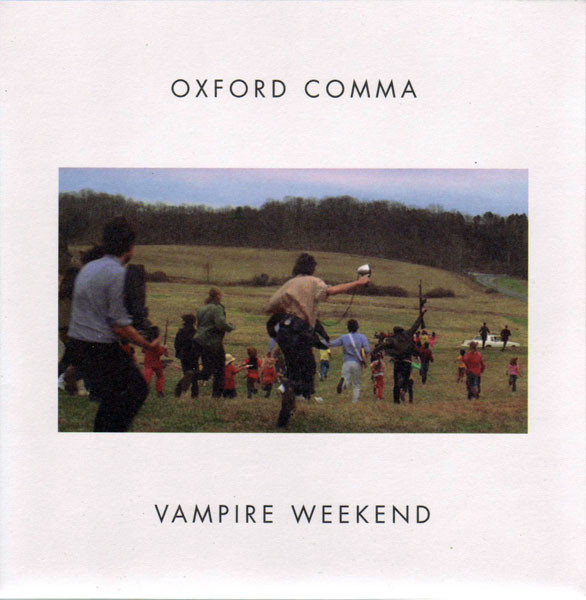
Oxford Comma – Vampire Weekend (2008)
I knew this had to be the last track on the book-themed playlist because it is impossible to resist a song which opens with the line: “Who gives a fuck about an Oxford comma?”. I’m sure I don’t need to explain (but I will anyway), the Oxford comma is a one used after the penultimate item in a list of three or more items, before ‘and’ or ‘or’. From the little research I have done (hey, I’m with Vampire Weekend on this), technically, the Oxford comma isn’t grammatically correct. However, apparently, it’s not grammatically incorrect either. As one online opinion piece I read put it: “It exists in a strange, metaphysical universe known as “grammatically optional.” As I have hinted, I’m not a fan as I really don’t see the need to add a layer of separation between the last item of a list and the rest of the sentence. Having said that, some smartarse is going to comment that I used one in a blog last month but I would put that down to my obsessive tinkering with my words and a lack of care in the proof read. Yeah, I know it sounds improbable, but I do try to proof read this stuff!
So back to the tune. Oxford Comma was the third single released by quirky American indie band Vampire Weekend in May 2008 and comes from their eponymous debut album released in January of that year. The LP was a critical and commercial success, charting in the top twenty on both sides of the Atlantic. Oxford Comma remains their biggest ‘hit’, reaching a modest No38 in the singles chart at a time when guitar-based pop tunes could still compete against dance and R’nB’ music – just. Their sound on this first record fused a number of genres including indie rock, African pop, reggae, baroque and Irish Folk. (Note lack of the aforementioned comma!) Added to their preppy, Ivy League looks, cynics reading about them could be excused for pulling a face, expecting some kind of soul-less, cerebral experiment. But, when you hear the music, it all makes joyous sense. While Oxford Comma is slightly more straightforward indie-pop, replete with woozy organ and interesting drum patterns, the yodel on the chorus catches the ear and the (presumably) deliberately stumbling guitar solo has a quasi-African feel. Listen to it or any of the other singles, like the Unit 4+2 referencing Mansard Roof or the brilliantly witty Cape Cod Kwasa Kwasa (“Can you stay up/To see the dawn/In the colours/Of Benetton”) and I dare you to try to stop smiling.
Last Word
Going for a theme this week (and probably next week) means that WIS doesn’t get the opportunity to jump aboard the hype bandwagon with the news that the Brothers Grimm have kissed and made up so that Oasis can play a series of lucrative stadium gigs next year. The mainstream media went nuts on the subject this week suggesting to me that the writers and broadcasters are between 40 and 50 and nostalgic for their teenage years. In this scribe’s view, Liam and Noel made two good LPs and then the rest went downhill fast as the nose candy kicked in. Although my son wasn’t born when these two records were released, he’ll be among millions attempting to break the internet tomorrow when the tix go on sale for a no doubt eye-watering price. Me, not so much.
Meanwhile, another six songs drop into what some might say is a treasure chest of tunes on the Master Playlist.
AR
 Week In Sound
Leave a comment