The start of a busy summer means this will be the last calendar-related blog for a while before guests, themes and les cartes postales take over. Enjoy!

Goodbye Lucille #1 – Prefab Sprout (1985)
Last week I missed the birthday of Wendy Smith, erstwhile chanteuse with the brilliant 1980s art-pop combo Prefab Sprout. I also noticed that, after about fifteen months of blogging, I had failed to find an excuse to playlist a track from the band and so I was keen to put this right. However, this gives me the not insignificant problem of picking one song from many as I own all their albums and several of their singles, including 12 inch versions with non-album b-sides.
I consider Paddy McAloon to be up there with the best songwriters of the later part of the 20th century. This view was formed when I bought Prefab Sprout’s debut album Swoon in 1984 on the strength of another of those famous NME tapes. This time Mad Mix II (NME008) included the Sprouts’ debut single Lions In My Own Garden Exit Someone, which has a suitably pretentious story around a girl at college in Limoges in central France. Swoon was a ‘difficult’ record, full of songs with strange time signatures and mid-song key changes. I thought it was wonderful but a listen to the single Don’t Sing will tell you why it didn’t get played on the radio.
Encouraged by the record company and in search of a hit himself, McAloon contacted Thomas Dolby and played him his whole archive of 40-50 demos, from which Dolby picked about a dozen for the next LP. He and McAloon went to work on them and the legend that is Steve McQueen was born. It was loved by the critics at the time but wasn’t a huge commercial success, only getting to No21 in the album charts. But it has endured. When Love Breaks Down was released as a single in multiple formats and mixes and finally scraped into the top 30. And while it features Wendy’s breathy vocals, I’m going for another track from the album which does the same. Goodbye Lucille #1 was released at 45rpm with the slightly more obvious title of Johnny Johnny. Despite this attempt to catch the ear, it failed to trouble the charts even though it got reasonable radio airplay. Paddy’s wise words on relationship breakdown spoke very personally to me at that particular time: “Life’s not complete/’Til your heart’s missed a beat”. And I loved the way he phrased the song around this line, changing to the offbeat the second time it is sung. Simple but hugely effective songcraft and masterful production.

God Save The Queen – Sex Pistols (1977)
On the first weekend in June 1977, many people in the UK were gripped by Silver Jubilee fever, with the Queen having reached 25 years of her time on the throne. In retrospect, this was a mere eyeblink compared with her final total of 70 years as the head of state. I think it is fair to say that the late 70s were a time when the monarchy commanded more respect across the wider public than it does now. But there were some pockets of resistance, the most obvious being the anti-establishment stance adopted by the nascent punk movement. And, for the seditionaries led by arch-publicist Malcolm McLaren, the jubilee was a royal gift.
As early as the previous autumn, McLaren and John Lydon had spotted the potential for exploitation. The development of an early song that Lydon had been calling No Future into the thunderous, layered guitars and mocking scorn of God Save The Queen was aimed squarely at the Jubilee. It was released on Richard Branson’s Virgin record label at the end of May, complete with its establishment-baiting Jamie Reid picture sleeve. The single was immediately banned by the BBC and the IBA. But, even though Boots, Woolworths and WH Smith declined to sell it, it was being purchased from other outlets by thousands and thousands of snotty 17-year-olds like me. However, through some shenanigans at the chart compilers, the single’s sales were not counted that week and Rod Stewart ended up being the Jubilee Weekend No1.
McLaren wasn’t done milking things yet, though. On the evening of the Jubilee Bank Holiday on 7 June, he chartered an entertainment boat on the Thames and, with Branson on board, the Pistols set sail with a large group of fans and journalists, as well as many crates of beer. As the vessel reached Westminster Bridge, the band kicked off their set with Anarchy In The UK and the river police launches were already circling as they swung into God Save The Queen. A predictable fight among the attendees was followed by the police boarding the vessel and the band and McLaren were duly arrested under the flashbulbs of Fleet St. Job well and truly done!
It seems slightly quaint to say it now, but at the time this was all incredibly exciting for those of us who were 17 and had safety-pinned our musical colours to the punk mast. I had already slipped my copy of the single onto the record player at the Jubilee street party held by neighbours around us – only to be quickly told to remove it. So when the BBC News that night carried some footage of the band being hauled off the boat by the police, I let out a quiet cheer. I can see now that it was all stage-managed to sell product but it was all part of the cultural change that was sweeping through music at that time. “We mean it, maaaann”

Essence – Lucinda Williams (2001)
The release of Lucinda Williams’ sixth studio album Essence on 5 June 2001 gives me a timely opportunity to dip into the tracks on this record and select something to bring her distinctive voice to the playlist.
Having started her recording career in 1979, Louisiana-born Williams had been building her critical reputation for songwriting in the late 80s and early 90s, most notably when the song Passionate Kisses from her eponymous third album became a US hit single for Mary Chapin Carpenter in 1993. Essence arrived three years after her commercial breakthrough record, 1997’s Car Wheels on a Gravel Road, where her songs were admired for fusing rock, blues and country in her distinctive Americana style. Car Wheels remains her biggest-selling record and won her a Grammy.
I bought Essence on the strength its critical reviews which described it as having a more downbeat tone than its predecessor, with spare, intimate arrangements. I found the music understated but richly textured and her amazing voice was made for those dark, bittersweet lyrics. At times, she drops into a half-whisper, adding extra vulnerability to ballads like Out of Touch and the gorgeous I Envy The Wind.
But I’ve decided to playlist the steamy, slow-crawl of the bluesy title track where Williams blurs the line between love and obsession. Be prepared to be unsettled by the palpable, physical yearning seeping through this dark, delirious swamp grunge. “Baby, sweet baby/Whisper my name/Shoot your love/Into my vein”, she slurs. Whoever this dubious character is, their absence seems to be disturbing Williams’ mind to the point she is stalking them through the harmony-filled chorus of waiting locations – I particularly like the slightly sinister imagery of the “I am waiting on your back steps”.
The slightly sad post-script to this is that we were meant to see Williams play as part of the 2021 Black Deer line-up but she suffered a minor stroke in November 2020 and had to pull out. The good news is she is well enough to be back performing again.
Keep On Keepin’ On – Curtis Mayfield (1971)
Soul legend and civil rights champion, Curtis Mayfield was born on 3 June 1942 in Chicago, Illinois. One of five children, he was brought up by his mother and grandmother in the city’s housing projects and like many artists began his singing career in a gospel choir in church. Although known for his beautiful falsetto voice, he is an accomplished self-taught guitar player – he tuned his first guitar to the black keys on the piano giving him an unusual F-sharp tuning that he would use throughout his recording career.
Mayfield rose to fame in the 1960s as the main songwriter with The Impressions, where he wrote a number of songs that were chart hits in the US. Their best-known tune was the gospel-influenced 1965 single People Get Ready which Martin Luther King considered as the unofficial anthem of the Civil Rights Movement. It was a top twenty hit and, as well as writing the music and lyrics, it was the first Impressions record where Mayfield played the guitar solo. The Impressions’ last major hit was the black pride anthem We’re A Winner in 1967, another Mayfield song. However, by this point, he had started a couple of record labels and was writing extensively for other artists and producing their recordings.
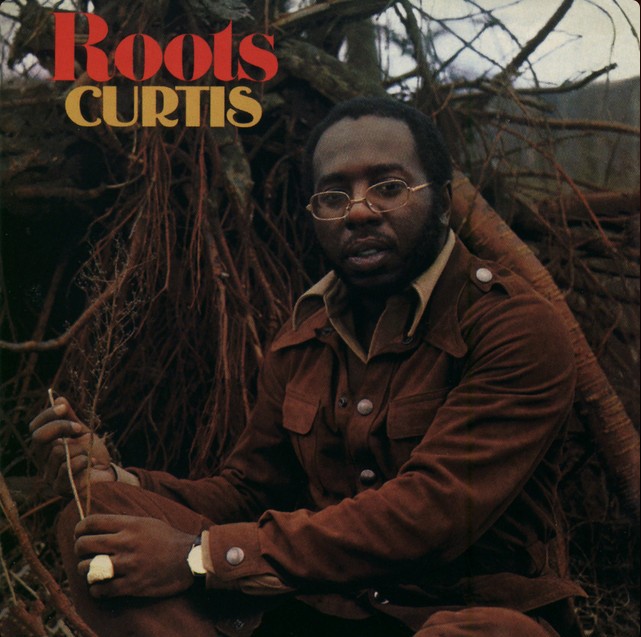
Mayfield left The Impressions in 1970 and released his first solo LP, Curtis. With its iconic sleeve (a shot of a sitting Mayfield in an amazing yellow suit taken from below with him looking into the distance), it maintained his socially aware lyrics and strong musicality. Some songs adopted a funkier, more psychedelic sound, epitomised by his 1971 UK hit single, the stonking Move On Up. Even though it was uncharacteristically upbeat in nature, it became his signature tune which went on to be covered by Paul Weller twice – once with The Jam in 1982 and then again with The Style Council in 1985. To mark his birthday, I’ve decided to playlist a more typical Mayfield tune from his second LP, Roots, which featured many hopeful songs of peace and love. Keep On Keepin’ On is a lush hymn to humanity with his glorious voice front and centre of what is a big orchestral production, with complex horn and string parts ebbing and flowing throughout its five-minute running time. Once you’ve listened to the playlisted version, check out this great stripped-back performance he gave on the Old Grey Whistle Test in 1972. His lovely understated guitar playing ties the piece together and that deceptively strong voice projects his message of love: “Continue to give, continue to live/For what you know is right”
Confetti – The Lemonheads (1992)
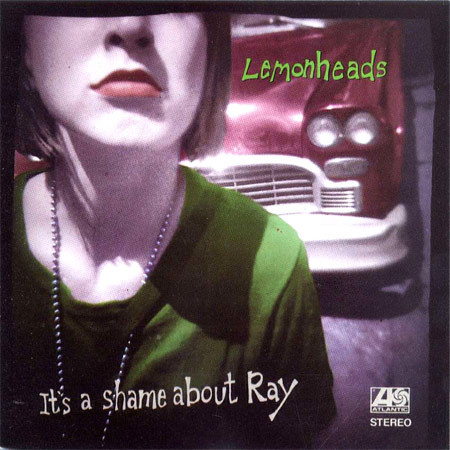
The Lemonheads released their breakthrough album It’s a Shame About Ray on 2 June 1992 and, as they are yet another band who have not had a… erm… huge media boost by being featured on this blog, I thought I would grab the chance to playlist a track from the record.
Built around main songwriter, good-looker and only constant member Evan Dando, they began life in Boston as a slacker college rock band in the late 80s, touring heavily and releasing three LPs and some singles on the wonderfully named Taang! Records. Their cover of The Stone Poney’s Different Drum is a standout from this period. Their reputation and airplay grew (along with Dando’s drug habit) and they got a deal with Atlantic Records. However, their first major label album flopped and Dando ran off to Australia where he found some new sidekicks and developed the songs that would appear on It’s a Shame About Ray. The new songs managed to achieve the noise and melody balance that their older records struggled with and Dando returned to the States to record them. He enlisted Julianna Hatfield as bass player and she adds some colour to the sound with her backing vocals.
The album was recorded in Los Angeles under the watchful eye of old Laurel Canyon producers the Robb Brothers. Citing his love of The Byrds, they teased Dando’s Gibson SG off him and got some lightness on the tracks by using layers of acoustic guitars and making Dando’s voice clearer in the mix. There are clearly exceptions to this – I love the rock hit of Alison’s Starting To Happen, which gallops along furiously on some great drumming by David Ryan. My initial thought was to playlist the semi-acoustic lament of the title track where Dando had taken inspiration from the headline of an article in an Australian newspaper about a kid called Ray who kept getting kicked out of every school he went to. But, just to be less obvious, I went for another single from the record which reached the giddy heights of No44 in the UK charts. Confetti is often referred to as the “shoulda sorta coulda” song after the lyrical play Dando employs throughout the tune. You can hear the layers of acoustic guitars against some more great drumming but there is also a fabulous Dando solo on that Gibson SG before the song finishes with a proper ending. Huzzah!
How Does It Feel – Slade (1971)
The last tune this week is picking up an anniversary I’ll miss next week. Multi-instrumentalist Jim Lea was born in Wolverhampton on 14 June 1949 making him 75 years old next week. Having been inspired by Stephane Grappelli, Lea took up the violin at the age of 10 and went on to develop his musical skills playing piano, guitar and finally bass. At 16 he left school and joined The ‘N Betweens, a band formed by drummer Don Powell and guitarist Dave Hill. Soon Noddy Holder joined and then Jimi Hendrix’s manager and producer Chas Chandler took the band under his wing, suggesting a name change to Ambrose Slade.
By 1969, after an unsuccessful debut LP, the band dropped the Ambrose and adopted a pre-glam skinhead look. This early TV clip of them in their braces playing their cover of McCartney’s Martha My Dear from the Fabs’ White Album is well worth a look and features Lea on his trusted violin. Success eluded them until Chandler got them to record an old 60s rhythm’n’blues tune called Get Down And Get With It in their raucous live style which crept into the UK Top 20 in 1971. Spotting the fashions moving, the band dropped the boots and sta-press trousers and jumped on the glam bandwagon. Chandler locked Holder and Lea away in a room and told them to write a hit and they came up with the quirky, violin-infused Coz I Luv You. The song went to No 1 in October 1971 and was a hugely popular tune in our Primary 7 class at the time. It was also the first of a dozen consecutive top five hits written by Lea and Holder, many with their trademark spelling in the titles.
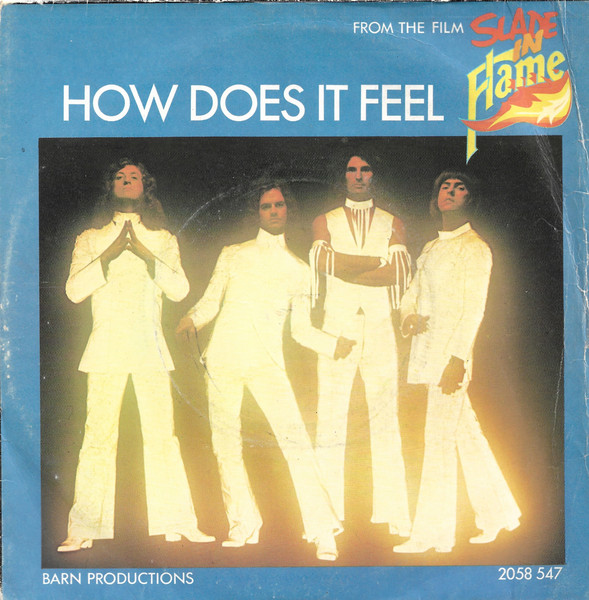
The band became big stars and by 1974 had the pulling power to star in their own movie, Slade In Flame. Sadly their story about the rise and fall of a fictional band called Fame was starting to play out in real life as their popularity was now waning. Their musical style was changing and while the first single from the soundtrack album Far Far Away made No 2 in December 1975, the second single and main theme from the movie did not fair as well. How Does It Feel struggled to No15 and signalled the beginning of end for the band as a major singles chart act. But what a way to go. The melody of the song was the first ever written by Lea when he was still at school, sat at an old piano with “half the keys missing”. He resurrected it for the film, developed a terrific brass arrangement and Holder put the lyrics to it. I love the way Lea’s bassline underpins the rising “Do you know, know, know what it’s like” refrain and how Holder’s voice sounds on the next “to be searching” line. Lea believes it was the best song that Slade ever recorded and Noel Gallagher is quoted as saying it was “one of the best songs written in the history of pop, ever”. So, it’s well worth its place in the playlist this week!
Last Word
A reminder that next week you are in for a treat. Assuming I have pressed the right buttons, the first ever guest blog by Dave Heatley will drop into your inboxes at 5pm on Friday 14 June. At that time, I’ll hoepfully be standing in a field in Kent watching the great BC Camplight grace the stage. However, I’ve had a sneak preview of Dave’s blog and it’s a corker – so don’t miss it!
I’ll have to remember to drop his tunes in the Master Playlist once I get mobile coverage but this week’s picks are already there and waiting…
AR
 Week In Sound
Leave a comment