With the recent Equinox and the clocks going forward this weekend, WIS sought out six Spring inspired tunes for this week’s selection. Enjoy!
First Word
Spring seemed to come on Sunday and go again on Monday without returning but it seems the right time to pivot to a theme this week. Particularly as my busy calendar for these seven days tells me time is tight, to borrow the song title from the great Booker T & The MGs. Normal week-related shennanigans will return with the next issue of the blog on Friday 5 April.
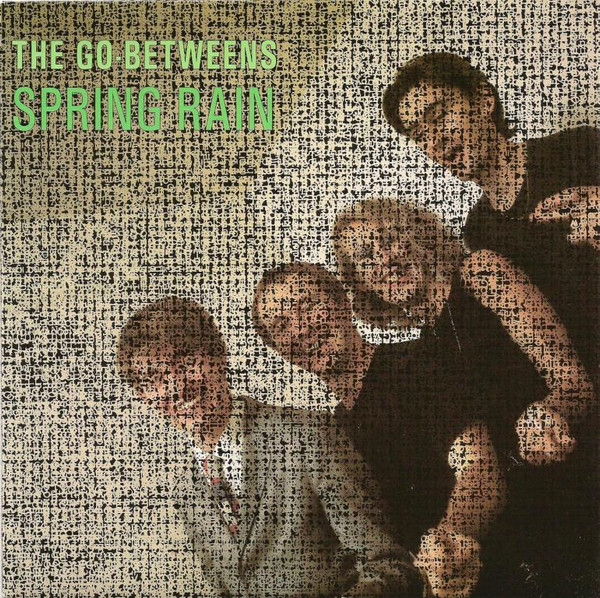
Spring Rain – The Go-Betweens (1986)
Despite The Go-Betweens being featured relatively recently on the blog, there was no doubt that this tune would be included in any Spring-related playlist. Side 1 track 1 and lead single from their 1986 LP Liberty Belle And The Black Diamond Express, Spring Rain kicks off this week’s six tunes with style. Further proof, if it were needed, that this band should have had hit singles, the lack of which ultimately contributed to the band’s demise, as I wittered on about back in February.
Played with almost a swing beat and opening with a trademark jangling guitar reminiscent of Creedence Clearwater Revival, this Robert Forster tune was written in London but gazes wistfully back to his youth in a Brisbane suburb: “Driving my first car/My elbow’s in the breeze” is such an evocative lyric. The chorus sings of falling rain and, in my head at least, its descending chord changes and call & response vocal perfectly mimic the sound of falling rain. One of the band’s more direct tracks with a simple song structure, the chorus melody locks itself into your head. Sadly, not in enough heads to make it a hit though.
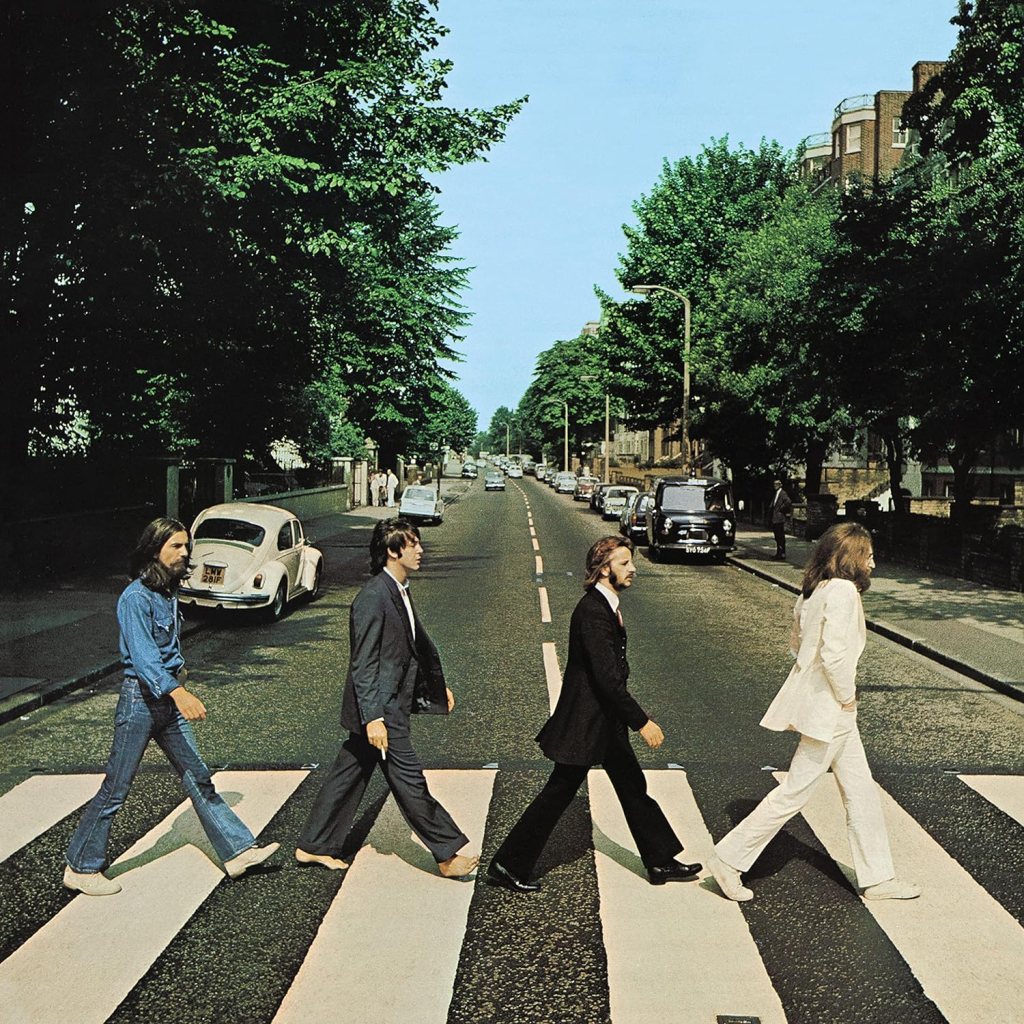
Here Comes The Sun – The Beatles (1971)
I said last week that WIS avoids the obvious wherever possible in selecting tunes but, one week later, I have failed miserably to live up to this statement. Well aware that Here Comes The Sun was written by George Harrison about the coming of Spring, I felt that I would playlist one of the many covers of the song rather go for the Beatles original which, as at the time of writing, has been streamed on Spotify 1,232,797,333 times. Over a billion streams suggests everyone has heard it enough and, to avoid being so obvious, I toyed with covers by Richie Havens, Nina Simone, Cat Stevens or even giving Steve Harley his second track in a week. But, admirable though many of these covers are, I clocked up another stream for George Harrison’s version and decided it should get the nod.
The song was famously written on a sunny April day in 1969 as Harrison wandered around Eric Clapton’s garden with his acoustic guitar picking out chords while playing truant from a meeting with the suits to sign stuff at Apple Corp. February and March had been particularly cold that year which explains the “long, cold, lonely winter” line but the vibe of that line was also due to the dark cloud hanging over the Beatles as they moved further and further apart. The recording does not feature John Lennon in any capacity as he was recovering from a car accident. Although the verses are in 4/4 time, influenced by Indian music, Harrison varies the time signature in the bridge and the chorus. The second and third verse feature the Moog synthesiser which had recently been installed in the Abbey Road studio. Balancing this new technology, the long “sun sun sun here it comes” bridge features some great drumming by Ringo and I love the syncopated handclaps which appear half way through that section. With this track and Something on the LP, Harrison’s credentials as a songwriter were finally being recognised.
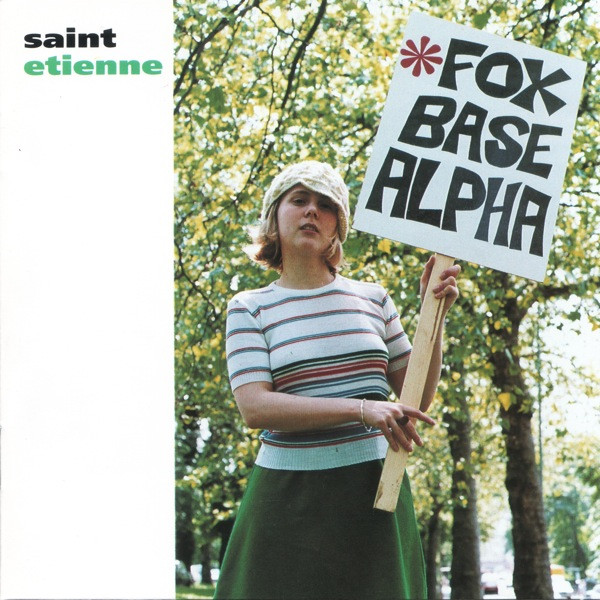
Spring – Saint Etienne (1991)
This is where WIS goes all confessional and admits that I only heard this seasonal tune by erstwhile indie dance band St Etienne for the first time last weekend on the Radcliffe and Maconie Show on BBC6Music. Never one to look the proverbial gift horse in the mouth, I quickly snaffled it for this week’s blog. The track featured on their 1991 debut album Fox Base Alpha alongside their singles Nothing Can Stop Us and their cover of Neil Young’s Only Love Can Break Your Heart, which scraped into the the top forty with its Soul II Soul type dance beat. Spring has a suitably airy string synth production and a nice chugging rhythm to it as it hands out advice to a boy with a broken heart: “It’s only Springtime/Hey you’re too young to say/You’re through with love”.
I don’t have much more to add about the band other than I believe their name derives from the French football club AS Saint Etienne, about which I have a story. I also support a canonized football team and the first taste of European football for my beloved Saint Mirren was the 1980-81 UEFA Cup. Having knocked out the mighty Elfsborg of Sweden in the first round 2-1, we went on to be drawn against high-flying Saint-Etienne in the second round. With no less a player than Michel Platini as their captain, we held them to a goalless draw in the first leg in Paisley but sadly lost 2-0 in France. They went on to lose in the quarter-finals but won the French League that season. A year or so later, while inter-railing around Europe with some mates after university, I got on the chat with the conductor on a French train who turned out to be a Saint Etienne supporter who had travelled to Paisley for the match. Seemed to think it was a great place, so he’d obviously had a few beers…
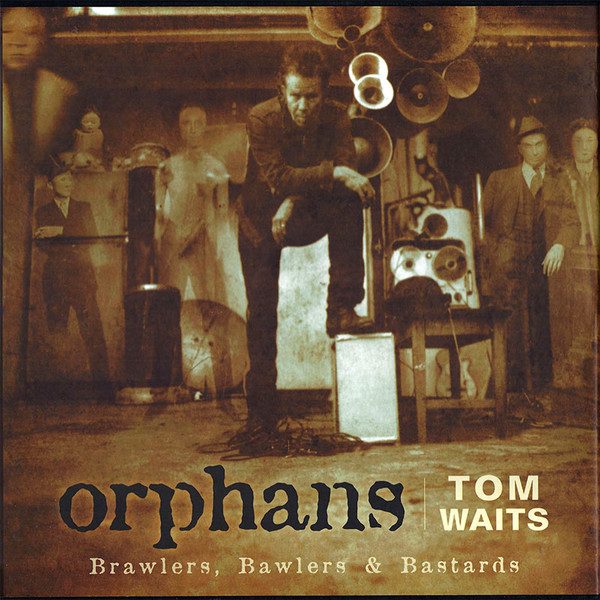
You Can Never Hold Back Spring – Tom Waits (2005)
And welcome to Week In Sound, Tom Waits! Not quite sure why it’s taken so long for the stars to align such that he drops into view but he’s here now. And oddly, the track that brings him in from the cold is a relative obscurity from a late-career box-set called Orphans released in 2006. The collection has the brilliant sub-title Brawlers, Bawlers and Bastards which are the three titles that the songs are arranged under. Waits explains in the sleeve notes that these are “songs that fell behind the stove while making dinner – oddball things, orphaned tunes.” Brawlers groups the rock and blues recordings together and includes a Ramones cover. Bawlers has more of his melancholic songs but also manages a Ramones cover – Waits’ reading of the wonderful Danny Says. Bastards was left with his more experimental difficult to classify work including stories and poems. For a box-set, it was incredibly well received, ranked as the second highest scoring album of the year by the online critical analysis site Metacritic. It was nominated for a Grammy and he even toured in support of it.
You Can Never Hold Back Spring sits under the Bawlers heading and is a co-write with his wife, Kathleen Brennan. It originally appeared in Italian director Roberto Benigni’s anti-war film The Tiger and the Snow with Waits himself performing it in the wedding scene. Brennan famously described her husband’s songs as either “grim reapers” or “grand weepers” and this romantic ballad falls firmly into the latter category: “So close your eyes, open your heart/To one who’s dreaming of you/You can never hold back Spring”. Waits unmistakable growl is set against the usual collection of jazz instruments with the clarinet part particularly ear-catching to this former player.
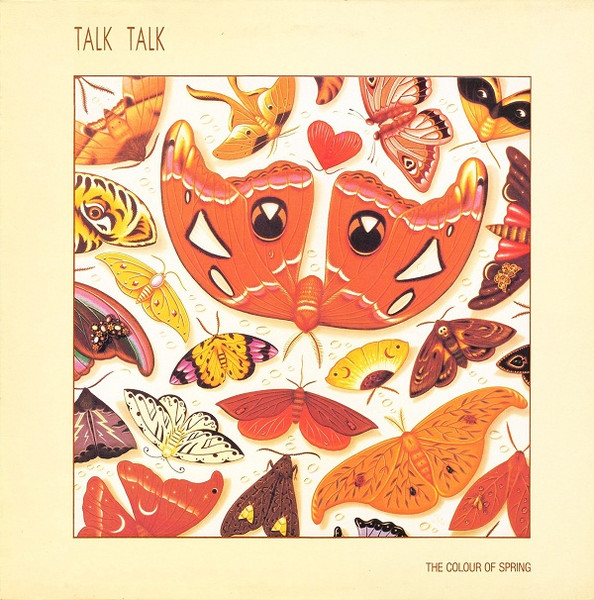
Life’s What You Make It – Talk Talk (1986)
OK so Life’s What You Make It is not truly a song about Spring but it comes from Talk Talk’s third album entitled The Colour of Spring so it gets a free pass on to this week’s playlist. Talk Talk famously began life in the early 80s as part of that synth-pop wave of bands and their first two albums, The Party’s Over (1982) and It’s My Life (1984) reached the top 40 in the UK. They had international hits with the various singles from these records – the self-titled Talk Talk got into the UK top thirty after a couple of attempts and Today made No 14 in 1982. The title track to It’s My Life was a hit across Europe and Such A Shame did even better. So far, so Duran Duran.
As their success grew, so did founder member and lead writer Mark Hollis’ wider musical aspirations. By the time Colour of Spring was released in 1986, he had dropped the synthesisers almost completely and sought an art-pop, almost jazz related sound deploying guitar, piano and organ, and focussing on a fuller, layered sound in the record’s production. History has shown the album to be the stepping stone to the full-blown experimental improvisation of Hollis’ masterpiece Spirit Of Eden, released in 1988. His ability to make this venerated but commercially unsuccessful album was squarely down to the success of Colour of Spring. A UK No 8 which remained in the chart for five months, the playlisted track was written under pressure from the record company for an obvious single. It features Hollis trading his angst-ridden vocal lines with an incredible guitar hook, all set against a thumping acoustic rhythm track with a ‘bass-line’ picked out on the piano. The drum pattern is apparently nicked from Running Up That Hill by Kate Bush and all of this duly delivered a No 16 chart hit for EMI. Darker days were ahead and after splitting the band in 1991, Hollis recorded a solo album in 1998 and then retired completely from music, dying of cancer in 2019 aged 64.
[If you are reading this, Stuart G, and wondering why I Don’t Believe In You didn’t get lifted off The Colour Of Spring, be reassured that I have a cunning plan to include it in a future blog with a different theme.]
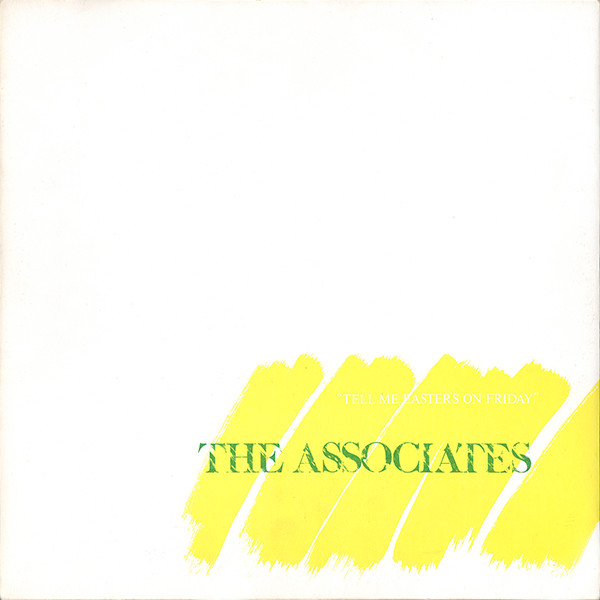
Tell Me Easter’s On Friday – The Associates (1981)
Another track that is not truly a song about Spring but given this blog will be published on Good Friday, I couldn’t help but playlist this single by The Associates from 1981. The late Billy MacKenzie’s birthday meant the band appeared on the blog one year ago this week (WIS 31Mar23) and my piece on their cover of Diana Ross’s Love Hangover set out the band’s history, namechecking this single on the way through. It came from the period after their first album, the white soul Bowie-influenced The Affectionate Punch, which was released in 1980 under a short term deal with The Cure’s label, Fiction Records. Funded by cash advances from major labels who were courting them and expecting demos for their money, and fuelled by increasing ingestion of serious narcotics, they released a series of avant-garde, experimental electronic singles.
The first of these was Tell Me Easter and I have the 12″ copy on my shelf which had the yellow splashed cover above – the 7″ was green and both were released on Situation Two Records with catalogue number SIT 1. Alan Rankine’s layers of synthesisers have a sombre European sound and pulse away ominously while MacKenzie’s vocal does what it always does – leap out and grab your ears. The lyric is unfathomable (“Tell me Easter’s on Friday/And I’ll splint my hips/Tell me Easter’s on Friday/And I’ll bruise my lips”) but somehow it doesn’t really matter as MacKenzie’s voice swoops gloriously around the music. More of this sonic experimentation was to come in subsequent single releases – the Teutonic White Car In Germany, the wonderfully titled Message Oblique Speech and the frantic Kitchen Person, where the rhythm track came from an electric typewriter and MacKenzie sang down the tube of a vacuum cleaner. All garnered critical acclaim on release but sold in very small numbers and were grouped together as a compilation LP Fourth Drawer Down released October 1981. Of course, they achieved pop success with some big hit singles the following year but anyone inspired to look back at the compilation must have found it all hard to fathom.
Last Word
All that is left for me to do after that last track is to pass on my best wishes to everyone reading this for a peaceful and relaxed Easter Holiday weekend. And yes, I am well aware that the price of chocolate is at an all time high, but I’m sure you’ll manage to eat just a little…
After much wrestling with the Master Playlist I think I have finally resolved its numerical shortcomings and we now have every tune on there that has been playlisted by the blog, bar the Christmas songs and poor old Ivor Cutler. We are now sitting proudly at 336 tracks and just 8 minutes shy of 24 hours of music. A day! Wowza!!
AR


 Week In Sound
Leave a comment