WIS is mixing it up a bit this week with some choices that may not sound as familiar as other weeks but its not a bad thing to challenge your ears. Enjoy!

Folsom Prison Blues (Live at Folsom State Prison) – Johnny Cash (1968)
In the mid 60s, Johnny Cash was struggling to move his career with the times as sales of his records began to drop from the highs of his late 50s/early 60s output. Cash had been playing live gigs in prisons since the start of his career but record companies were nervous of the association with jails and wanted to steer clear of that image. However, Cash persuaded Columbia Records that inmates were the audience that never let him down and they agreed to fund the live recording of his next performance at Folsom State Prison in California. A regular venue for the Man In Black, he had already immortalised the state penitentiary in his 1955 country hit Folsom Prison Blues. A mobile recording unit was set up to record two shows performed on 13 January 1968 and was manned by Bob Johnson, who had just completed producing Dylan’s Blonde on Blonde album in New York and Nashville. Apparently, it was Johnson who suggested to Cash he start by going out and saying who he was and his now legendary “Hello I’m Johnny Cash” introduction was born. To the noisy delight of the inmates, he kicked off with his usual opener Folsom Prison Blues and when he sings “I shot a man in Reno/Just to watch him die” there is a slightly unnerving holler from the crowd, which some claim was added afterwards for effect. The cheer for the start of Carl Perkin’s guitar solo is reassuringly louder. Cash said he wrote the lyric while “trying to think of the worst reason for killing another person” and it caused issues for him when Columbia released the track as a single at the end of April 68. As it was rising up the charts, Bobby Kennedy was assassinated and radio stations stopped playing the record. However, the popularity from the Folsom concert prompted ABC to give Cash his own television show and he was back on the up curve again.
January Hymn – The Decemberists (2011)
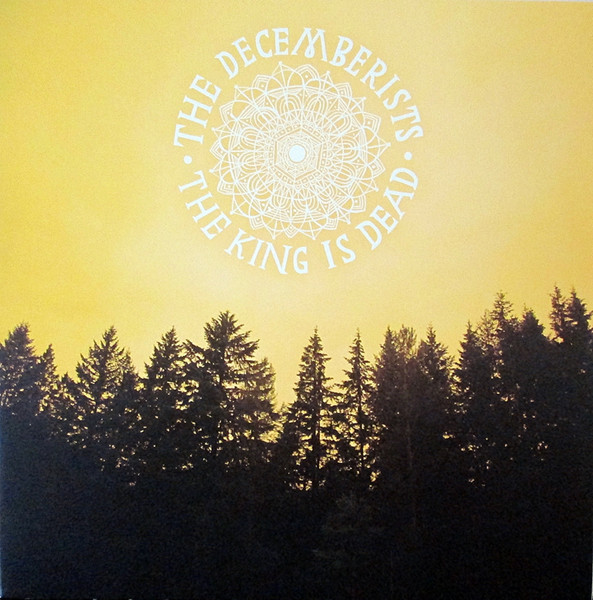
The UK has had another Arctic blast of cold weather this week so I think a dip back into my Winter playlist is in order. If, as I do, you ignore songs by Pilot and Barbara Dickson, there aren’t too many tunes out there with January in the title, but this one by The Decemberists hits the spot perfectly. Also, their name has a winter feel to it. Although it refers to the Decembrist Revolt, an 1825 insurrection in Imperial Russia, band frontman Colin Meloy has suggested the name is also meant to invoke the drama and melancholy of the month of December. The band was formed in Portland, Oregon in 2001 and January Hymn is taken from their sixth album The King Is Dead released this week in 2011. They have a very distinct style which I’m going to try and sum up as indie baroque folk pop, which doesn’t really do them justice. Their songs can be whimsical, epic and dark and are often based on mythological or historical events. My introduction to them came through a track called the Shankhill Butchers on the covermount CD of The Word magazine, which told the grisly and vivid story of the UVF faction in 1970s Belfast. I bought the album it came from, 2006’s The Crane Wife, to find there was also a song about Siege Of Leningrad in the Second World War on it. So they are not your normal pop band! The King is Dead album has a more pastoral feel to it, exemplified by this gentle acoustic ballad inspired by the first January Meloy and his family spent in their new home in the hills above Portland in 2009. Three feet of snow stranded them for 10 days and while shovelling snow with his young son, Meloy recalled “How I lived my childhood in snow/All my teens in tow”. Beautiful.
Say Goodbye to Hollywood – Ronnie Spector (1977)
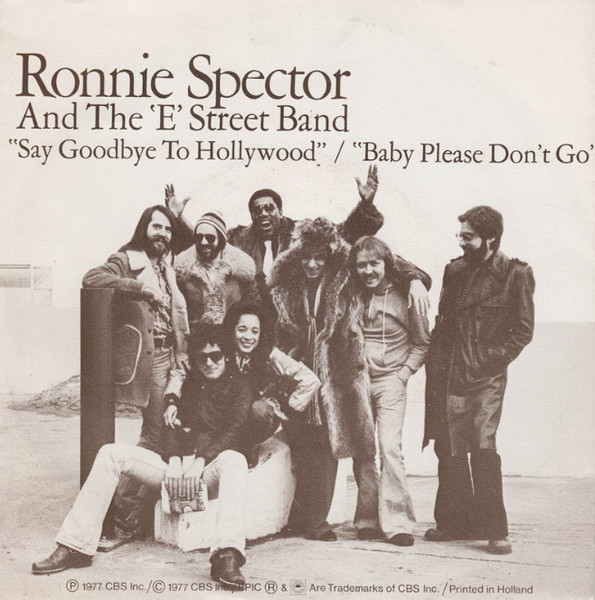
Ronnie Spector, who died this week in 2022, was probably one of the most recognisable voices of the sixties. Born in East Harlem, New York to an African American/Cherokee mother and an Irish father, she had formed the singing group the Ronettes with her sister and her cousin in the late 50s. When they signed to Phil Spector’s label Philles in 1963, he teamed them with his house band the Wrecking Crew and wrote Be My Baby for them with Jeff Barry and Ellie Greenwich. Using a full orchestra for the first time, his ‘Wall of Sound’ recording technique produced an instant classic with a drum beat that everybody in the world must know. Other hits followed before the band broke up and Ronnie married Phil in 1968, formalising a relationship that had begun when they first met. After five years of trouble and torment, she left him and forfeited all her future royalties to get a divorce settlement. That outcome has maybe driven her to continue to work and record right up until she died, doing some really interesting stuff with a range of collaborators. In 1999, she hooked up with Joey Ramone, a fellow New Yorker and huge Ronnettes fan, and recorded an EP featuring She Talks To Rainbows, a late period Ramones song written by Joey, and a fantastic version of Johnny Thunders’ signature song, You Can’t Put Your Arms Around A Memory. But to playlist a track, I’m going back to 1977 when she worked with Miami Steve Van Zandt, another Ronnettes fan, to record a great version of Billy Joel’s Say Goodbye To Hollywood, backed by the full E Street Band. Joel has claimed he wrote the song with Ronnie Spector in mind, having lifted the iconic drum beat from Be My Baby and tried to mimic Phil Spector’s sound. However, Van Zandt’s production and string arrangements, along with Clarence Clemons’ tenor saxophone, combine with Ronnie’s voice to knock the socks off the original. As you will hear, she was untouchable at this sort of thing.
Tear Off Your Own Head (It’s A Doll Revolution) – The Bangles (2003)
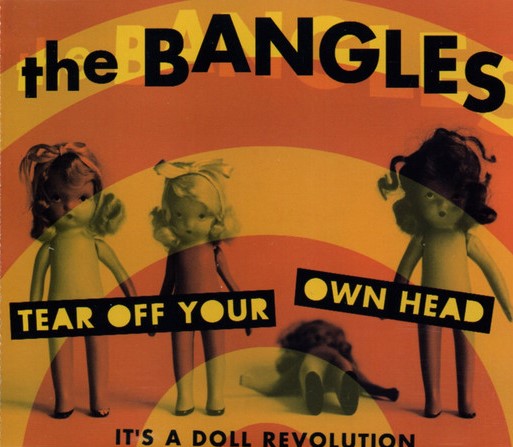
Guitarist Susanna Hoffs of The Bangles had a birthday this week – I’m not going to say a number but she looks pretty damn good on it, let me tell you. As the archetypal female pop-rock band from California, they had all their big hits in the 80s when the arrival of MTV moved the goalposts. But they began life as part the Los Angeles ‘Paisley Underground’ scene, playing a mixture of 60s-influenced rock alongside bands like The Dream Syndicate, Green On Red and The Long Ryders. The Bangles were by far the most successful alumni of this scene, leading off with their cover of Going Down To Liverpool and then receiving the gift of Manic Monday from Prince who had originally written it for Apollonia 6 to perform. Once he saw the Bangles play live, he knew it was for them. The band went mainstream and big time with the global No 1 Walk Like An Egyptian, which had been recorded by Lene Lovich who would probably have suited it better. Another hit cover, Simon and Garfunkel’s Hazy Shade of Winter was followed by two Hoffs-penned major hits In Your Room and Eternal Flame, but the band split in 1989. They reformed in 1998 and still play today although, in terms of sales of their occasional new music releases, success has eluded them. However, that hasn’t stopped me ignoring the hits and picking the (almost) title tune from their 2003 LP Doll Revolution for the playlist. Sticking with their theme of covers, this song was written by Elvis Costello for his 2002 LP When I Was Cruel. Even as a life-long Costello-phile, I knew his vocal on this song of female empowerment didn’t quite work. So, I was delighted when Hoffs and her bandmates brought their distinctive melodic vocal style to it on their version. In a ‘two for the price of one’ style, watch them having great fun performing it with EC and The Imposters on the 2011 Spectacular Spinning Songbook here. Look out for a mad solo on the theremin from Professor Steve Nieve.
One Better Day – Madness (1984)
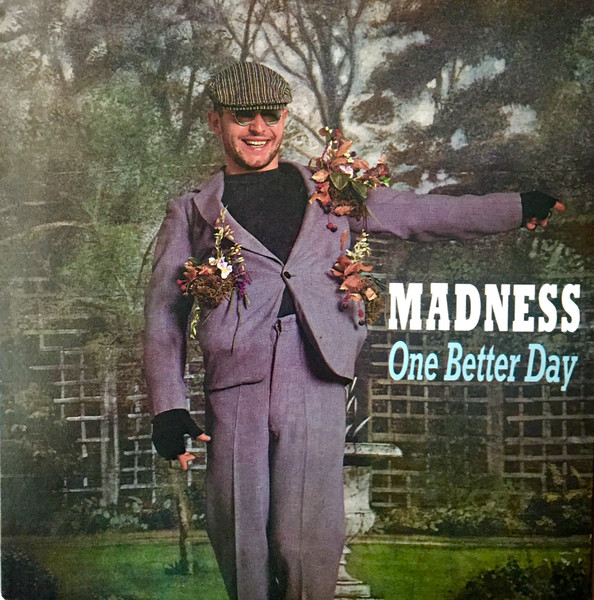
Graham McPherson was born in Hastings on 13 January 1961 and moved to London with his mother, going to school in St John’s Wood. To rid himself of the embarrassing Scottish surname, he sought a nickname by sticking a pin in an encyclopaedia of jazz musicians and hit Peter Suggs. He joined the Camden-based six-piece band North London Invaders as vocalist in 1977. In 1979, they renamed themselves Madness after one of the band’s favourite ska songs by Prince Buster. After building a substantial following in north London, they released the single The Prince, their only record on the 2-Tone label. A homage by the band to the aforementioned Prince Buster, the b-side was their cover of his Madness. They signed to Stiff Records and the self-styled nutty boys became one of the greatest singles bands ever in the UK. By 1983, only one of their sixteen Stiff singles had failed to make the top ten – Cardiac Arrest ‘only’ reached No 14. However, as the Thatcherite 80s wore on, the band struggled keep playing the nutty clowns and, as their songwriting subject matter matured, their singles never returned to the top ten. However, in my opinion, One Better Day (No 17 in 1984) is their finest moment on a 7 inch record – a wonderful, moving song about homelessness with music by bassist Mark Bedford and lyrics by Suggs. Produced by Clive Langer and Alan Winstanley, it’s a song about a homeless man and woman who find love on the street – Suggs and his wife Bette Bright play the couple in the video. Bedford wrote himself a beautiful bass part and Lee Thompson shows he can bring light and shade to his sax playing. The song’s brilliance is in how the bleakness of the verses erupts into the glorious romance of the chorus. As the strings soar, Suggs sings “Walking round you sometimes/ Hear that sunshine/ Beating down in time with the rhythm of your shoes.” Graham McPherson has never sounded better.
Life In A Scotch Sittingroom Vol 2 Ep 6 – Ivor Cutler (1978)
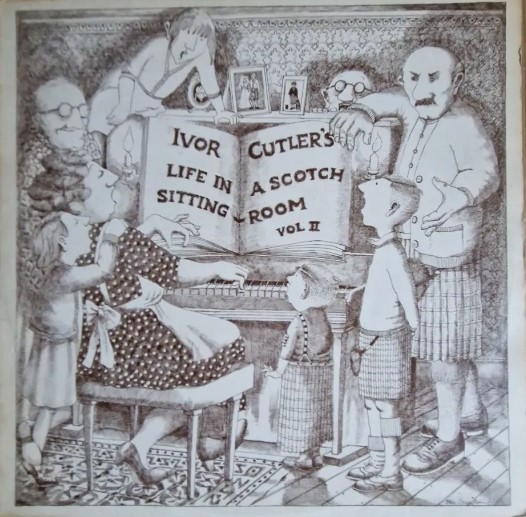
When I saw that Monday this week would have been Ivor Cutler’s 101st birthday, I thought long and hard about whether I should include a track by him on this playlist. To say that the work of the eccentric Scottish poet/musician/artist/surrealist is niche is a significant understatement and I suspected it might be a step too far for the discerning audience of WIS. However, a listen to him performing this amazing piece made my mind up and I decided to go for it. It is taken from a 1978 album entitled Life in a Scotch Sitting Room Vol. 2 (there is no Vol. 1!) and was recorded with Cutler accompanying himself on his wheezing harmonium. He tells a series of stories as episodes from his childhood growing up in a middle-class family in 1930s Glasgow. He appeared on the BBC regularly in the 1960s and Paul McCartney became a fan, getting him to appear in the Beatles’ Magical Mystery Tour film. He was famously adopted by John Peel (this was where I first heard him) and went on to record an incredible 21 sessions for Peel and Andy Kershaw broadcasts on Radio 1 from 1969 until 1991. Episode 6 is my favourite Cutler track with his unmistakeable voice bending around the amazing words he is speaking. Opening with: ” ‘Scotland gets its brains from the herring’ said Grandpa; and we all nodded our heads with complete incomprehension”, Cutler goes on to describe cooking herring in a batter of porridge on a coal fire so brilliantly that you can almost smell the “juice steaming through with a glad fizz”. He finishes the poem with a real flourish in stating: “There’s nothing quite like a Scotch education. One is left with an irreparable debt. My head is full of irregular verbs still.” Incredible in every meaning of the word.
Last Word
I generally don’t go too off-piste with my selections but I think I might have ended up in a snow drift with the Ivor Cutler track at the end there. So, I’ve decided not include it in the master playlist to prevent the majority of you reaching for the skip button every time it comes on. In the unlikely event of an outcry over this decision, it will be added due to ‘public demand’. The remaining five tracks have been put into their rightful place at the link below.
Following my hand operation today, next week is going to be a theme week but I am hoping my hand will be recovered enough to allow a normal blog to return on 2 February.
AR
 Week In Sound
Leave a comment