This blog arrives six months after I started this nonsense and has led to some reflection on my part and a bit of a re-set. Same great tunes, though. Enjoy!
First Word
I went back and read my first blog post WIS 24 Feb 23 where I wrote about songs by Dawes, Smokey Robinson & The Miracles, The Smiths, Little Simz, Gang Of Four and David Bowie. Overall I was pleased to see that I began with six tunes from a diverse range of artists which has remained the ‘entertainment’ aim of this blog. However, what really struck me was that the posts were much shorter back then – the longest post was a pretty punchy 172 words. The longest post in last week’s blog was three times longer – a whopping 528 words. No wonder it takes me so much time to research, write and edit the blog these days! So for my sanity and your patience, this week I’m going to make a real effort to return to writing shorter posts where rabbit holes will be avoided and some things will remain unsaid. This First Word paragraph is already 167 words, so we’ll see how long it lasts…
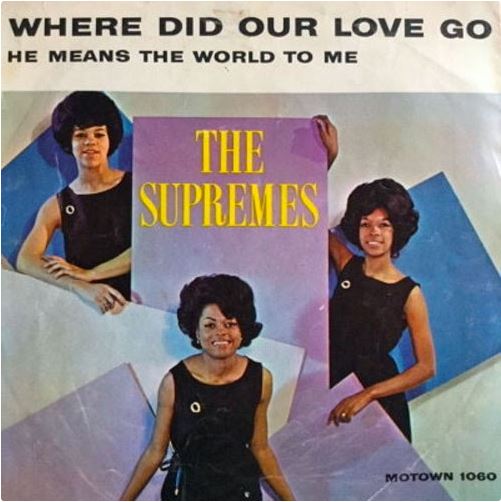
Where Did Our Love Go – The Supremes (1964)
It’s hard to imagine but in late summer 1964, after three years recording with Motown records, The Supremes were known as the “No-hit Supremes” around the record company offices. None of their eight singles had achieved any significant sales, unlike label mates The Marvelettes and Martha Reed & The Vandellas. But Mary Wilson, Florence Ballard and Diana Ross had the support of label boss Berry Gordy and he gave them access to the best songwriters in the company. When Holland Dozier Holland came up with Where Did Our Love Go, it was offered to The Marvelettes first. However, their lead singer Gladys Norton wasn’t keen on the song and so it came to the Supremes. The Supremes weren’t that sold on the tune either but, desperate for a hit, they took it on. Brian Holland and Lamont Dozier knew the song relied on the strength of the lead vocal and but struggled to get Diana Ross to sing it the way they wanted, in a lower register to match their arrangement . After an argument in the studio, an angry Ross sung it to their instruction achieving the softer, coy sound they were after but still with some bite from the mood she was in. However, once added to Ballard and Wilson’s smooth backing vocal, when Ross heard it in the studio playback she knew right then that this was the hit they were after. On 22 August 1964, it reached the No 1 spot in the US Billboard Charts. They had arrived and their next four singles all went to No 1. There was no more office gossip.
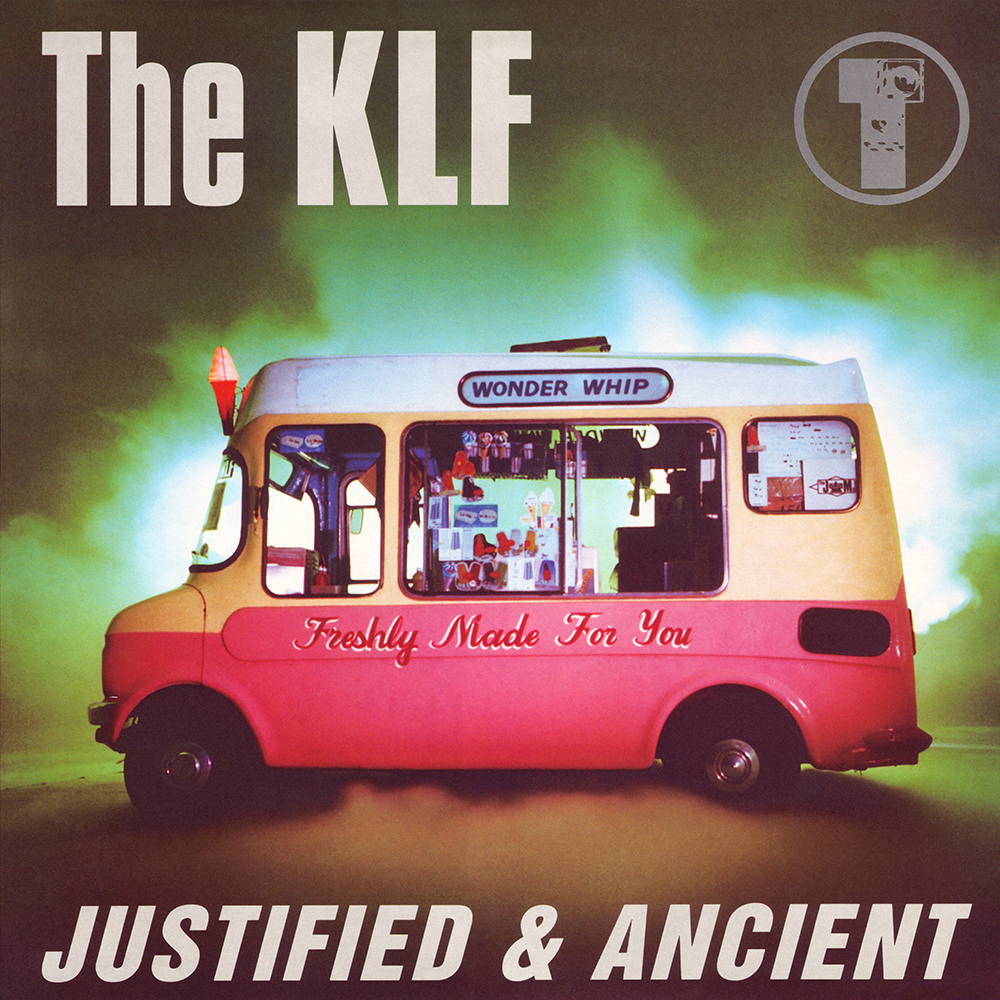
Justified And Ancient – The KLF (1991)
By 1994, Bill Drummond and Jimmy Cauty had retired their avante-garde electronic pop group the KLF and formed a controversial arts foundation known as the K Foundation. Their notoriety was assured when they withdrew the £1M remaining from their KLF earnings in cash and went to the Isle of Jura on 23 August with a film crew and burnt the money in an act of performance art. Outrage duly followed. Drummond is a Scottish artist, author, musician and record producer who had founded legendary Liverpool band Big In Japan with the likes of Holly Johnson and Ian Broudie. He went on to develop Zoom Records and produce the debut albums by Echo & The Bunnymen and The Teardrop Explodes. After the cash burning escapade, Julian Cope is quoted as saying Drummond still owed him money! After a stint as an A&R man, Drummond started making music again and in 1987 joined up with his artist/musician friend Kauty. After a couple of sample heavy hip hop records released under the name The Justified Ancients Of Mu Mu, they then had a novelty UK No 1 hit with Doctorin’ The Tardis as The Timelords in 1988. A crass mash up of The Sweet’s Blockbuster and …erm… Gary Glitter’s Rock’n’Roll Pt 2, it led to them writing a book called How To Have A No 1 The Easy Way. In 1991, under the new name of the KLF, their series of UK top ten singles lifted from their LP The White Room made them the biggest selling singles band in the world that year and this was what gave them the money to burn. The joy of getting Tammy Wynette to sing the daft lyrics and appear in the video for Justified And Ancient showed it wasn’t as Grim Up North as they claimed. Eccentric stuff.
The Comedians [Live] – Roy Orbison (1989)
I haven’t been to see any comedians at the Edinburgh Fringe this year but a quick read of the top ten jokes chosen by the public from a judge’s shortlist this week isn’t making me rush for a ticket before the thing ends this weekend. It did remind me of this great song, though, which is well deserving of a place on the playlist. The song was originally written by Elvis Costello and recorded in a glossy arrangement with an odd 5/4 time signature for the self proclaimed “worst album” he did with the Attractions (1984’s Goodbye Cruel World). However, it was rescued from that oblivion by the intervention of T-Bone Burnett who was the support act on a solo tour EC did in 1985. They developed a writing and production partnership, working together on Costello’s celebrated King Of America record. In 1988, Burnett had taken the role of musical director for the Black And White Night television special centred on a live performance by Roy Orbison backed by Elvis Presley’s TCB band. The idea was that Orbison would be joined by a series of guests including Bruce Springsteen, Jackson Browne, Bonnie Raitt and Costello himself. Burnett was after new material for Orbison to consider and Costello dug out The Comedians, wrote new words for it and restored the arrangement to what he had on his first demo, which he had nicked from Orbison’s 1961 hit Running Scared. The Big O loved the melodic drama and soaring chorus of EC’s ‘new’ The Comedians and recorded it for what would be his final album, just before the televised concert. He died 14 months later. The footage of the great man effortlessly performing it live is worth a watch, not only for Burnett’s introduction but to see Costello and Springsteen sat together strumming in the background, furiously concentrating on their sheet music.
Blue Boy – Orange Juice (1980)
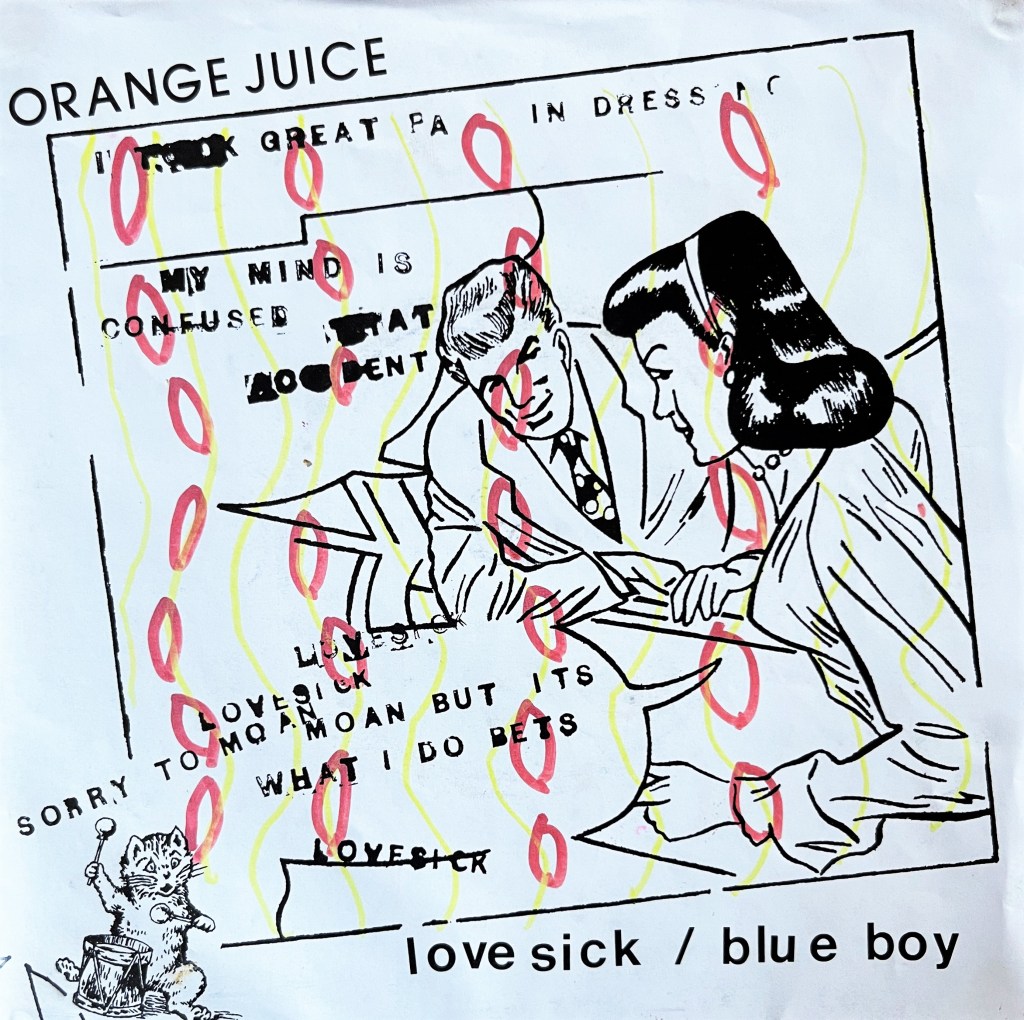
Edwyn Collins was 64 on Wednesday which all seems a long way from a cartoon cat playing a drum and “The Sound Of Young Scotland”. I wanted to mark the birthday of this alternative national treasure with a track on the playlist. Although still making great solo records today, initially I considered picking a song from Orange Juice’s 1982 debut record You Can’t Hide Your Love Forever. This LP got repeated plays on my turntable back then and remains one of my favourite albums to this day. However, this major label recording does sound more polished than the fey, quirky, low-rent guitar pop of the band’s earlier singles for Alan Horne’s home-spun Postcard Records. So I’m going to playlist one of the three singles I still have on the shelf behind me as I type. That statement tells you that, sadly, I wasn’t hip enough to have bought their first single Falling And Laughing. Only 1,000 copies were pressed and the record is now a very expensive collector’s item. In the end, I sidelined Simply Thrilled Honey and Poor Old Soul and have gone for the band’s second single Blue Boy. It has all the hallmarks of early Orange Juice with David McClymont’s thoughtful bass and Steven Daly’s drums pounding away, at times at odds with the brilliant jangle of James Kirk’s guitar. Then there is the slightly discordant solo and Edwyn’s wonderful ‘non-rock’ voice with the great chorus: “She wasn’t listening to the sweet words/He wasn’t listening to her lying tongue/He was listening to the words being sung/By the blue boy”. In true Postcard fashion, Horne got the monochrome sleeves printed and then gave the band some felt pens and got them to add colour themselves making every one unique. My version is pictured above!

Meeting Across The River – Bruce Springsteen (1975)
So with Born To Run released this week in 1975 and containing one of the greatest songs ever written (Thunder Road, by the way), what am I doing playlisting what is probably the least listened to track on the iconic album? I could argue it’s because I’m an awkward sod and that would be true, but it’s a brilliant song that is well worthy of your time. Although very different in sound, it’s in keeping with the cinematic feel of other tracks, but more film noir than widescreen epic. Located as the penultimate track on Side 2, it is seen as forming a bridge across the Hudson between the New Jersey of the preceding songs and the New York City setting of album closer Jungleland. It’s the sombre but captivating story of a low level criminal on his last chance and desperate. “Cherry says she’s gonna walk/’Cause she found I took her radio and hocked it”. He’s trying to persuade his friend Eddie to find him a ride to meet a man on the other side of the river to do some sort of deal. The consequences of failure are huge but he finds bravado in the last verse: “And tonight’s gonna be everything that I said/And when I walk through that door, I’m just gonna throw that money on the bed/She’ll see this time I wasn’t just talking/Then I’m gonna go out walking.” But what elevates the strong lyric to brilliance, is the music. Randy Brecker plays a haunting trumpet over a graceful piano by E-Streeter Roy Bittan while veteran jazz bassist Richard David twangs his upright. I recall first hearing it and being stopped in my tracks by the drama of it all, particularly as Springsteen lets the song conclude without resolution. Does Eddie get him that ride?

Doo Wop (That Thing) – Lauryn Hill (1998)
This week in 1998, Lauryn Hill released what was to be her only solo studio album, The Miseducation Of Lauryn Hill. The first hip hop album to win Album Of The Year at the Grammys, it was never followed up. Hill met Pras and Wyclef Jean while at high school and they went on to form the Fugees. Named after a derogatory derivative of ‘refugee’, their hip hop sound blended reggae, rock and soul into the mix. Major global success came with their second album The Score, released in 1996. It was everywhere that year reaching No 2 in the UK but No 1 in the US and stayed in the top ten there for over six months. Lauryn’s rendition of Roberta Flack’s Killing Me Softly was a breakout hit and was the UK single of the year. Tensions in the band were heightened by their sudden success and they split in 1997, with Hill producing her solo record a year later which went on to sell 8 million copies worldwide. On the record she gives an honest representation of a woman’s life and relationships and castigates the music industry for trying to talk her into putting motherhood aside for the sake of her career. Her second child is born two months after the LP is released. I have playlisted the lovely loping beat of lead single Doo Wop (That Thing) which was Rolling Stone magazine’s single of the year for 1998 and won Hill two of her five Grammys that year – more than any other solo female artist. In the end, Hill put the awards and accolades to one side and, apart from a few sporadic performances, has devoted most of her time to raising her six children. However, even with her short career, she remains a hugely influential artist.
Last Word
So a quick review tells me I’ve managed to keep the posts to no more than 300 words – I was never going to get back to less than 200, was I?! And you’ve no idea how many rabbit holes I had to ignore, particularly for the KLF which was a positive warren of fantastic little side stories. Hopefully it makes it less of a chore to read – it certainly gave me some of my week back.
In adding these to the master playlist, I spotted I had missed transferring the six tracks from 6 June so now there is even more for you to shuffle through when the mood takes you.
AR
 Week In Sound
Leave a comment