Bit of a squeeze to get this done this week due to taking some time away at Easter. But I managed it so hopefully you get time to read my ramblings. Enjoy! !
A reminder that Spotify plays from this box in the annoying ‘Preview’ mode with short excerpts of each track. Please click the icon in top right corner to open the full playlist in a separate Spotify window.
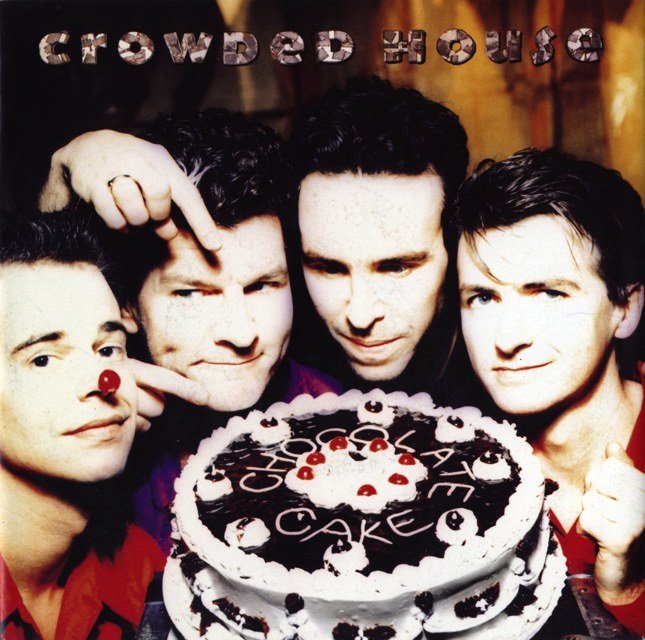
Chocolate Cake – Crowded House (1991)
Well I didn’t have on my bonnet with all the frills upon it but Easter arrived last weekend in a blaze of spring sunshine and we decamped to the beautiful Solway Coast for a few days. In the heathen north, this religious holiday is not as well observed as it is in the south where there are two bank holidays and everyone goes a bit chocolate crazy. I have no idea what the relationship is between the crucifixion/resurrection of Christ and the purchase and rapid consumption of vast quantities of chocolate eggs. But it must make sense somewhere. We were lucky enough to alleviate our chocolate craving with an exceptional homemade cake which my wife had decorated with several mini-eggs. It went down a storm with the family and I could not get this 1991 track by Crowded House out of my head. The band were formed in Australia in 1985 after New Zealand band Split Enz …erm… split! North Islander, Neil Finn has been at the core of the group across their three periods of activity. I first heard their classy, melodic pop songs in the late 80s having taped their second LP Temple Of The Low Men from somebody’s collection. Every single from this album flopped in the UK, even the achingly beautiful Better Be Home Soon. Disappointed in the reception for the LP, Finn went off to work with his brother Tim on their own record – they had played together in Split Enz for a while. Tim then joined Crowded House for the writing and recording of the band’s third LP Woodface. This led to arguably their most successful period in terms of sales in Europe and the US and this track was one of five singles from the album, four of which were Finn/Finn compositions. This was the lead single and the only one that didn’t make the UK top 30. It also failed to chart in the US, probably not surprisingly with a lyric which included: “Now the excess of fat on your American bones, will cushion the impact as you sink like a stone.” The Tammy Baker in the chorus was the wife of TV evangelist Jim Baker who was jailed for having bought the silence of a woman who claimed he had raped her with money embezzled from church funds. Taking her cue from another famous Tammy, Mrs Baker stood by her man through the scandal. She eventually admitted she was wrong and divorced him.

Red Kites – Blue Rose Code (2018)
Like the rest of the Easter weekend, Monday involved walking off as much of the chocolate cake as we could. We found ourselves on what is known as the Galloway Red Kite trail which is an area around Loch Ken to the north of Kirkcudbright. As the image shows, red kites are magnificently graceful birds of prey and unmistakable with their reddish-brown body, angled wings and forked tail. In 1980s, egg stealing and illegal poisoning meant the red kite was one of only three globally threatened species in the UK, breeding in a small area in Wales. It was saved from extinction by one of the UK’s longest-running protection programmes. Birds were reintroduced into various areas around the country with the site in Galloway commencing in 2001 and four pairs were nesting there two years later. Twenty years on, they are thriving – we must have seen a couple of dozen birds as we drove up the A713 from Crossmichael and then did a walk around the area where the old railway bridge crosses the Loch. At that point, this song by Blue Rose Code became a stick-on for this week’s blog. The band are led by Ross Wilson who had a troubled upbringing in Edinburgh where solace from addiction came through the music of Van Morrison, John Martyn and Tom Waits. He formed the band in London in 2009 and by 2012 Wilson had got sober and built a reputation for live performance and powerful songwriting. In the last ten years or so, the band have released five studio albums, four live albums and numerous EPs. Wilson’s music blends folk, Americana, jazz and pop and is best seen live. I’ve only seen them twice, once at one of Bobby Motherwell’s promoted gigs at the tiny Boarding House in Howwood and then on the main stage at Black Deer Festival on a sunny afternoon last June. Both shows were excellent and I recommend you seek them out. Red Kites came out as a single in 2018 but I prefer the version that appears on their 2020 album called With Healings Of The Deepest Kind. Its as haunting as the kites themselves. For a ‘live’ experience, have a look at the videoof them performing the soulful Grateful at last year’s Celtic Connections in Glasgow.
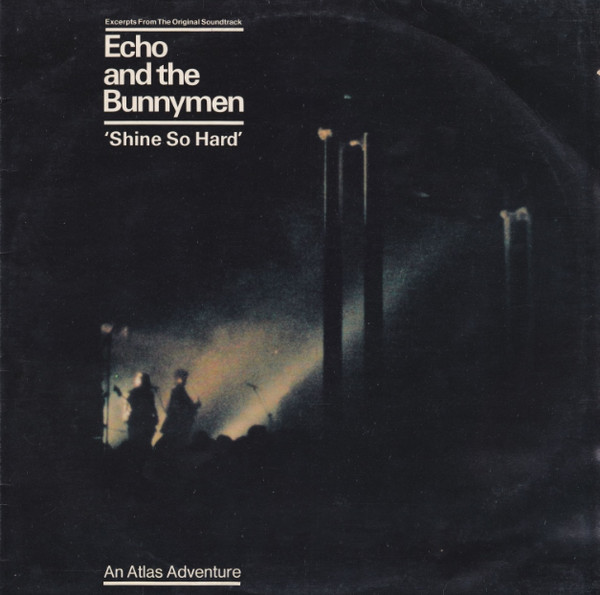
All That Jazz – Echo and the Bunnymen (1981)
An incredible forty two years ago this week, Echo & The Bunnymen released their 12″ Live EP Shine So Hard. In addition, Bunnymen guitarist and all round good bloke Will Sergeant was 64 years old on Wednesday. So that seems like two good reasons for this track from the EP to go on this week’s playlist. I recently read Sergeant’s biography Bunnyman: A Memoir which was a real down to earth and highly amusing story of his life growing up in a council house in Melling near Kirby between the late 50s and the early 80s. The time period is charted through the release of records and, as I am of a similar vintage and was also music-obsessed from the age of 10, I found it a great read. The development of the post-punk Liverpool scene based around Eric’s club is particularly interesting with the Bunnymen stumbling into existence behind Julian Cope and the Teardrop Explodes who got out the blocks first. Sergeant’s self taught guitar joined Les Pattinson’s bass and Ian McCulloch’s vocals and they began performing with a highly temperamental drum machine – the ‘Echo’ in the band name. The pain of coaxing this old machine into life in the early gigs is really well illustrated in the book and by the time drummer Pete de Freitas joined the band to record their first LP Crocodiles, the machine was headed for the tip. This LP and its follow up Heaven Up Here were essential student purchases for me, as was the live EP which was released between the two and was their first to chart, just squeezing into the top 40. Recorded on the last date of their ‘Camo’ tour in the Pavilion Gardens in Buxton, it was a free gig for 500 fans organised by manager Bill Drummond (later of the KLF). The performance was filmed but Drummond was unable to direct it as he had planned due UK film union rules. A 32 minute film featuring the four tracks on the EP got a limited cinema release in the UK and 500 VHS videos were made available only to people who had been present at the concert. For someone who replaced a machine, it is the drumming by Pete de Freitas that defines the early Bunnymen sound for me. He is just brilliant and this track illustrates the power of his playing, locked solid with the bass and underpinning everything Sergeant does on the guitar. His use of tom toms to drive some Bunnymen songs is also notable as seen on this slightly grainy footage of Zimbo (All My Colours) presumably grabbed from one of those VHS tapes. A sad footnote is that de Freitas was killed in a road accident in 1989 aged just 27 riding his beloved 900cc Ducati from Liverpool to London.
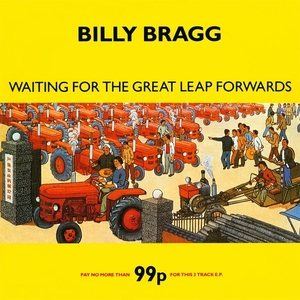
Waiting For The Great Leap Forwards – Billy Bragg (1988)
On the 12 April 1954, the Oppenheimer Security Hearing was held in Washington where Dr Robert Oppenheimer was accused of being a communist and had his US Government security clearance revoked. A theoretical physicist who was the wartime head of the Los Alamos Laboratory, he had become known as the “father of the atomic bomb” for his role in the Manhattan Project that developed the first nuclear weapons. He witnessed the first test detonation in New Mexico and then saw the horror of Hiroshma and Nagasaki after which he became an outspoken lobbyist against nuclear proliferation and the development of the hydrogen bomb. In the era of McCarthyism, these Un-American activities and his past associations with people associated with the Communist Party, led to his hearing and isolation from public life. Although JFK gave him the Enrico Fermi Award as a gesture of political rehabilitation, it was not until last year, five decades after his death, that the U.S. government formally nullified its 1954 decision. Oppenheimer’s story will be told in a Christopher Nolan directed movie starring Cillian Murphy to be released this summer. His position on nuclear physics and the bomb is brilliantly referenced in one of the many memorable lines in this song by Billy Bragg. It was released as a pay-no-more than 99p EP in 1988 – a veritable bargain as it also includes his great cover of Gram Parsons’ Sin City with Hank Wangford. Leap Forwards is my favourite Bragg lyric, taking its title from Mao’s disastrously failed plan to modernise China. According to Bragg biographer Andrew Collins, it “pulls off the difficult trick of boiling down the whole pop-and-politics-don’t-mix argument”. The track was included on his fourth LP Workers Playtime and has Martin Belmont (from the Rumour) on guitar and Bruce Thomas (of the Attractions) on bass and features backing vocals by Michelle Shocked and Pittenweem resident Phil Jupitus. But it is also a great live number with a battery of fantastic two line fills in the play out section, one tipping its hat to Mott the Hoople as all great songs should. I saw Billy talking about his book of lyrics at the Edinburgh Book Festival a few years back and I got him to sign my copy with another of those two liners. It just seemed appropriate for someone who at the time was trying to sing in a band as part of his mid(late?)-life crisis: “In a perfect world we’d all sing in tune, but this is reality so give me some room!”
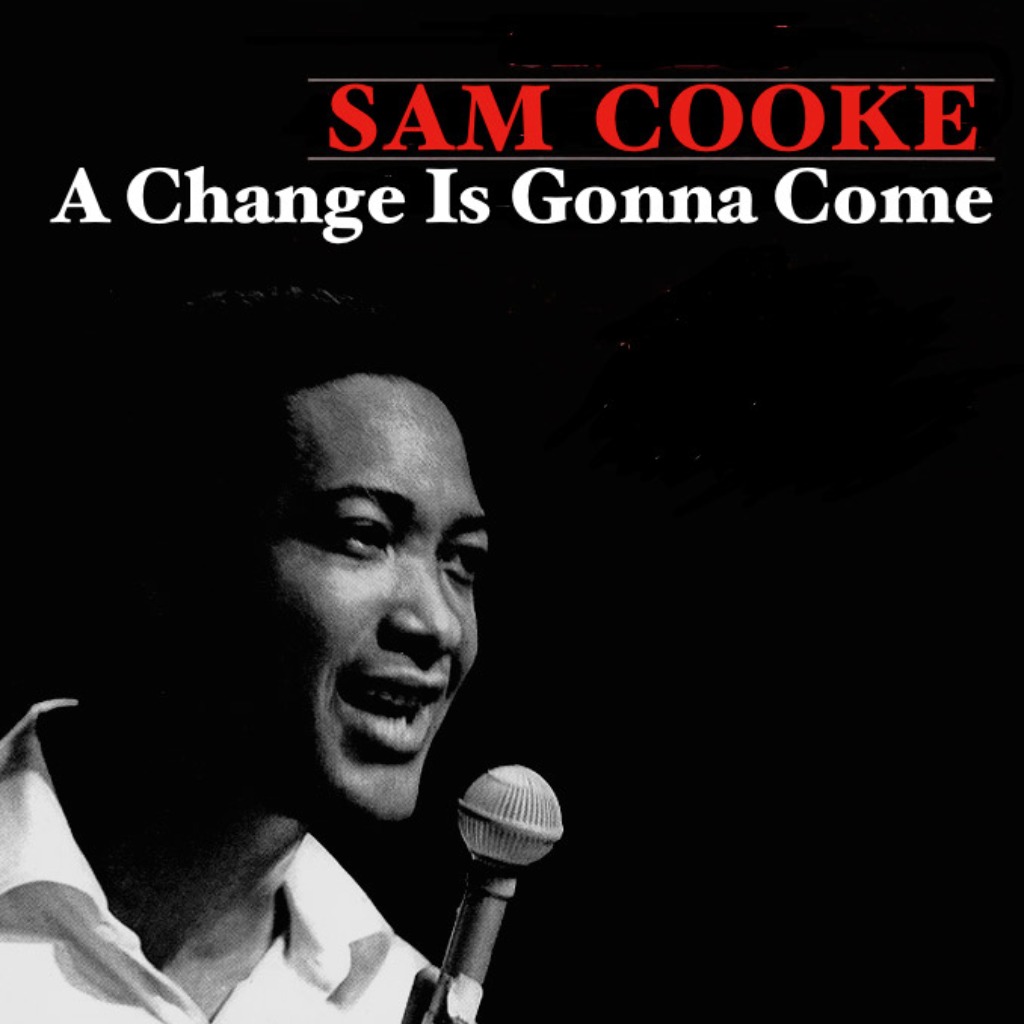
A Change Is Gonna Come – Sam Cooke (1964)
Fifty five years ago this week, President Lyndon B Johnson signed the 1968 US Civil Rights Act. Linking back to the first Act in 1866 which followed Lincoln’s Emancipation Proclamation, the 1968 version was seen as the culmination of the pressure brought on the US Government by the Civil Rights Movement. While the 1964 Act was the landmark which outlawed discrimination on the basis of race, colour, religion, sex, and national origin, pressure had been growing to resolve specific issues of discrimination related to housing which was driving huge social inequalities for African Americans. Following nationwide rioting in the long, hot summer of 1967, the bill was stalled but the civil unrest following the assassination of Martin Luther King on 4 April led Johnson to urge the House of Representatives to pass the Act which they did within a week. The Civil Rights Movement had many anthems but Sam Cooke’s is probably at the top of the list and it has resonated down through the years. Cooke wrote the song after he had been refused a room on arrival at a Holiday Inn in Louisiana after phoning ahead to book it. He was an admirer of the sentiments in Bob Dylan’s Blowing In The Wind, covering it in his live shows, but wanted to make his own statement. A big step for a young singer who had a long line of pop hits played on ‘white radio’. It was recorded in RCA Studios in Hollywood in January 1964 as part of the sessions for his Ain’t That Good News album. Notoriously fickle in the studio, Cooke handed the guitar outline of his song to his arranger Rene Hall to develop on his own, simply asking that it be given the kind of instrumentation it demanded. Hall took him at his word and devised a dramatic symphonic arrangement with lush strings, striking kettledrums and a haunting French horn line which delicately counterpoints the vocal on the chorus. And what a vocal! The man could sing, could he not? Although this song has had a long life (the lyric being referenced by Barack Obama in his victory speech in 2008), Sam Cooke’s life was to end tragically some 11 months after recording it. He was shot in LA in mysterious circumstances by a motel owner who successfully claimed self defence. He was just 33 years old.
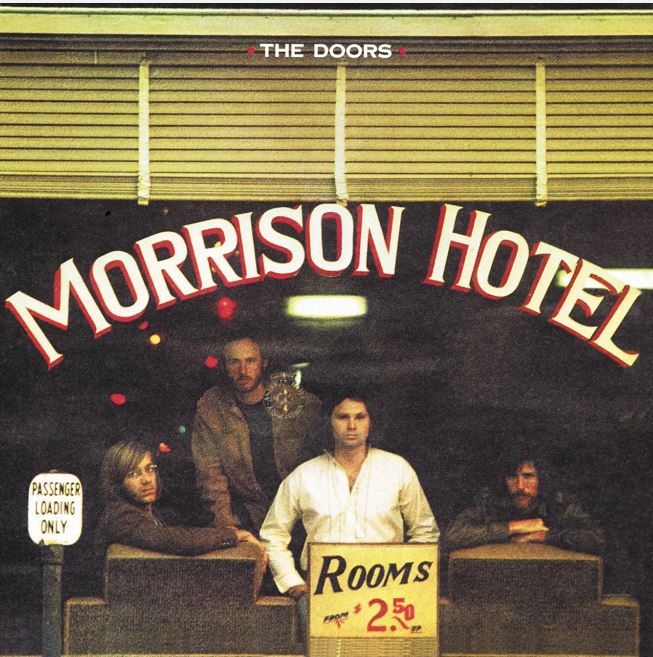
Roadhouse Blues – The Doors (1970)
Today the self-driving car took a further small step(?) from science-fiction fantasy to future-of-transport reality when the UK government approved Ford’s BlueCruise technology for use on certain motorways. Apparently it can control steering, acceleration and braking as well as keep a safe distance from other cars and even bring them to a complete stop in traffic jams. Drivers will legally be able to take their hands off the wheel but they will need to be driving a 2023 electric Mustang Mach-E SUV and, of course, have paid a subscription fee to the Ford Motor Company for the ability to use this function. The report I read reassured me that a camera will monitor a driver’s eyes so they stay on the road. Hmmmm…. Now I love technology as much as the next person – I even mastered WordPress to publish this blog – but I still have an inherent concern with the idea of hurtling down a motorway at speed putting complete faith in some code programmed by some spotty geek in California. And what happens if you forget to tell Ford you’ve changed your bank account and they cancel the service part way through a trip down the M74? I’m sure it will all become natural in the future, but for now I’m keeping faith with the opening lines of this classic blues stomping track by The Doors from their fifth album Morrison Hotel. With the death of troubled and unpredictable singer Jim Morrison in July 1971, the career of The Doors was over before I knew who they were. I was introduced to this song as the final track on Piledriver, the 1972 album that completed Status Quo’s transition from jangly 60s psychedelia to full on 12-bar boogie merchants. As I sat in the front room of my mate Mike’s house while he played the LP on his dad’s expensive hi-fi usually used for classical music, I ran my eye down the credits on the sleeve. All but this track were Quo compositions and it was a rare lead vocal for bassist Alan Lancaster. It never really sent me in search of more music by The Doors who, when I did hear them, felt a bit hippy and druggy for this 12 year old. But over time, I came to recognise their importance in ‘rock history’ albeit I’ve never really got the adulation heaped on Morrison after his death. He could sing, though. Francis Ford Coppola’s decision to use their track The End for the stunning opening sequence to Apocalypse Now was a stroke of genius. Meanwhile, my advice remains “keep your eyes on the road and your hands upon the wheel”.
Last Word
Thank for the comments last week – keep them coming. I am still amazed that no-one has pointed out any glaring errors in my musings as I am sure there are many.
As ever, the Master Playlist has been updated at the link below.
AR


 Week In Sound
Leave a comment